
Best
A risk register is the document a board reads and a regulator asks for. In the Gulf it is also, very often, the document that has to exist in Arabic while the people who feed it work in English. That combination is what makes risk management software in Arabic a harder requirement than it first appears, and it is worth being precise about what you need before you shortlist anything.
Why a translated interface is not enough for risk
Risk data is written by people, not generated by systems. A control test produces a log file that needs no translation; a risk description is a paragraph somebody typed, and whoever typed it chose a language. In practice a Gulf risk function ends up with Arabic risk descriptions from the business, English descriptions from IT and third-party providers, and a board that wants one register.
Three things follow from that, and they are the things to test:
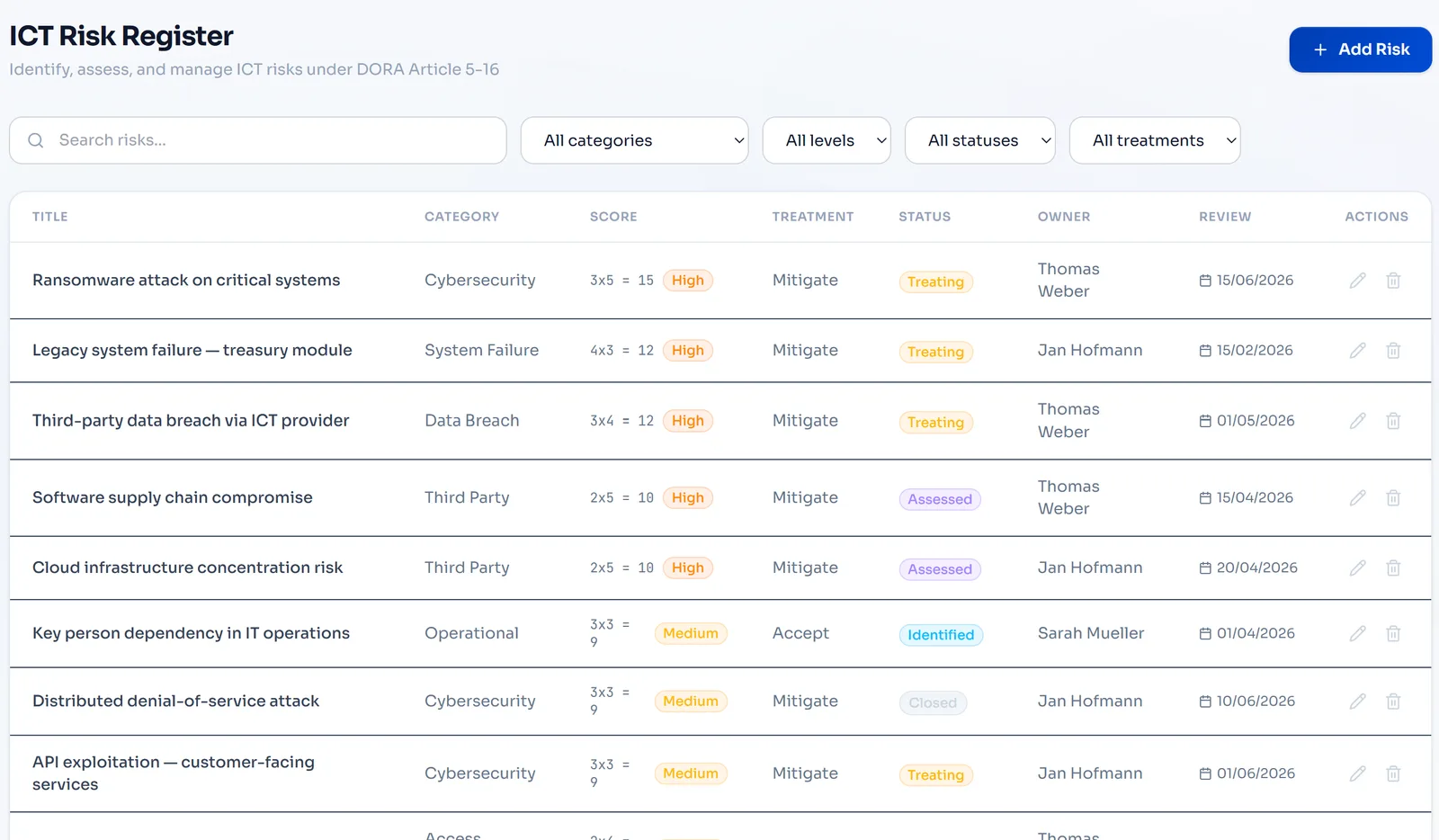
The register has to hold both languages at once. If the platform stores one description field and the interface language decides what you see, then switching to Arabic hides the English entries rather than translating them. What you want is a register where each entry carries its own language and everything is visible in one list.
Sorting and filtering have to work on Arabic text. Arabic sorts differently from Latin script, and a filter built on simple string comparison puts Arabic entries in an order that looks random to an Arabic reader. Type an Arabic word into the search box during the demo and see what comes back.
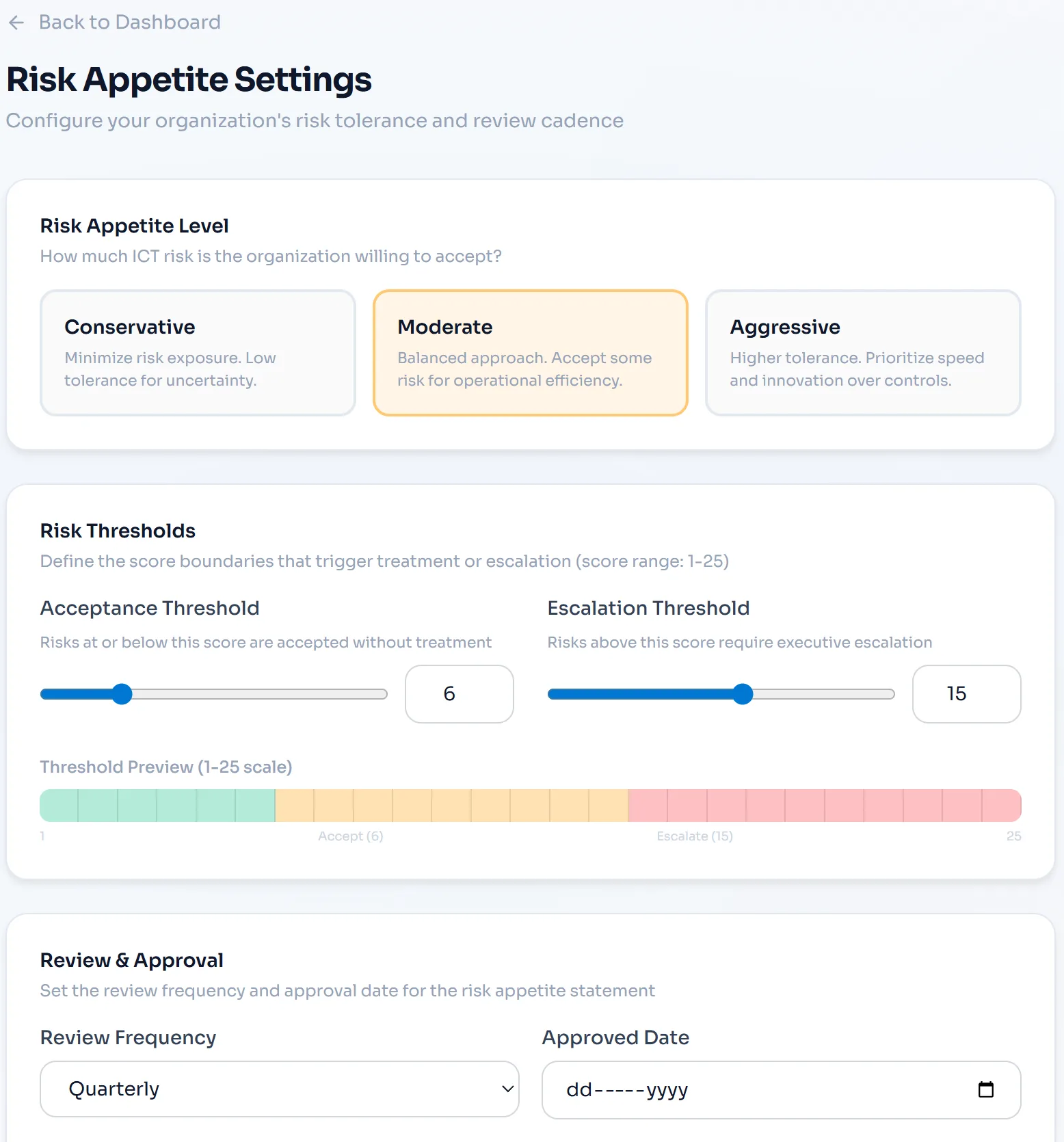
The scoring scales have to be labelled in both languages consistently. A five point likelihood scale is only useful if everyone means the same thing by point three. When the Arabic and English labels are translated independently they drift, and two assessors scoring the same risk land in different places for no reason connected to the risk.
What the regulator expects to see
The regional frameworks are explicit that risk management is a documented, repeatable process rather than a spreadsheet somebody maintains. SAMA's Cyber Security Framework requires a defined risk management methodology with criteria, and the Saudi NCA Essential Cybersecurity Controls and the UAE Information Assurance Standard both require risk assessment, treatment and periodic review with the results recorded.
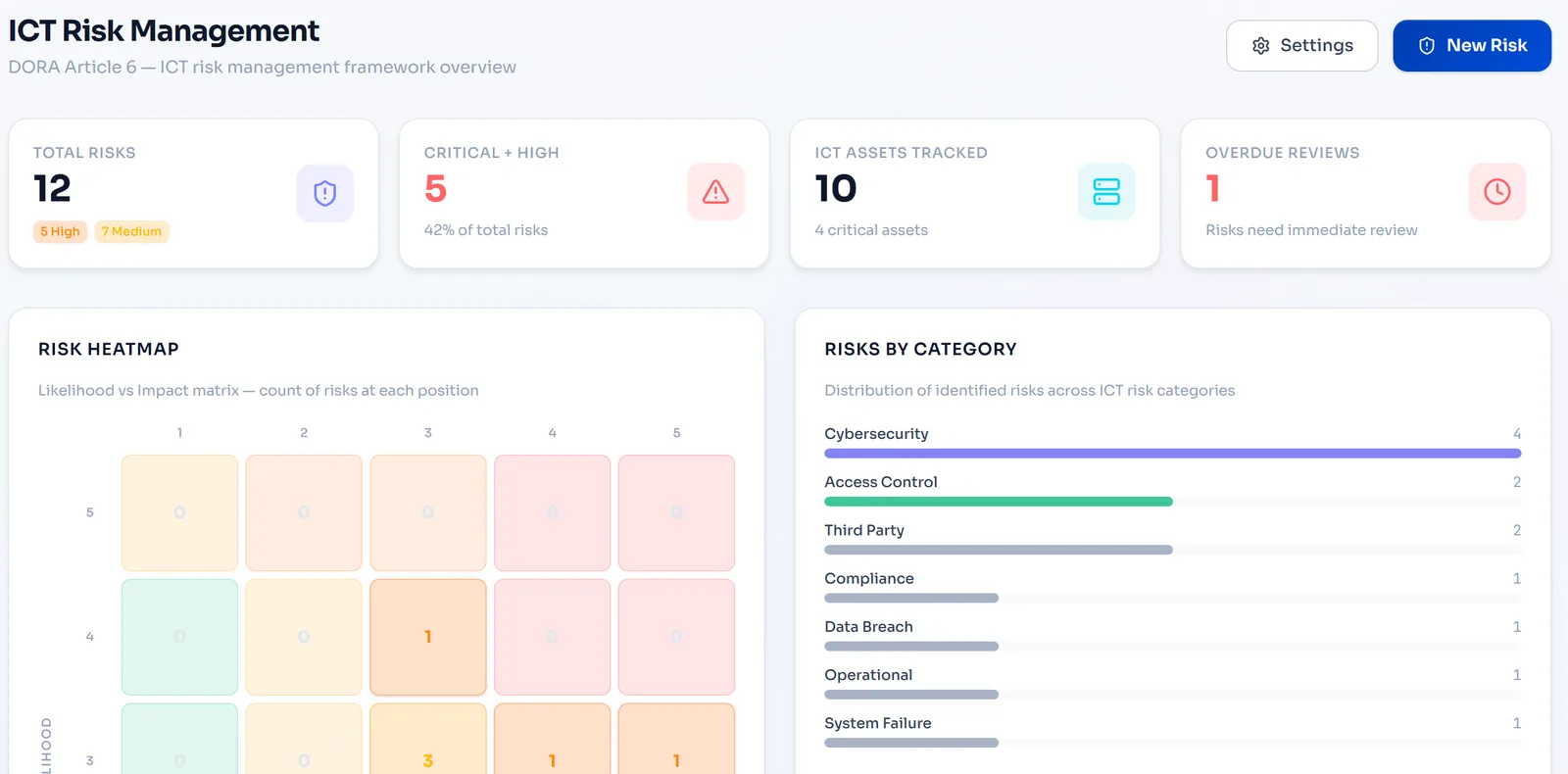
In practice that means an assessor will ask for four things, and all four are documents rather than screens: the methodology with its criteria, the register itself, the treatment plan with owners and dates, and evidence that the assessment was reviewed after a significant change. If your platform can produce those four in Arabic, the language question is answered. If it can produce them only in English, you will be translating them by hand before every assessment.
Connecting risk to controls, which is where the time goes
The part of risk work that consumes the most time is not writing risks. It is keeping the link between a risk, the controls that treat it, and the evidence that those controls operate. Done in spreadsheets, that link breaks quietly: a control is retired, the risk still cites it, and nobody notices until an assessment.
When you evaluate a platform, ask to see a risk with its treating controls attached, then ask what happens to the risk when one of those controls is marked as failing. If the answer is that nothing happens, the register will drift away from reality at the speed your estate changes.
Where Venvera stands
Risk is one part of a wider requirement. Arabic compliance software covers the platform-level tests, and SAMA CSF compliance software covers the Saudi banking framework in which this risk methodology is assessed.
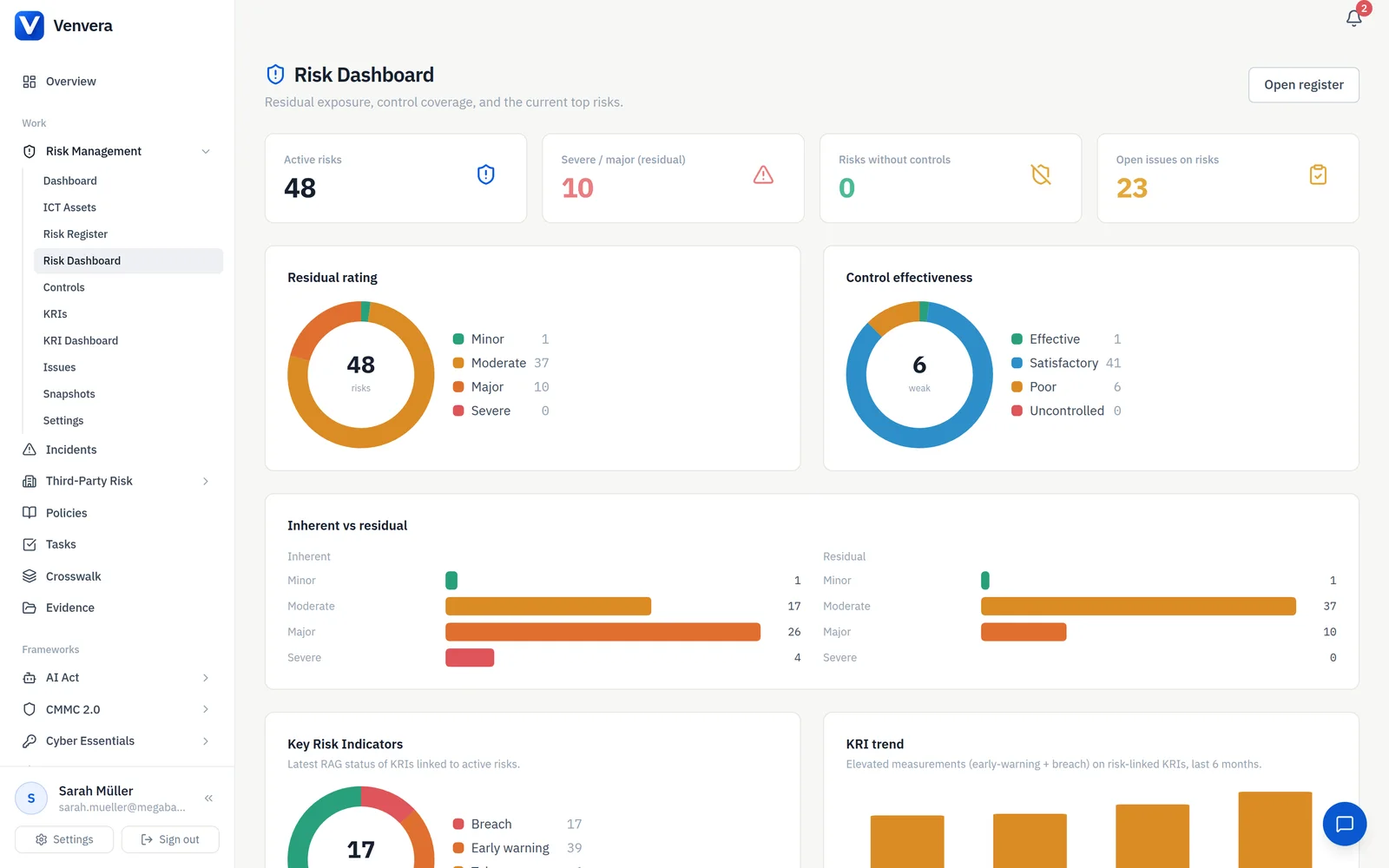
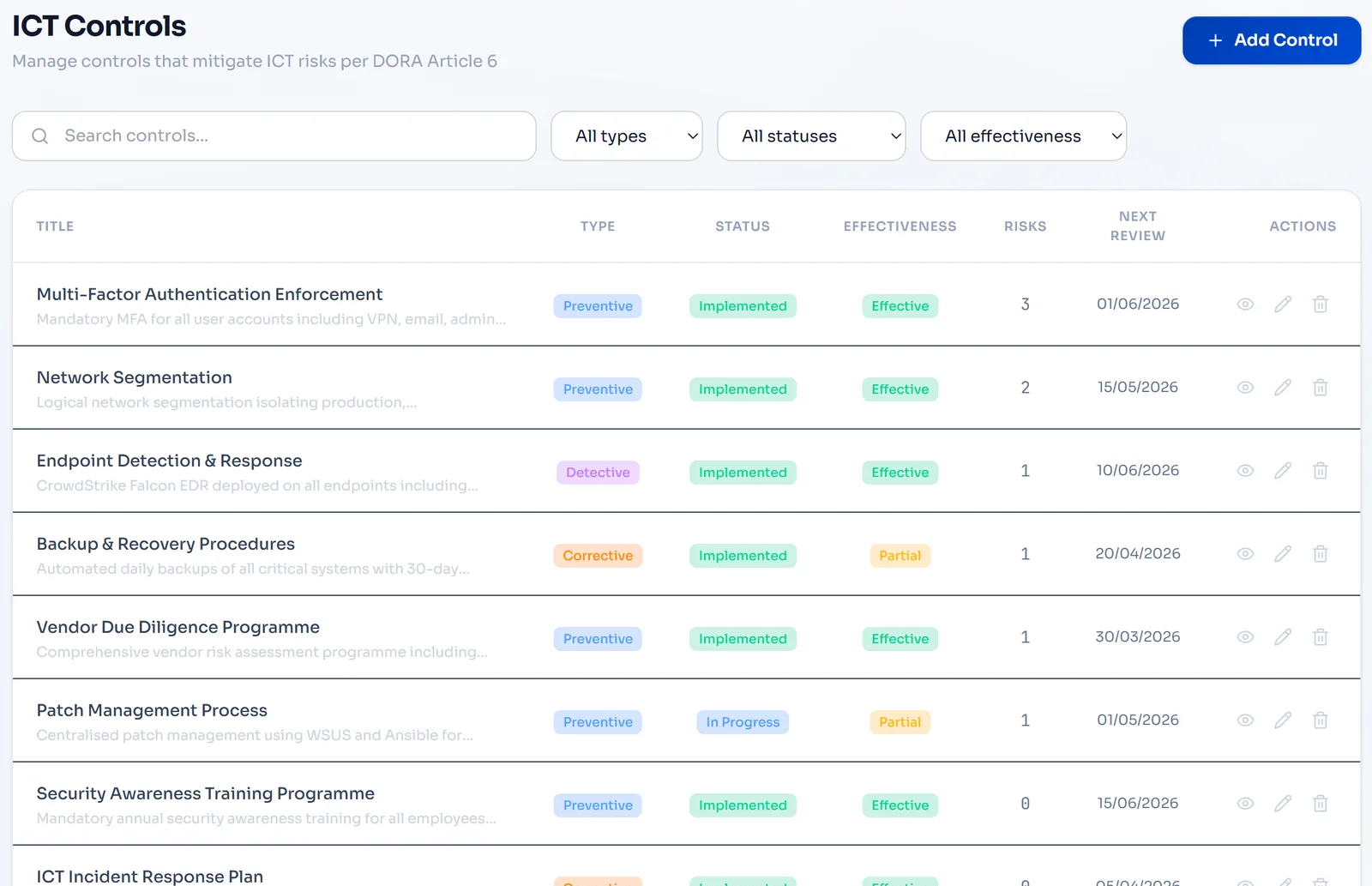
Venvera runs in Arabic with a right to left layout and keeps risk entries in the language they were written in, so a bilingual register stays in one list. Risks link to the controls that treat them, and a control that stops meeting its evidence requirement is visible from the risk rather than discovered at assessment. SAMA CSF, the Saudi NCA Essential Cybersecurity Controls and the UAE Information Assurance Standard ship as maintained control sets, so the risk work connects to the framework you are actually assessed against.
The honest limits: the scoring scales are configurable but their labels are yours to keep consistent across languages, and quantitative risk modelling is out of scope. This is a register and treatment tool rather than a capital modelling one.