Skip to framework content
NEWVenvera speaks your language: the full platform, in English, German, Spanish, Bulgarian, Arabic and Chinese.See what’s new →
FrameworksPCI DSS

PCI DSS compliance software

Make payment security easier to evidence.

Organise PCI DSS controls, cardholder-data records and assessment preparation. Keep security work and the evidence for validation in the same workspace.

14-day Professional trial · no credit card required

Inside VenveraProduct preview
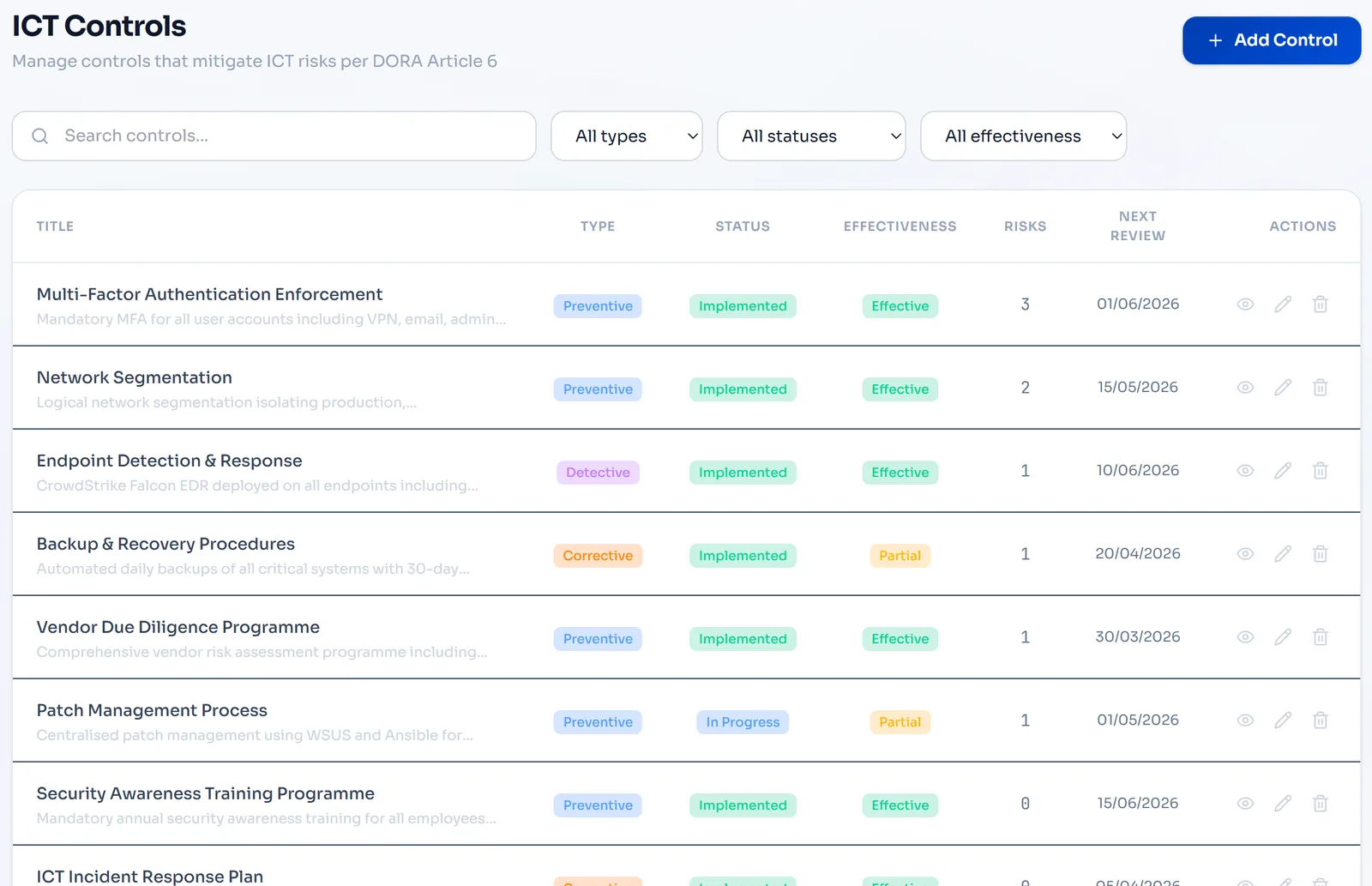
Shared control workspace: implementation status and control detail.
Real product screen · example dataExplore the workflow

A practical way to move forward

Know the work. See the progress.

One workspace for the requirements, the people doing the work and the records behind your next review.

Data & controls

Give the payment environment a clear record.

Organise cardholder-data, network-security and safeguard records. Keep the relevant controls visible to the people responsible for implementation.

  • Cardholder-data records
  • Network security and safeguard tracking
Security operations

Keep recurring work in view.

Manage vulnerability and incident-response records alongside the controls. Give reviews a shared place to check the work still outstanding.

  • Vulnerability management records
  • Incident-response workflow
Validation preparation

Prepare the evidence for your review.

Assess gaps and organise compliance reporting work. Use the records to support the SAQ or assessment process appropriate to your environment.

  • PCI DSS gap assessment
  • Compliance reporting workspace

The detail behind the dashboard

Give every review a better starting point.

Move from a progress summary to the records that support it. Keep the next conversation focused on the work that needs attention.

Screens show example data. Shared platform features and availability depend on your plan.

See it with our team
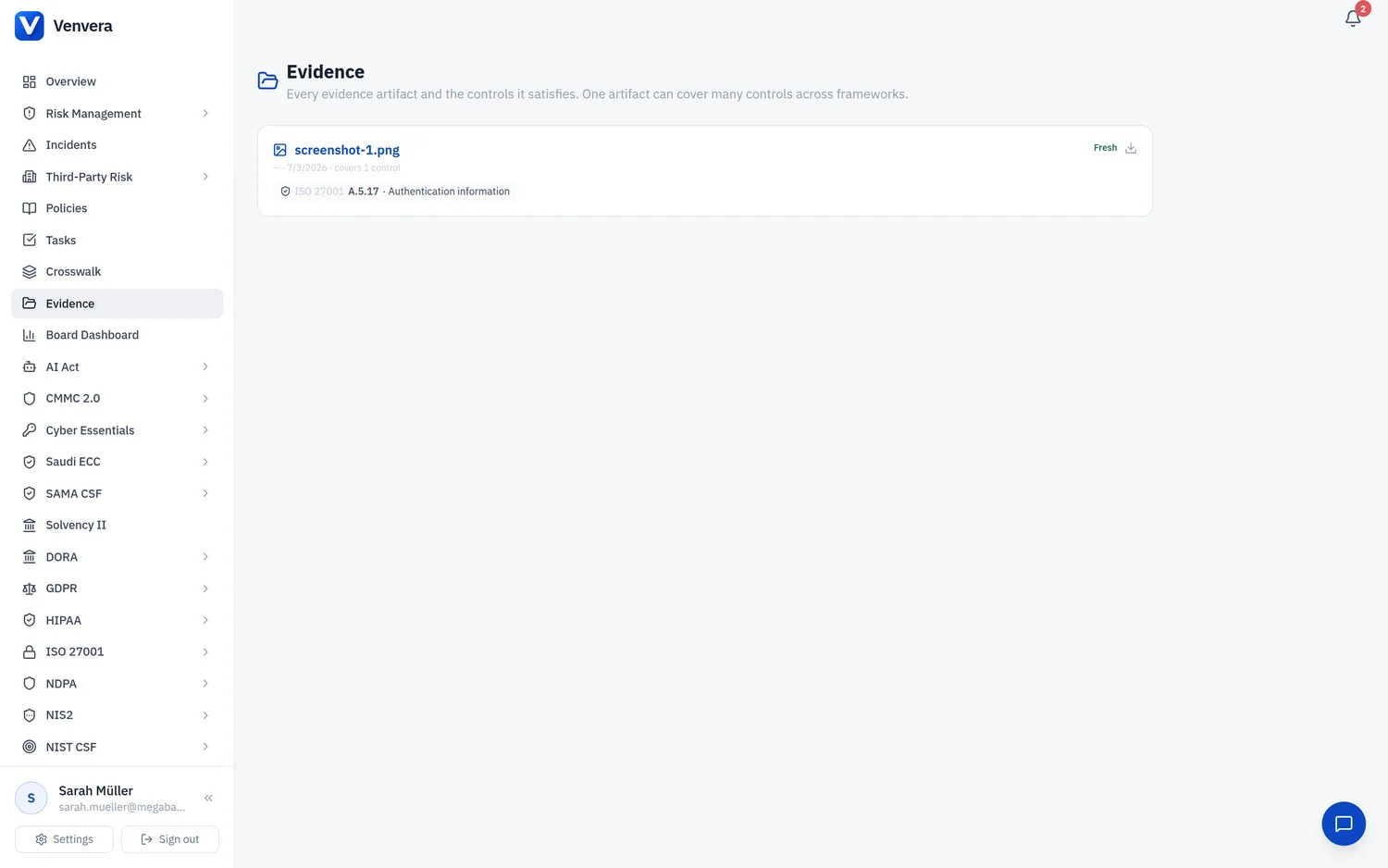
Shared evidence workspace: supporting records for compliance review.
Shared evidence workspace: supporting records for compliance review.Open full size

Start with the right scope

For merchants and service providers managing payment security.

PCI DSS applies to environments that store, process or transmit payment account data, and systems that can affect its security. Confirm your scope and validation route with your acquirer, payment brand or assessor using the current PCI SSC materials.

PCI SSC: PCI DSS document library (opens in a new tab)

Use the work you already have

Find the overlap. Review the gaps.

Explore shared requirements and download a CSV. A mapping identifies related work; it does not certify compliance.

Explore PCI DSS control mappings
You already run
You have been asked to add
19 of the 53 domains in this crosswalk appear in both NIST SP 800-53 and PCI DSS.
DomainNIST SP 800-53PCI DSS
Encryption
SC-13Cryptographic Protection
SC-28Protection of Information at Rest
SC-8Transmission Confidentiality and Integrity
R3.5PAN Secured Wherever Stored
R4.2PAN Protected During Transmission
Key Management
SC-12Cryptographic Key Establishment and Management
R3.6Cryptographic Keys Protected
Access Control
AC-3Access Enforcement
AC-6Least Privilege
R7.1Access Restriction Processes
Identity Management
AC-2Account Management
IA-4Identifier Management
R8.2User Identification Managed
Authentication & MFA
IA-2Identification and Authentication (Organizational Users)
IA-5Authenticator Management
R8.4MFA Implemented
R8.5MFA Systems Configured
Network Security
SC-7Boundary Protection
AC-17Remote Access
R1.1Network Security Control Processes
R1.2Network Security Controls Configured
Vulnerability Management
RA-5Vulnerability Monitoring and Scanning
SI-2Flaw Remediation
R6.3Security Vulnerabilities Managed
R11.3Vulnerabilities Identified/Prioritized
Logging & Monitoring
AU-2Event Logging
AU-6Audit Record Review, Analysis, and Reporting
AU-12Audit Record Generation
SI-4System Monitoring
R10.1Logging/Monitoring Processes
R10.2Audit Logs Implemented
Incident Management
IR-4Incident Handling
R12.10Incident Response Plan
Third-Party Risk Management
SR-2Supply Chain Risk Management Plan
R12.8TPSP Risk Managed
Risk Assessment
RA-3Risk Assessment
PM-9Risk Management Strategy
R12.3Risks Formally Identified
Information Security Policy
AC-1Policy and Procedures
PL-2System Security and Privacy Plans
R12.1Security Policy Maintained
Security Awareness Training
AT-2Literacy Training and Awareness
AT-3Role-Based Training
R12.6Security Awareness Training
Change Management
CM-3Configuration Change Control
R6.5Changes Managed Securely
Secure Development
SA-3System Development Life Cycle
SA-8Security and Privacy Engineering Principles
R6.2Bespoke Software Developed Securely
Security Testing
SA-11Developer Testing and Evaluation
CA-2Control Assessments
R11.1Security Testing Processes
Penetration Testing
CA-8Penetration Testing
R11.4Penetration Testing Performed
Configuration Management
CM-2Baseline Configuration
CM-7Least Functionality
CM-8System Component Inventory
R2.2System Components Securely Configured
Malware Protection
SI-3Malicious Code Protection
SI-5Security Alerts, Advisories, and Directives
R5.2Malicious Software Prevented/Detected
R5.3Anti-Malware Mechanisms Active

A row means the two requirements cover the same ground, so one implementation and one set of evidence can usually serve both. It does not mean satisfying one certifies the other: each framework keeps its own scope, wording and assessment, and some requirements have no counterpart at all. Treat this as a starting map for planning, then confirm each row against the requirement text.

Go deeper

Your PCI DSS reading list.

Visit the knowledge centre

Before you get started

A few useful answers.

Want to discuss your framework and current process?

Talk it through with us
Which PCI DSS version should we use?

Use the current PCI SSC standard and the validation documents required for your environment. PCI SSC currently publishes PCI DSS v4.0.1. Confirm scope and validation requirements with your acquirer, payment brand or assessor.

Does Venvera replace a QSA or an ASV scan?

No. The workspace helps organise controls, evidence and preparation. Any required Qualified Security Assessor assessment, Approved Scanning Vendor scan or official validation remains a separate process.

Can we use our existing evidence?

Yes. Bring your policies and supporting evidence into Venvera and link them to the relevant controls. Cross-framework mappings help you identify reusable work; your team still reviews whether the evidence meets each requirement.

What is included in the trial?

The 14-day Professional trial includes up to five frameworks and unlimited users, with no credit card required. You can explore the controls, assess gaps and organise your compliance work. Framework modules are on paid plans; compare plans for feature availability.

PCI DSS by Venvera

Give your next review a clearer starting point.

14-day Professional trial · no credit card required · up to 5 frameworks · unlimited users