
Learn
The Saudi Central Bank's Cyber Security Framework applies to banks, insurers, financing companies and the other entities SAMA supervises. It is structured as four domains broken into sub-domains and individual controls, and entities are assessed against a maturity model rather than a simple met or not met. That structure is what makes tooling worth having, and it is also what most general purpose compliance platforms handle badly.
What SAMA CSF compliance software has to hold
Four things, in order of how often they are missing:
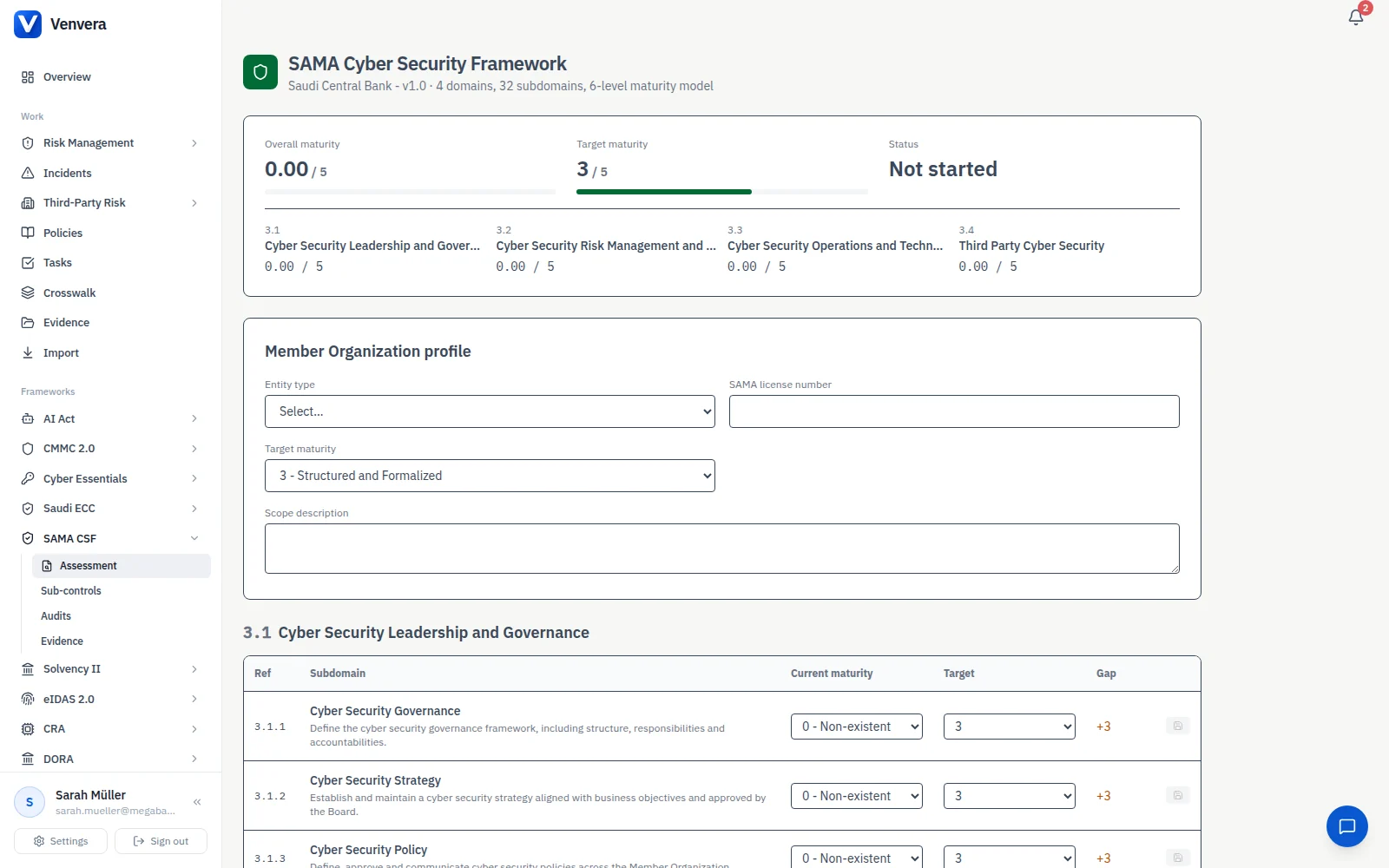
The real control structure. SAMA's framework nests domains inside sub-domains inside controls, and the control references carry that nesting. A platform that flattens it into a list loses the level at which an assessment is actually reported. Ask to see the control tree and check the references match the framework document you were given.
Maturity, not a binary. SAMA assesses against maturity levels, so a control is not simply implemented or not. A platform whose only status field is a checkbox forces you to keep the maturity assessment somewhere else, which is where it goes out of date.
Evidence attached at the control. The assessment asks what proves the control operates. Evidence that lives in a shared drive and is referenced by a filename in a spreadsheet is evidence you will re-gather for every assessment.
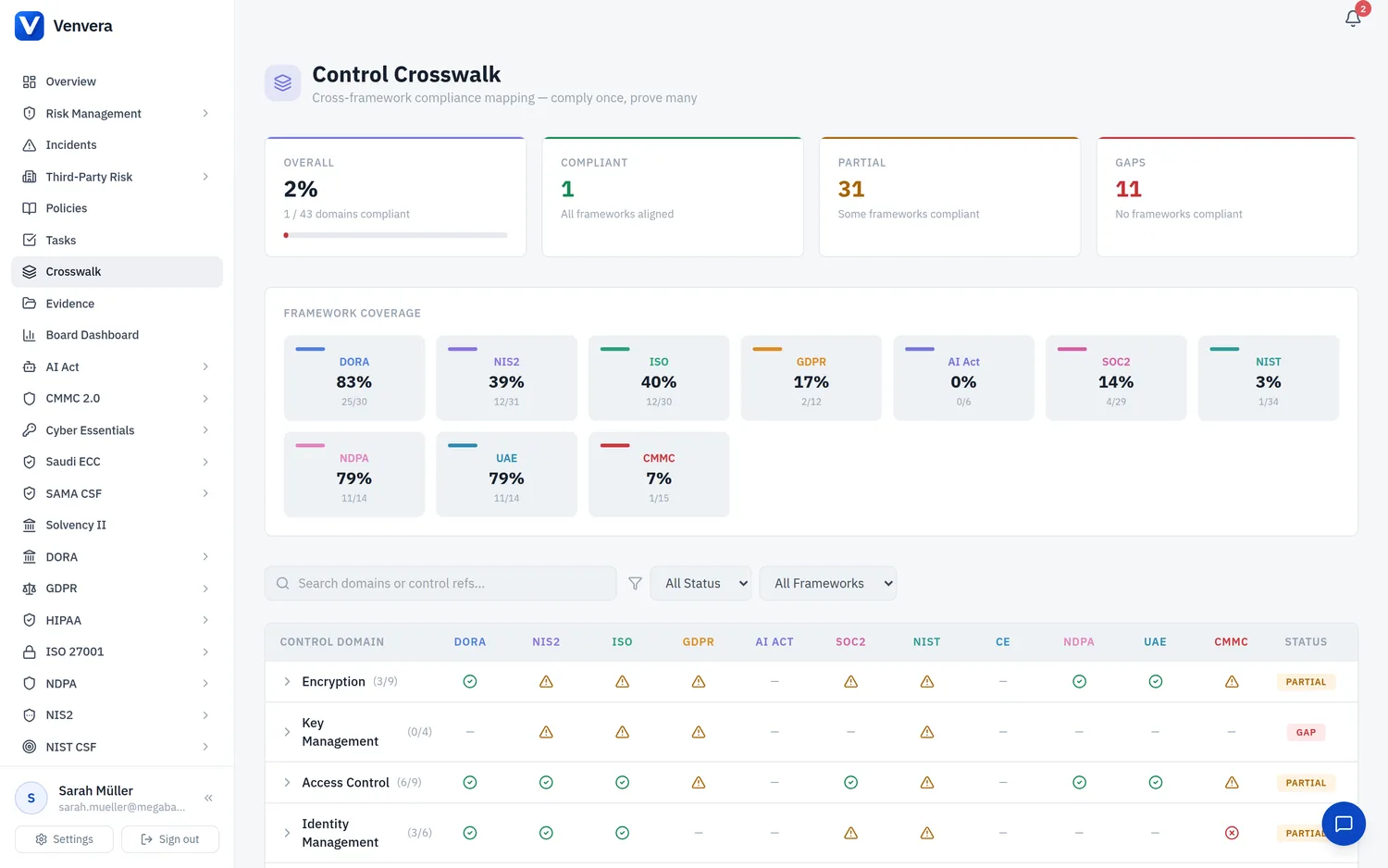
Overlap with everything else you report on. A Saudi bank is rarely assessed only against SAMA. ISO 27001, PCI DSS for card operations, and increasingly the NCA Essential Cybersecurity Controls all ask for overlapping evidence. Collecting it once and mapping it across is the difference between one programme and three.
Where the effort actually goes
Teams new to SAMA usually budget for writing policies and are surprised by two other things, both of which our guide to SAMA CSF compliance cost traces back to the requirements that create them.
The first is evidence freshness. A control assessed as mature in January is assessed on the evidence available in October, and quarterly artefacts such as access reviews and restoration tests expire quietly. Tracking expiry per artefact rather than per control is what stops an assessment turning into a scramble.
The second is third parties. SAMA expects the entity to remain responsible for outsourced functions, which means evidence has to come from suppliers on your timetable rather than theirs. Getting the evidence expectation into the contract before you need it is the single change that saves the most time later.
Choosing between building it and buying it
A spreadsheet works while one person holds the whole programme in their head. It stops working at the point where evidence has owners other than that person, because the register and reality separate without anyone noticing.
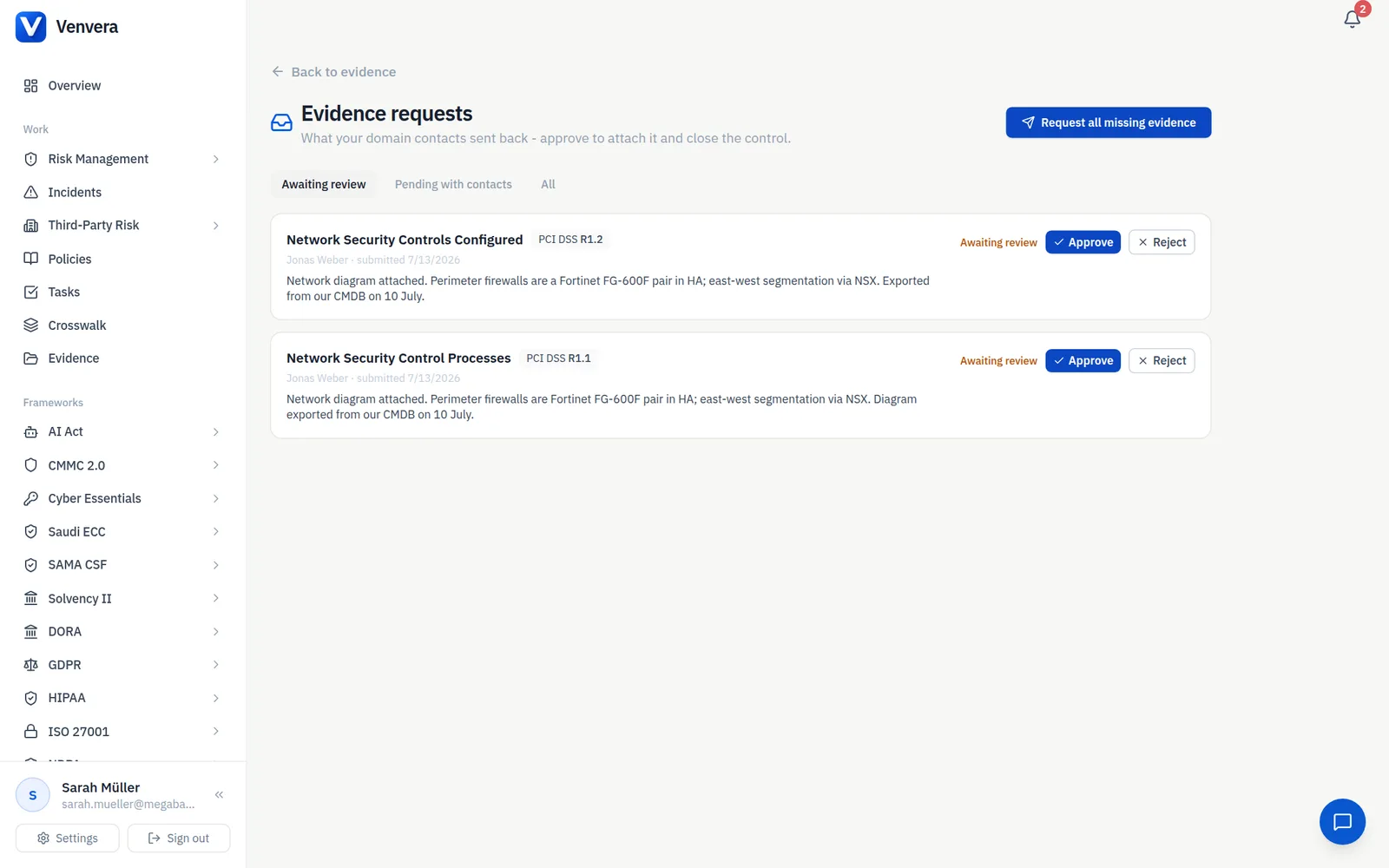
The honest test is not feature count. It is whether the platform can answer, without anyone preparing an answer, which controls have no evidence, which evidence has expired, and who owes you the missing items. If a platform cannot answer those three from its own data, it is a nicer spreadsheet.

Where Venvera stands
Most SAMA-supervised entities also carry the Saudi NCA Essential Cybersecurity Controls, and the wider GCC buyer guide covers running both without duplicating the evidence work.
Venvera ships SAMA CSF as a maintained control set with its real references, alongside the Saudi NCA Essential Cybersecurity Controls, the UAE Information Assurance Standard, ISO 27001, PCI DSS, SOC 2 and NIST CSF, and maps evidence across them so an access review collected once counts everywhere it applies. The interface runs in Arabic with a right to left layout as well as English.
The limits, stated plainly: the depth of per-control guidance is greater on the frameworks that have been in the product longest, and Venvera is a compliance management platform rather than an assessment service, so the maturity judgement remains yours or your assessor's.