
Best
A compliance function in the GCC usually carries more than one regulator at once. A Saudi bank answers to SAMA and, for parts of its estate, to the National Cybersecurity Authority. A UAE entity may hold the Information Assurance Standard alongside sector rules. Almost everyone is also asked for ISO 27001 or SOC 2 by customers. This guide is about choosing GRC software when that is the shape of the problem.
Start from overlap, not from framework count
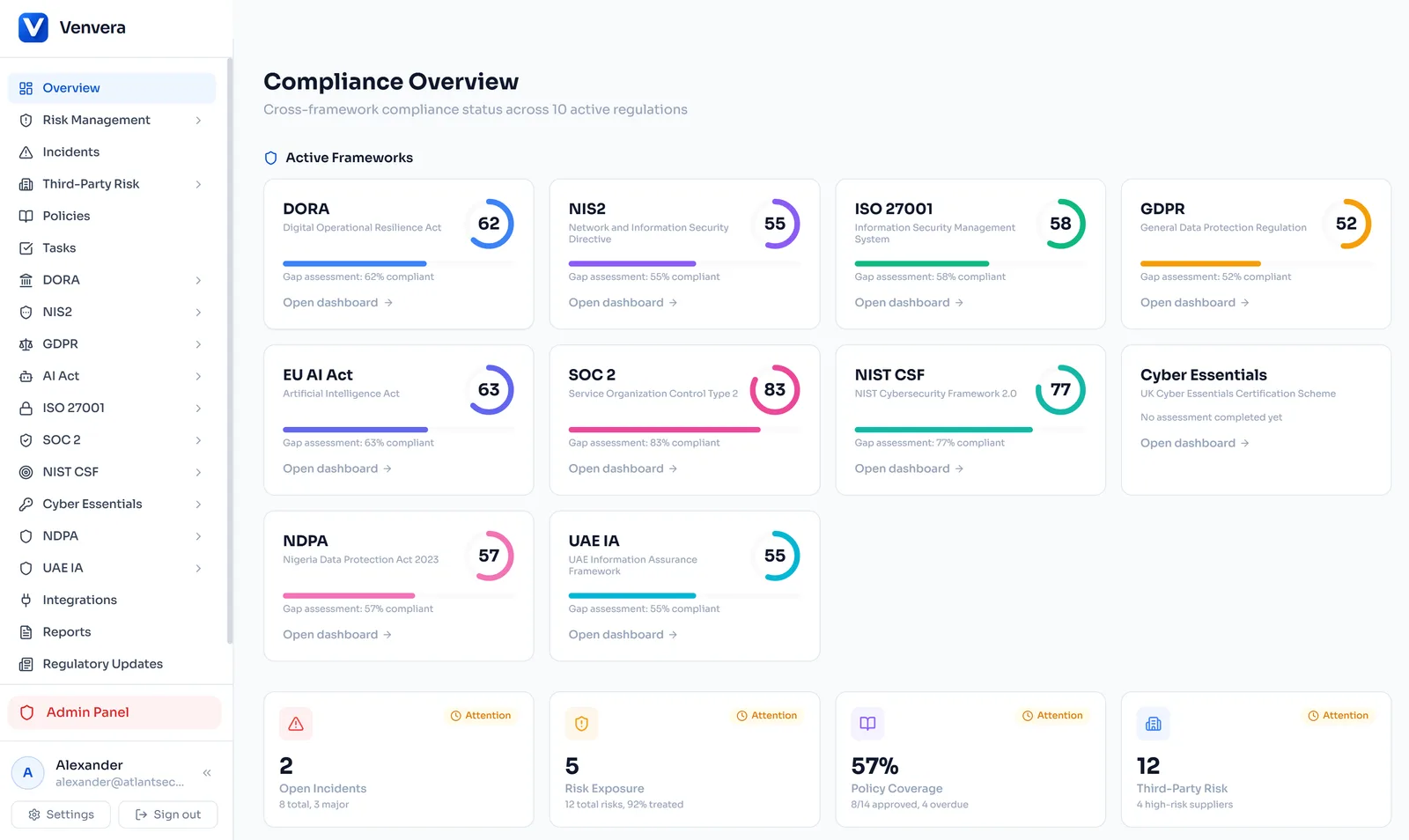
The instinct is to count frameworks and pick the platform with the most. That is the wrong measure, because the value is not in how many control sets exist but in whether evidence collected for one counts for the others.
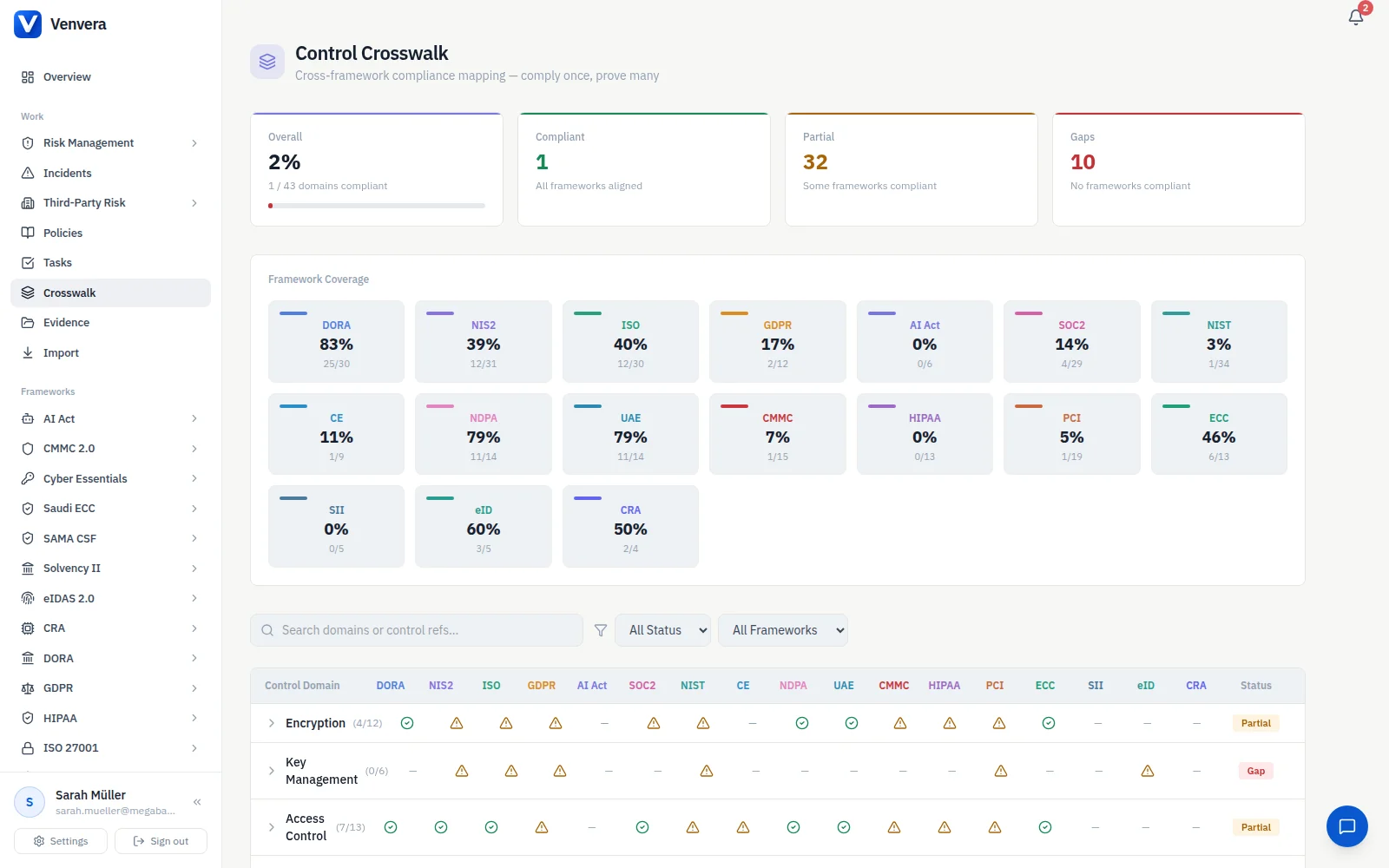
The controls that overlap most across SAMA, the NCA Essential Cybersecurity Controls, the UAE Information Assurance Standard, ISO 27001 and SOC 2 are the ones that generate the most work: access reviews, backup and restoration testing, vulnerability management, incident records, supplier assurance and awareness training. If those are collected once and mapped across, a second framework costs a fraction of the first. If they are not, each framework is a fresh programme.
The demo question that tests this: attach one access review to one control, then show me every other control in every other framework that this evidence now satisfies.
Check the regional control sets are real
Several platforms sold into the region support regional frameworks as a custom framework: an empty structure you populate yourself. That is a legitimate feature, and it is not the same as a maintained control set. The difference matters when the regulator publishes a revision, because with a custom framework the re-keying is yours to do.
Ask three things. Whether the regional framework ships with its controls and their official references. Who updates it when the regulator revises the standard. And what happened the last time one did. The third question is the informative one.
Data residency, asked precisely
Residency questions in the GCC are often asked loosely and answered loosely. Ask precisely: where is the primary database, where are backups held, where does support access it from, and where does any AI feature send content. The last one is increasingly the answer that surprises people, because a feature that summarises a policy may send that policy outside the region.
Get the answer in writing, because it is a contractual matter rather than a technical one, and it is the question a regulator is most likely to ask you rather than the vendor.
The practical shortlist test
Whatever the platform, three questions answered from its own data without preparation tell you most of what you need: which controls have no evidence, which evidence has expired, and who owes you the missing items. A platform that cannot answer those has moved your spreadsheet rather than replaced it.

Where Venvera stands
Framework by framework: SAMA CSF, the Saudi NCA Essential Cybersecurity Controls and the UAE Information Assurance Standard each have their own guide.
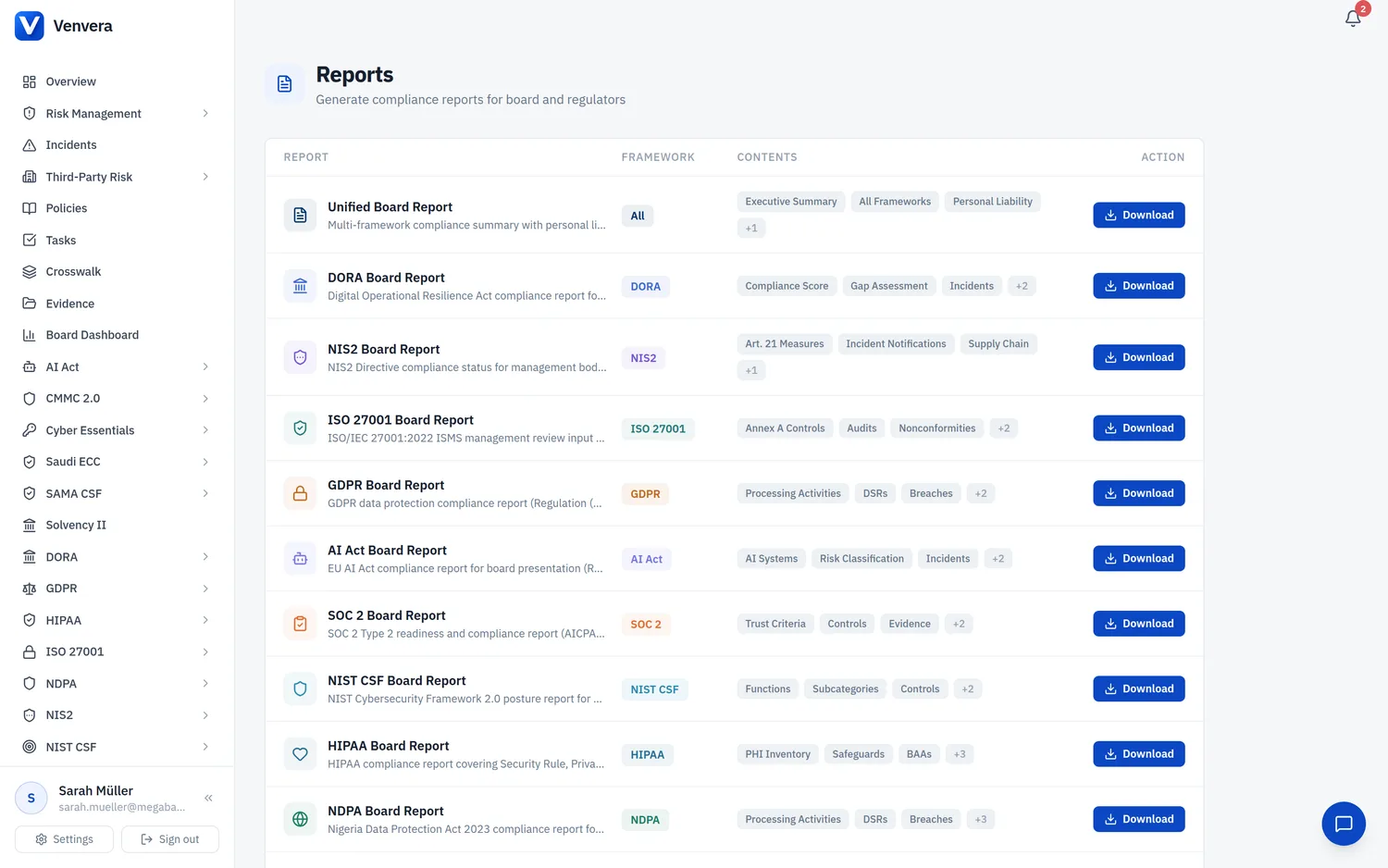
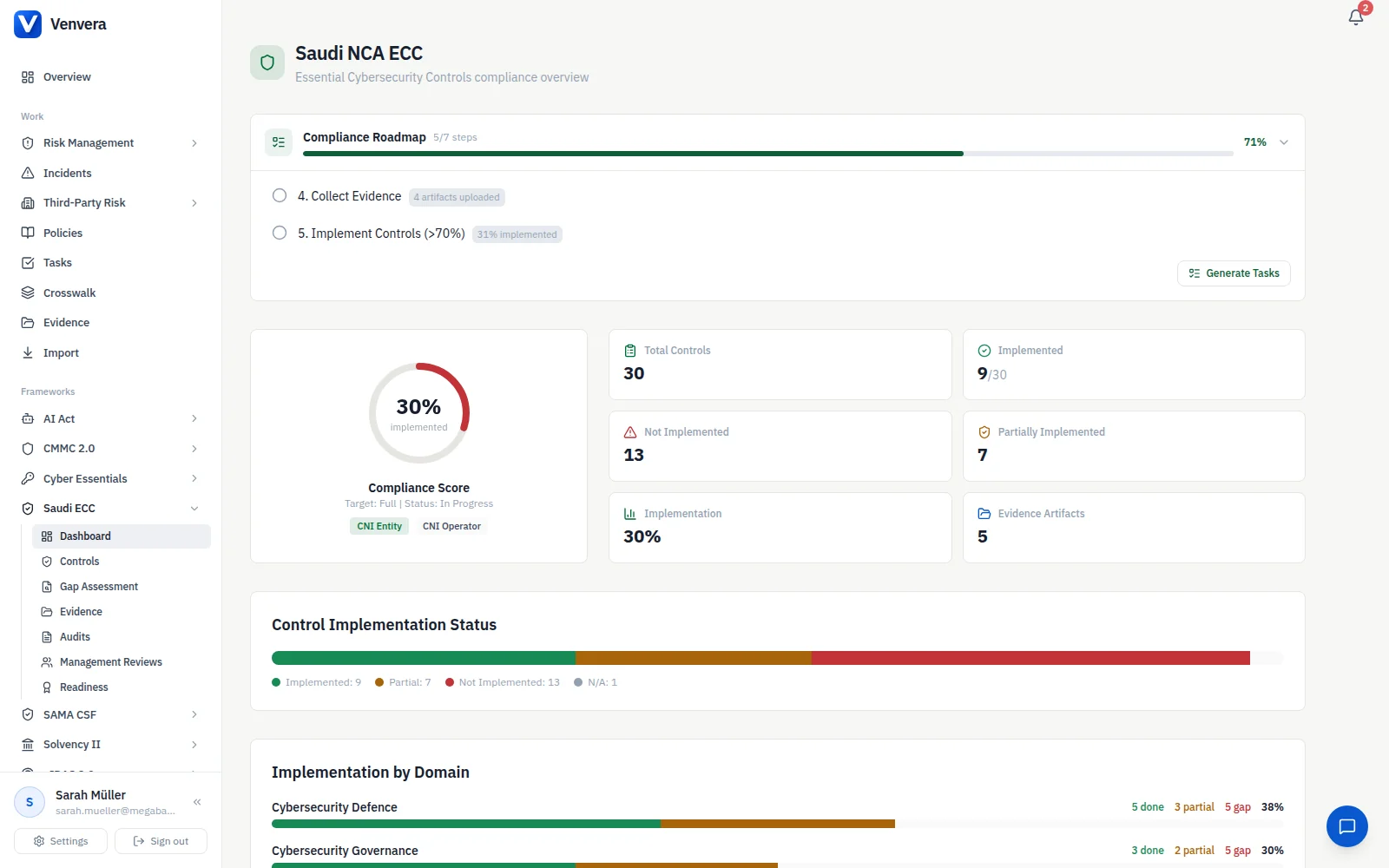
Venvera holds SAMA CSF, the Saudi NCA Essential Cybersecurity Controls and the UAE Information Assurance Standard as maintained control sets with their real references, alongside ISO 27001, SOC 2, PCI DSS, NIST CSF and the other frameworks a GCC entity is commonly asked about, and maps evidence across them. The interface runs in Arabic with a right to left layout as well as English. Data is hosted in Amsterdam, which is a residency fact to weigh against your own requirement rather than a claim about who the product is for.
Stated plainly: if your requirement is in-region hosting, that is a real constraint to test against, and pricing is published rather than quoted so you can compare it without a sales conversation.