Best
If you run compliance for an entity in Saudi Arabia, the UAE, Qatar, Kuwait, Bahrain or Oman, you have probably discovered that "supports Arabic" means very different things depending on who is saying it. Some platforms mean the marketing site has an Arabic page. Some mean the interface has been machine translated once. Very few mean what an Arabic-speaking compliance team actually needs, which is a product that works right to left, holds evidence and policies in both languages, and produces something a national regulator will accept in Arabic.
This guide sets out what Arabic compliance software has to do, so you can test a platform against it rather than against a claim on a pricing page.
What Arabic compliance software actually has to do
There are four requirements, and they are independent of each other. A platform can meet one and fail the rest.
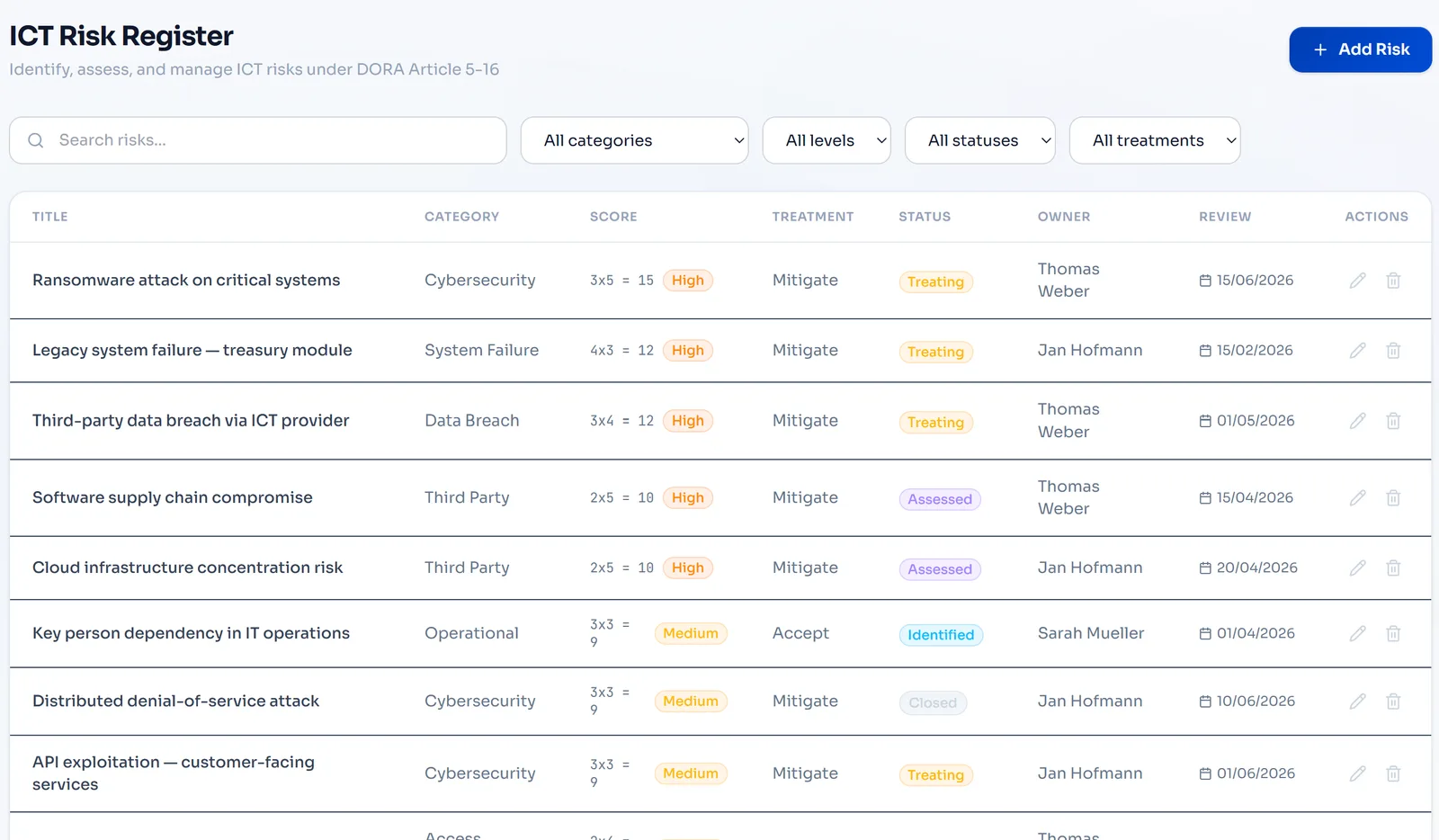
1. Right to left as a layout, not a translation. Arabic is written right to left, and that changes the direction of the entire interface: navigation moves to the right, tables read from the right, progress bars fill from the right, icons that imply direction have to flip. A product that translates its strings but keeps a left to right layout produces an interface that reads backwards. The test takes ten seconds: open a table view in Arabic and see which side the first column sits on.
2. Bilingual content, not a single language choice. A Gulf entity typically writes policies in Arabic for its own people and holds evidence in whatever language the underlying system produced, which is usually English. Choosing one language for the whole platform forces you to translate things that never needed translating. What works is per-document language, so an Arabic policy and an English configuration export can sit against the same control.
3. Arabic in the output, not only the interface. The point of the platform is what comes out of it. Ask to see an exported report and a generated policy in Arabic. Rendering Arabic correctly in a browser and rendering it correctly in a generated document are different problems, and the second is where products usually fail: letters that do not join, numerals in the wrong direction, or a PDF that silently falls back to a font with no Arabic glyphs.
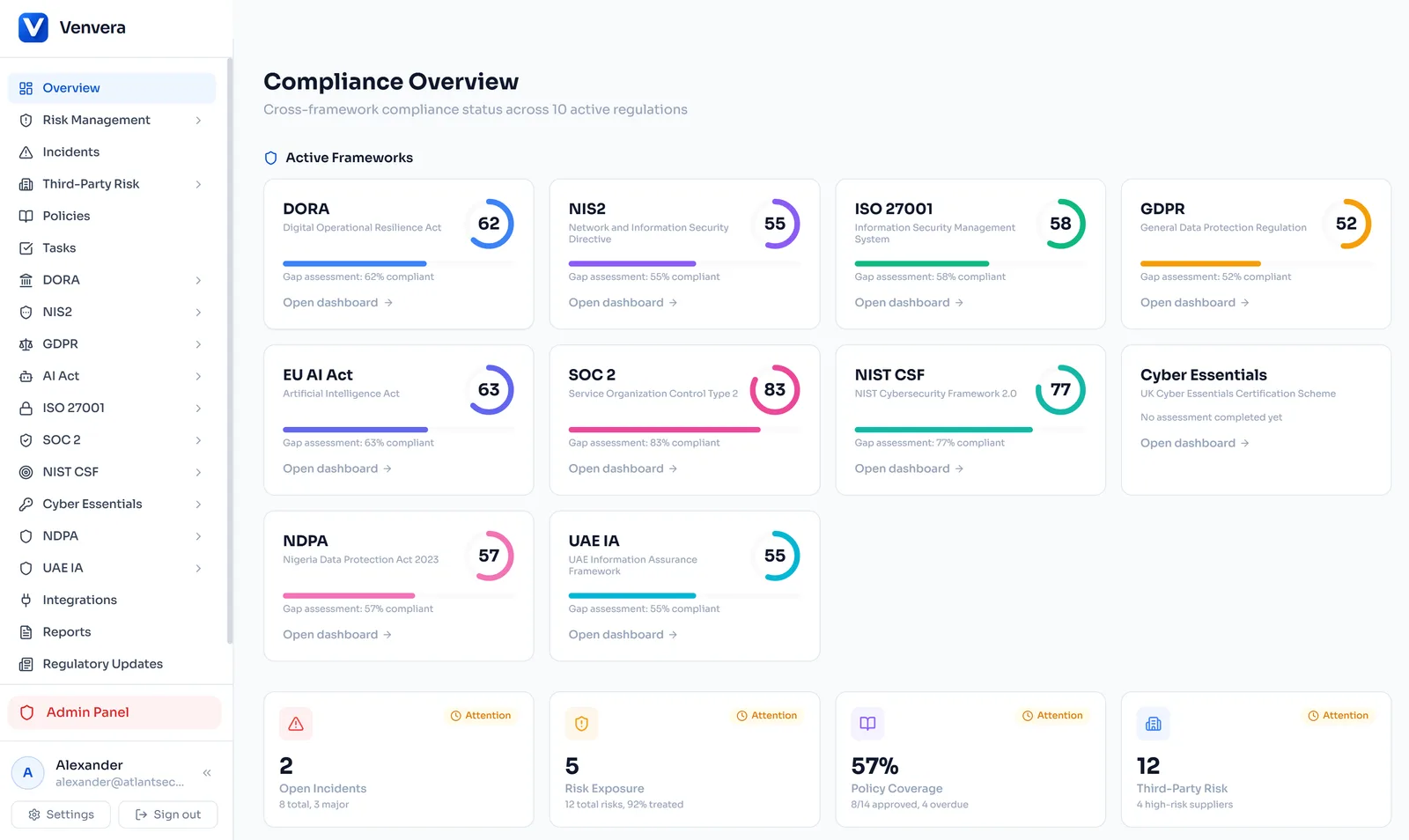
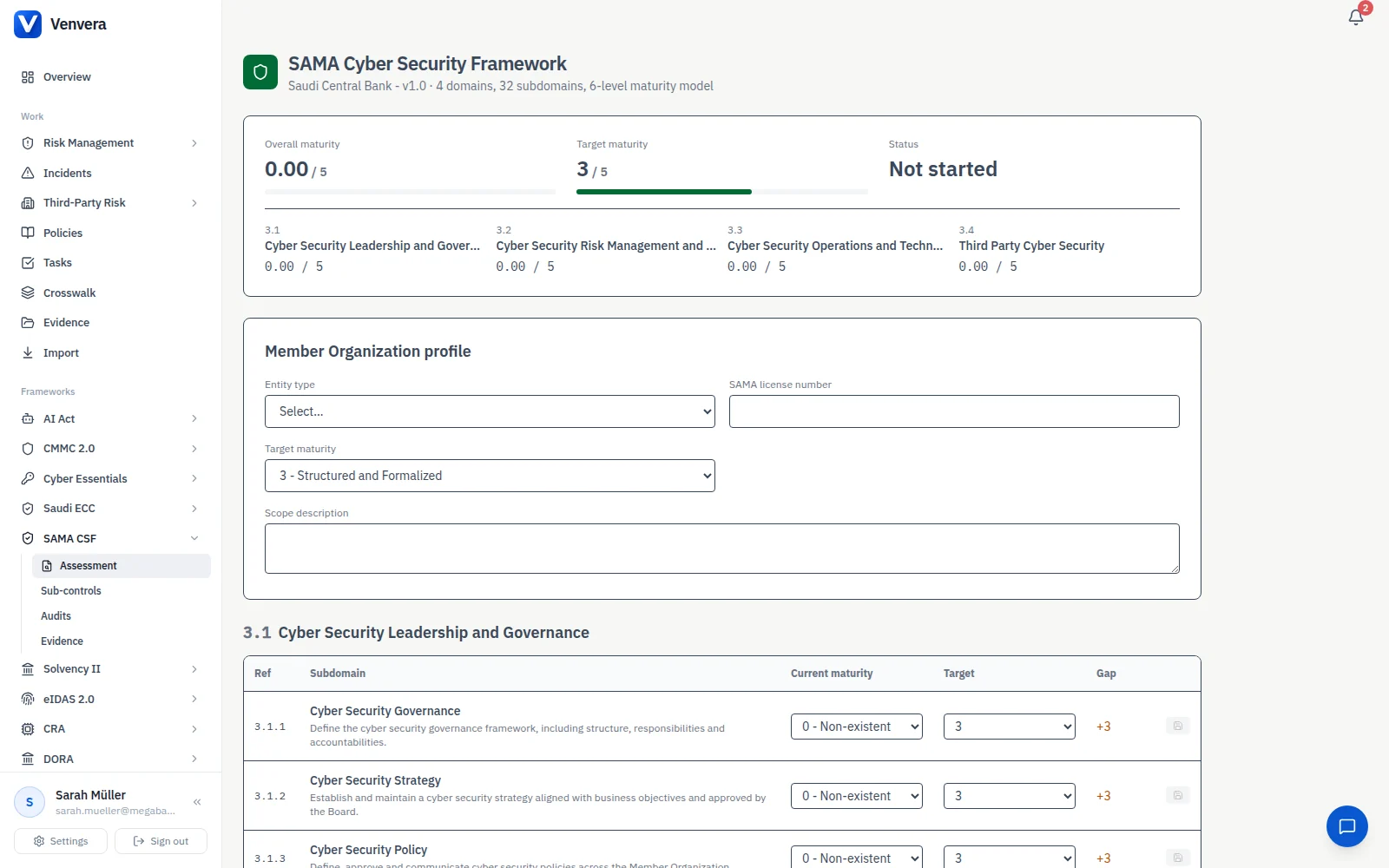
4. The frameworks the region is actually assessed against. Arabic support is of limited use if the platform has no control set for SAMA CSF, the Saudi NCA Essential Cybersecurity Controls, or the UAE Information Assurance Standard. Building those as a custom framework means you maintain the control set yourself, which is the work you were buying software to avoid.
How to test Arabic compliance software in a demo
Five checks, each of which takes a couple of minutes and each of which has caught a real gap:
Switch the interface to Arabic and open the busiest screen you have, usually a control list. Look at column order, at where the scroll bar sits, and at whether truncated text truncates on the correct side.
Create a policy in Arabic and export it. Open the export on a machine that is not the demo machine. Check that the letters join and that the document is searchable rather than an image.
Attach an English evidence file to a control whose policy is in Arabic. If the platform forces both into one language, you have found a real constraint on how your team can work.
Ask for a report intended for a regulator in Arabic, and read the headings. Automated translation tends to be fine on prose and wrong on domain terms: the Arabic for "control" in a cybersecurity standard is not the Arabic a general translation engine reaches for.
Ask which regional frameworks ship as a maintained control set, and who updates them when the regulator publishes a new version.
Where Venvera stands
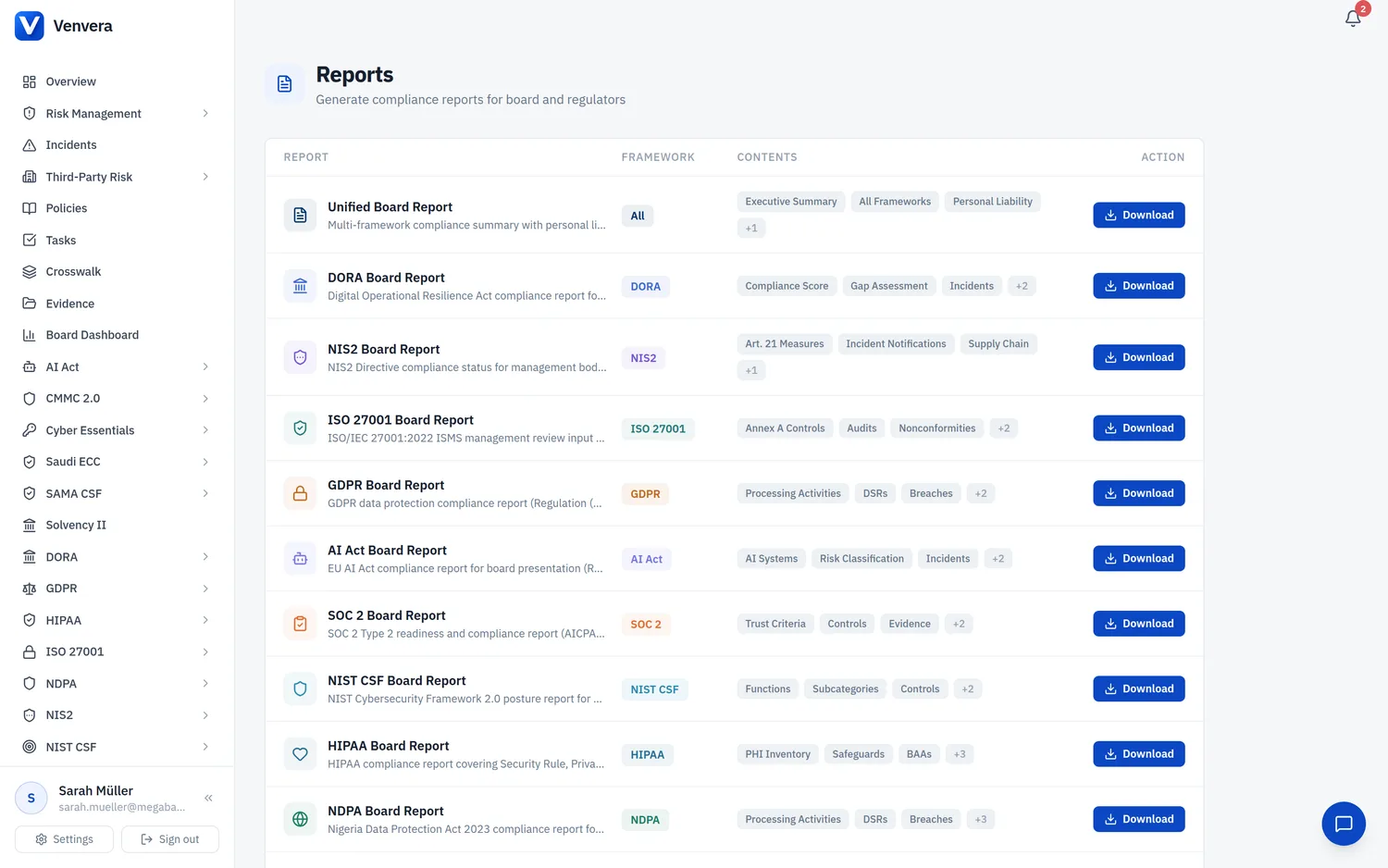
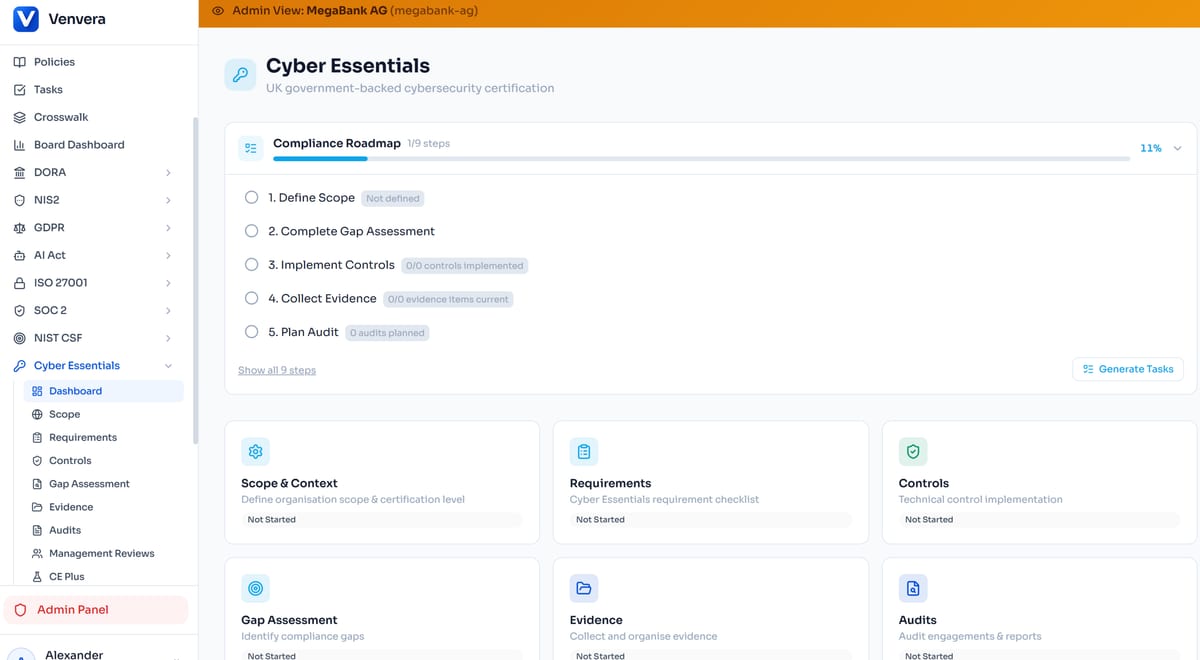
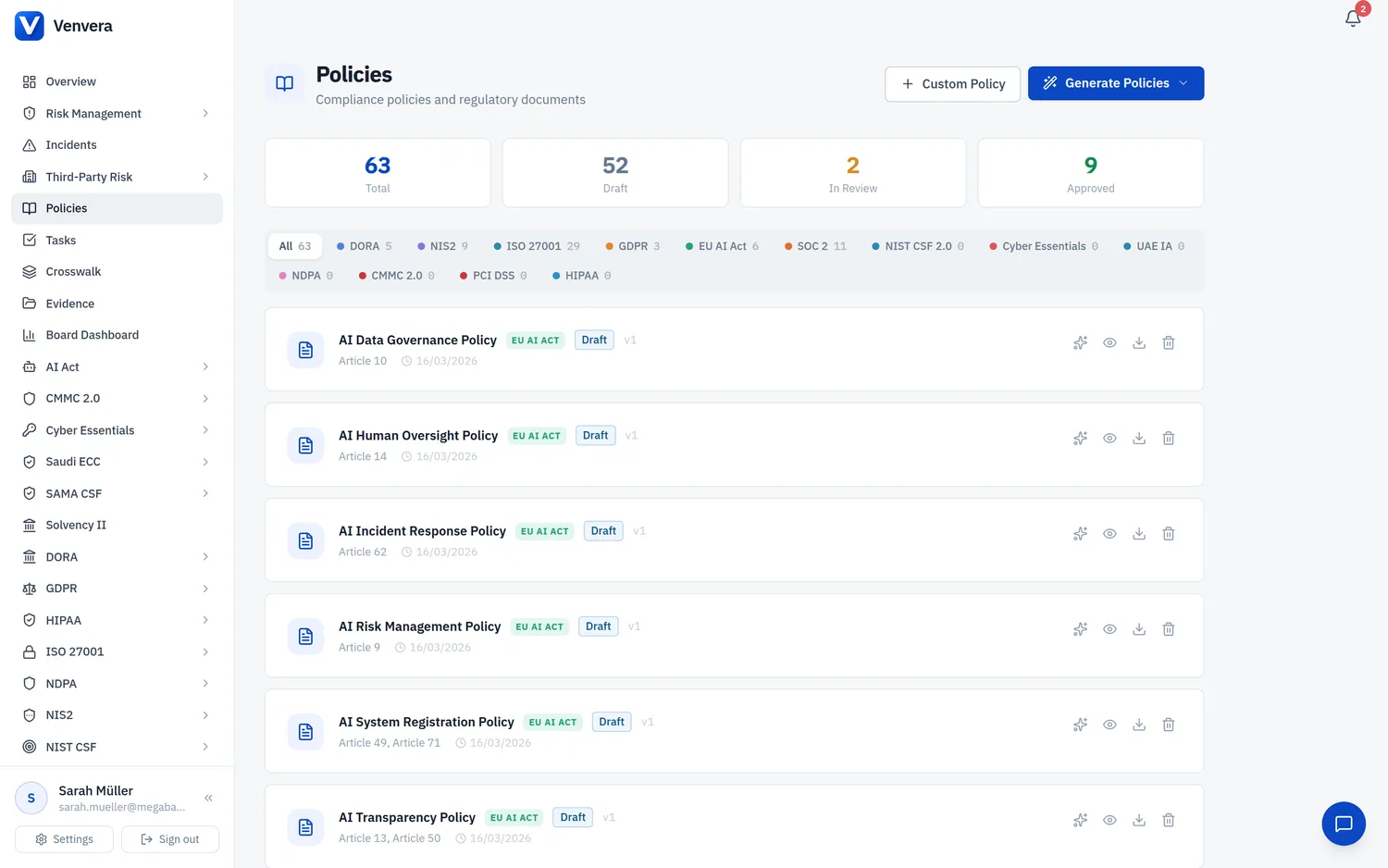
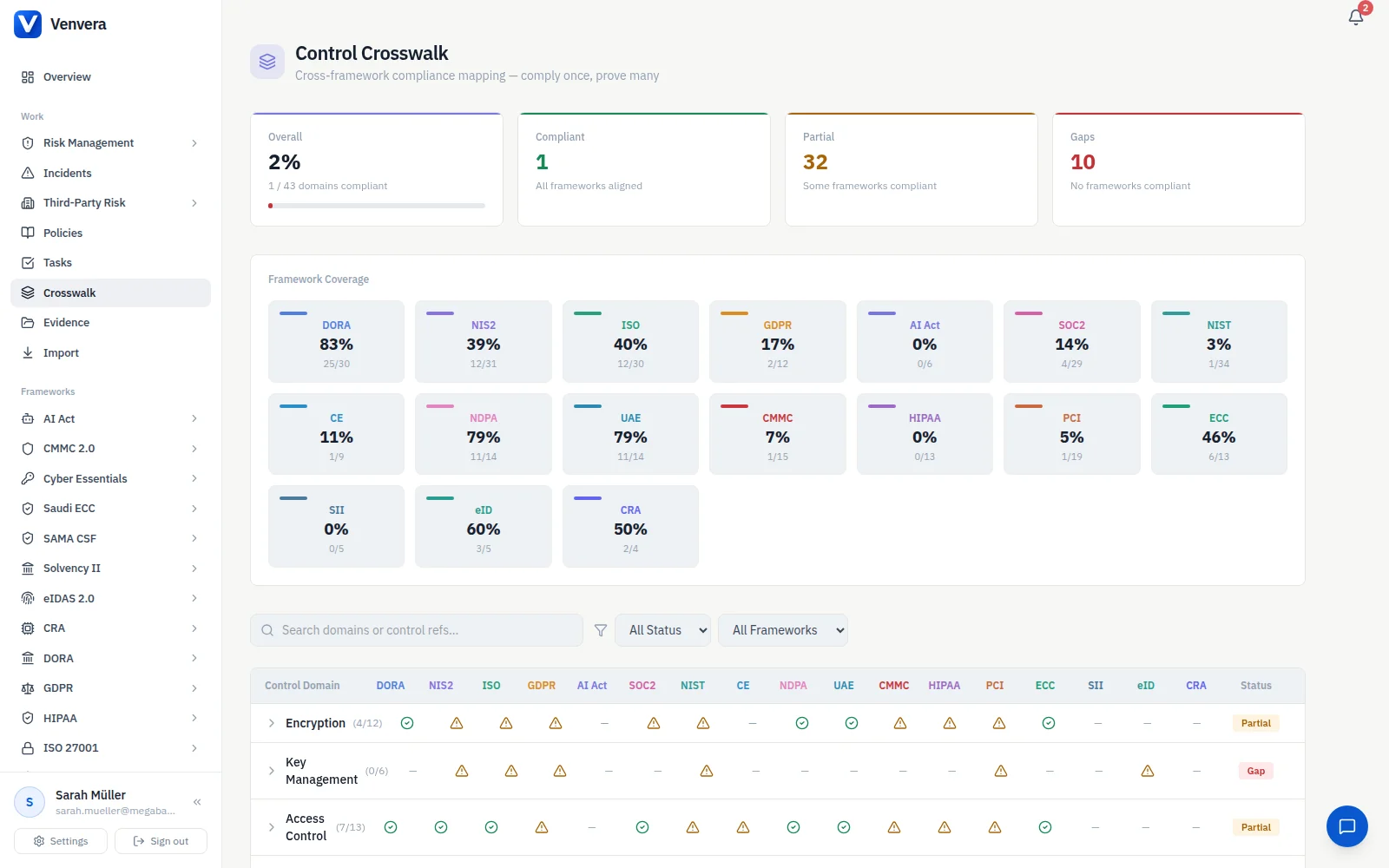
Venvera runs its interface in Arabic with a right to left layout, alongside English, German, Spanish and Bulgarian. Policies and evidence carry their own language, so a bilingual programme does not have to pick one. SAMA CSF, the Saudi NCA Essential Cybersecurity Controls and the UAE Information Assurance Standard ship as maintained control sets with their real control references, next to the international frameworks a Gulf entity is usually also asked about, such as ISO 27001, SOC 2, PCI DSS and NIST CSF.
Two limits worth stating plainly, because you will find them in a demo anyway. Arabic covers the product interface and the documents you author in it; some help content is English first. And the depth of guidance behind each control varies by framework, with the frameworks that have been in the product longest carrying more detail than the newest additions.
The question that settles it
Two related pieces go deeper on parts of this. Risk management software in Arabic covers bilingual risk registers specifically, and bilingual policies and evidence for Gulf regulators covers which documents have to be in which language.
Ask the vendor to show you one control, in Arabic, with a policy attached in Arabic and an evidence file attached in English, and then export the assessment report. Everything that matters about Arabic support is visible in that single flow, and no amount of interface translation hides a failure in it.