


Compare
The short answer
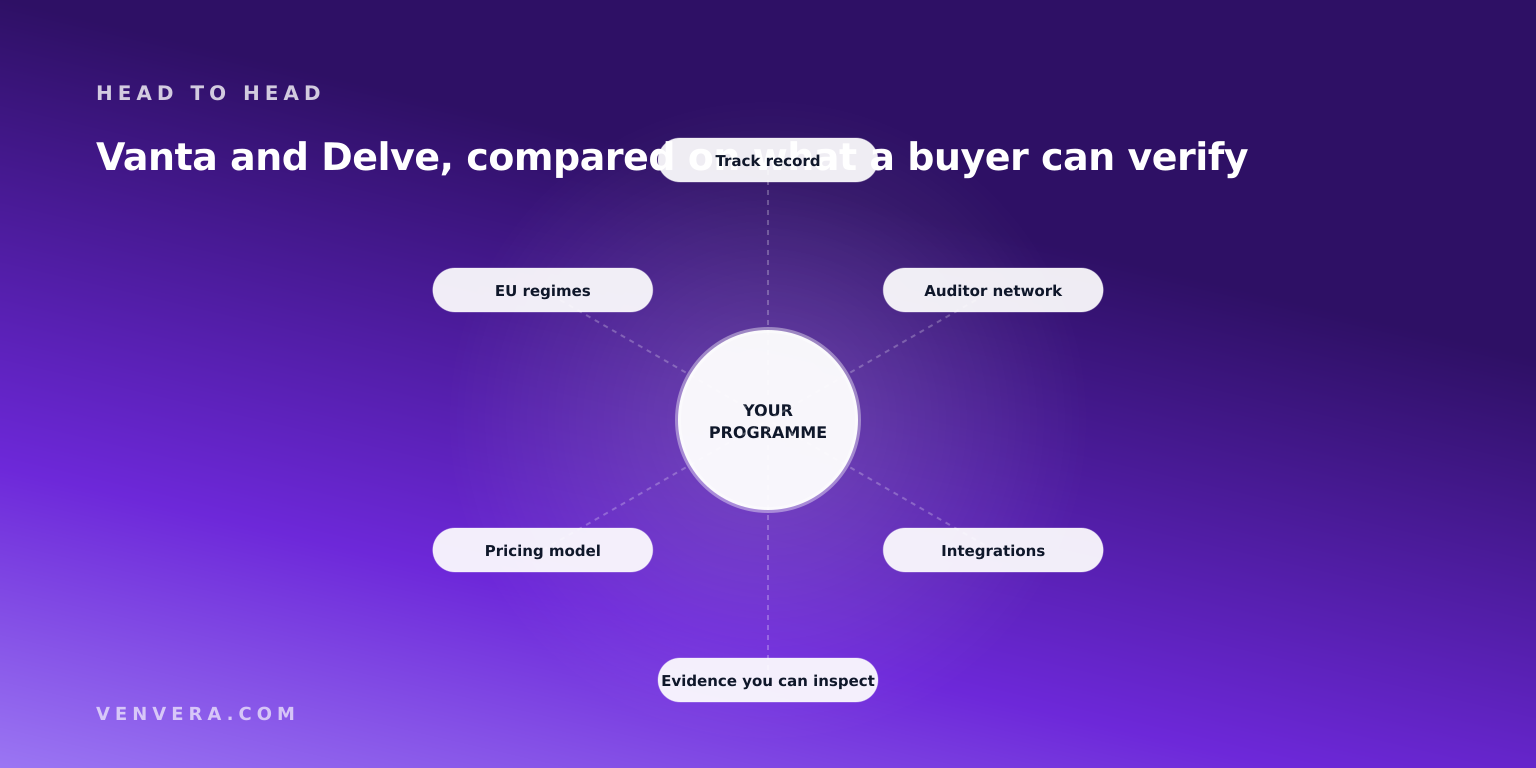
Vanta is the established platform: the largest integration library in the category, the most mature trust center, and the widest familiarity among audit firms. Delve positions on speed, with an AI-first approach and a "compliance in days" message. Following reporting in April 2026 about incidents at Delve customers and Y Combinator severing ties, the comparison most buyers now want is not feature by feature. It is which vendor's claims you can verify for yourself.
How this page handles the allegations. Venvera competes with the products named here, so the standard we hold ourselves to is higher rather than lower. Everything below separates three things: what has been reported as fact, what has been alleged, and what Delve has said in response. The reporting relied on is TechCrunch, 23 April 2026. The allegations are unproven and Delve denies them. Situations like this move quickly, so check the current position before you act on anything here.
On this page
How the two position themselves
Vanta is one of the two market leaders. It publishes close to 500 integration pages, its trust center and questionnaire automation are the most established in the category, and its framework catalogue is broad. It does not publish pricing.
Delve positions on speed and AI-driven automation. Its own headline is "Compliance in days, Security that lasts", and its site lists SOC 2, ISO 27001, ISO 42001, HIPAA, GDPR, PCI DSS, HITRUST, FedRAMP, the EU AI Act, NIST AI RMF, CCPA and CMMC. It does not publish pricing either.
What has been reported, and what is alleged
Reported as fact by TechCrunch in April 2026: Y Combinator severed ties with Delve in early April 2026; Delve customer LiteLLM was hacked in March 2026 with malware planted in its open source code; and Delve customer Context AI had a security incident that led to a data breach at Vercel. Context AI has moved to Vanta for compliance and Insight Assurance for audits.
Separately alleged by an anonymous whistleblower, and denied by Delve: fabricated customer evidence and auditors who rubber-stamped reports. Delve's position is that customers "fully build and manage their own codebases, infrastructure, and day to day security operations".
The reported incidents occurred at Delve's customers. Nothing in the reporting describes a breach of Delve itself.
Feature comparison
| Vanta | Delve | Venvera | |
|---|---|---|---|
| Positioning | Breadth and maturity | Speed, AI-first automation | EU and Gulf regimes, filing |
| Integration library | Largest in the category | Smaller | Focused on posture and evidence |
| Trust center | Most established | Available | Included |
| Auditor familiarity | Very wide | Narrower | Narrower |
| Published pricing | No | No | Yes, from EUR 399 per month |
| Data residency | US-headquartered | US-headquartered | EU, Amsterdam |
| EU and Gulf regimes | DORA and NIS2 listed | EU AI Act listed | Native, including DORA filing |
| Track record | Extensive | Recent, and under scrutiny in 2026 | New, no customer references yet |

What to verify, whichever you choose
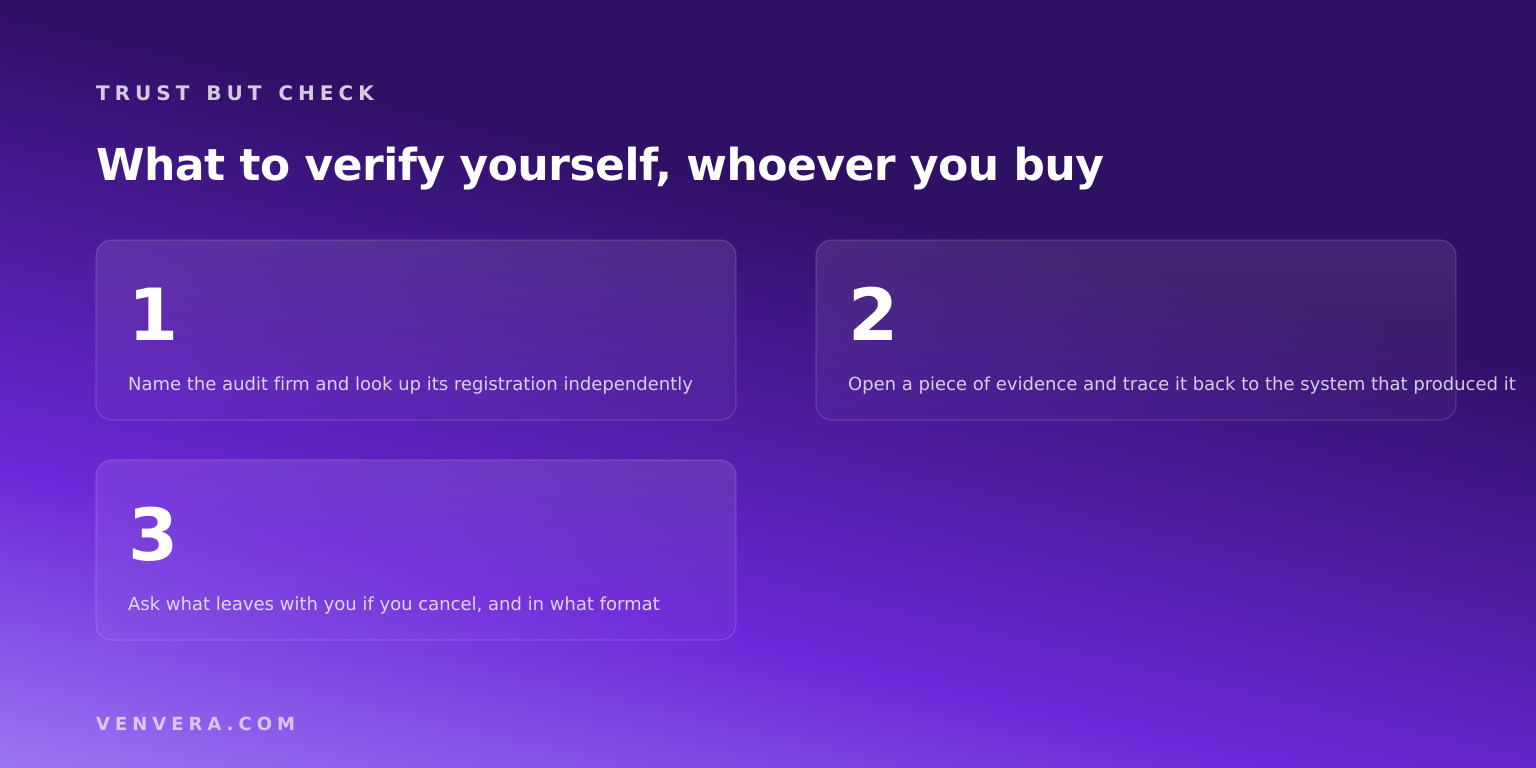
Speed is a real benefit and it is also the easiest thing to fake. The way to keep the benefit without taking the risk is to check three things in the demo.
- Name the audit firm and verify its registration independently. Do not accept a logo on a slide.
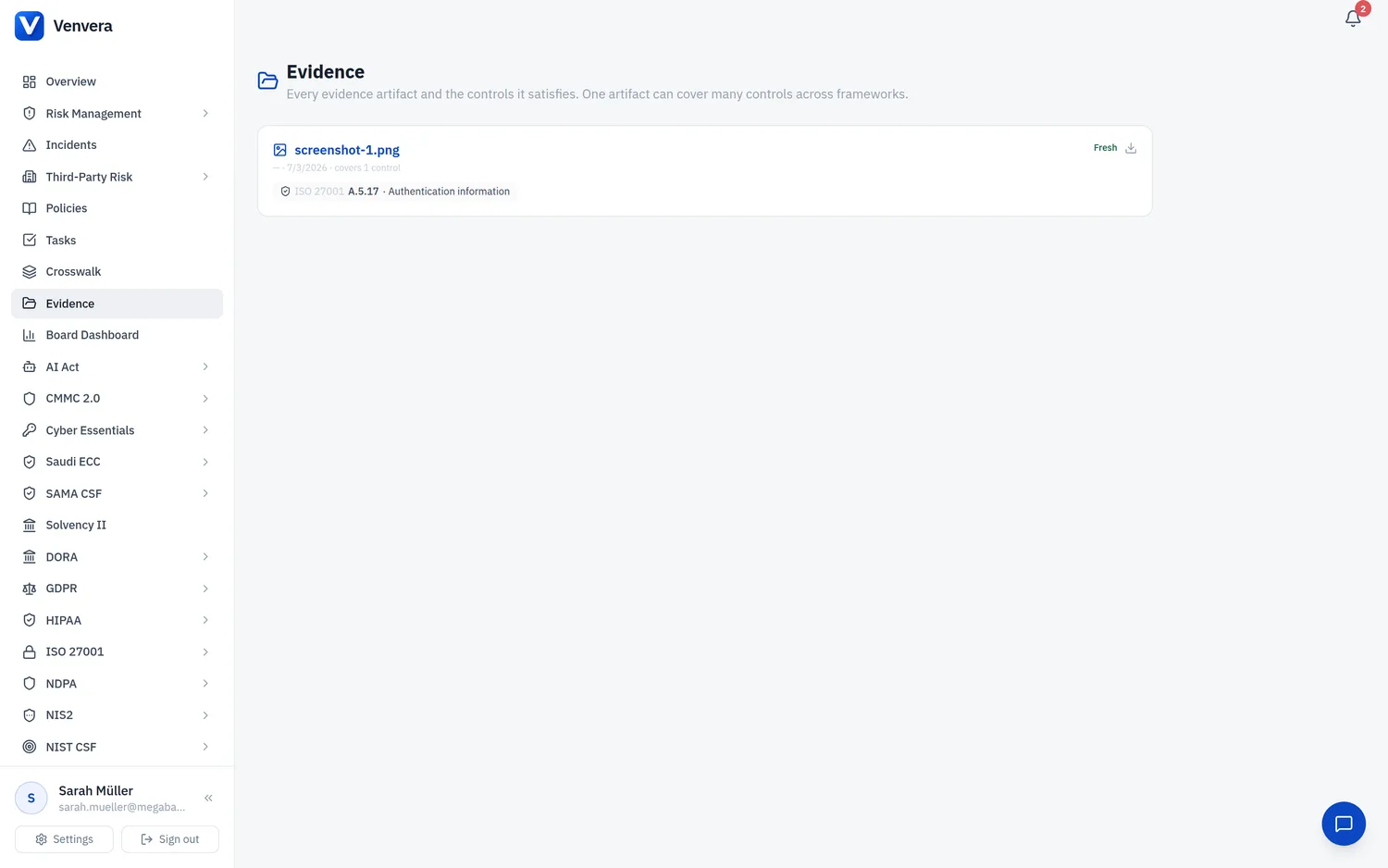
- Open one piece of evidence and trace it to its source system. Evidence pulled from your cloud is a different object from a document generated on your behalf.
- Ask to see a control that is failing. A platform that only ever shows green is not describing an operating business.
When neither fits
Both are built around the US audit set. If your compliance year ends in a DORA Register of Information filed as xBRL-CSV, or NIS2 obligations arriving through national transposition and differing per Member State, that is a different deliverable. See the EU comparison, and Delve alternatives for the full replacement shortlist.
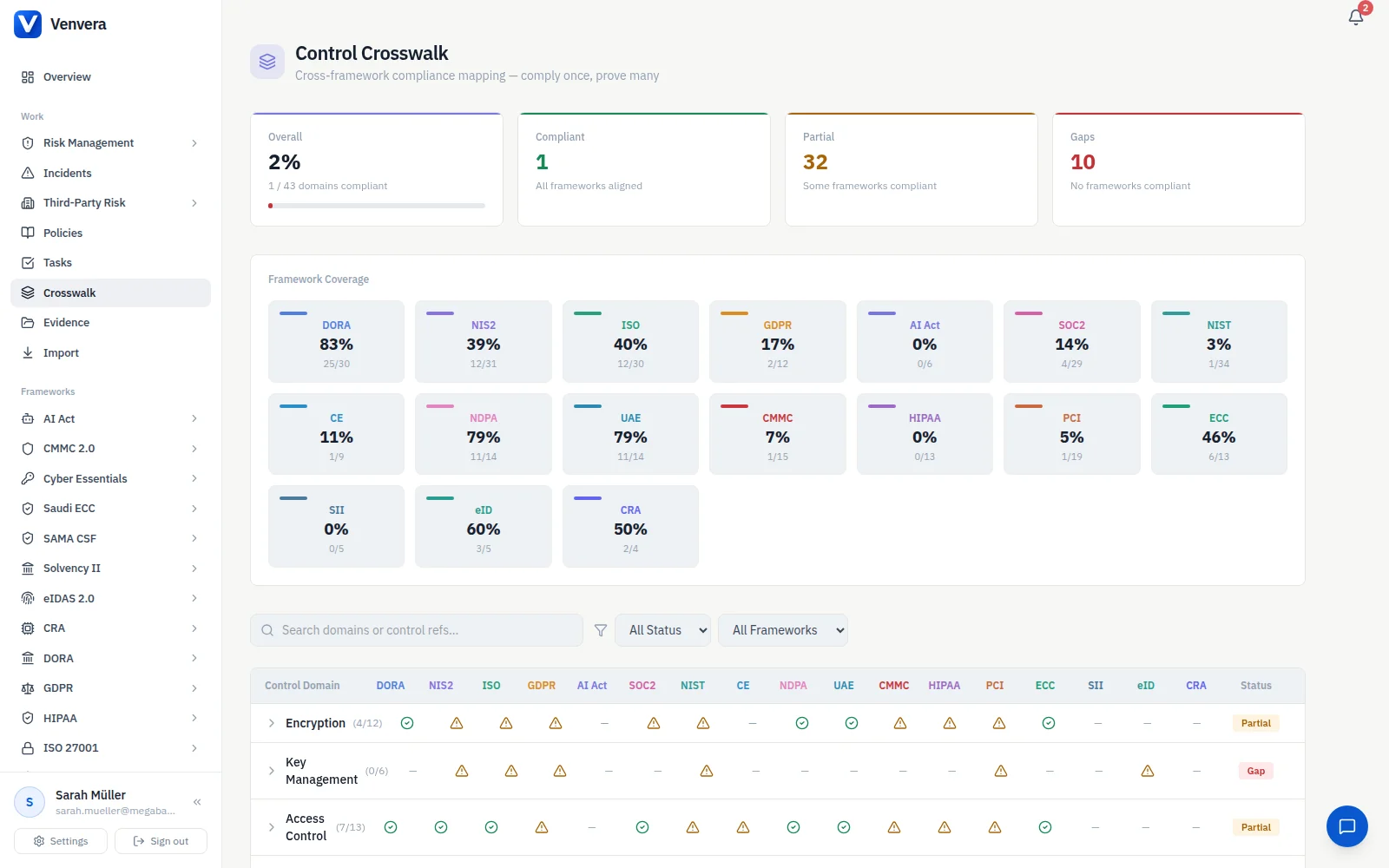
Venvera's own gaps, stated plainly: no customer references yet, a smaller integration library than the incumbents, and no FedRAMP, HITRUST or TISAX.
See it against your own obligations
The free readiness check scores your position with no email gate, and pricing is published from EUR 399 per month. Ask us the same three verification questions above.
Frequently asked questions
Is Vanta or Delve better?
Vanta has the longer track record, the larger integration library and wider auditor familiarity. Delve positions on speed and AI-driven automation. Given the April 2026 reporting about incidents at Delve customers and Y Combinator severing ties, buyers are weighting verifiability more heavily than they did.
Did Delve fake compliance reports?
That was alleged by an anonymous whistleblower. The allegations are unproven and Delve denies them. What has been reported as fact is separate: Y Combinator cut ties, and two Delve customers suffered security incidents.
Do Vanta or Delve publish pricing?
Neither publishes a price figure. Both route you to a sales conversation.
What should I ask a compliance vendor to prove?
That the audit firm is real and independently verifiable, that a piece of evidence traces back to the system that produced it, and that controls can show failure. All three are checkable in a demo.