


Compare
The short answer
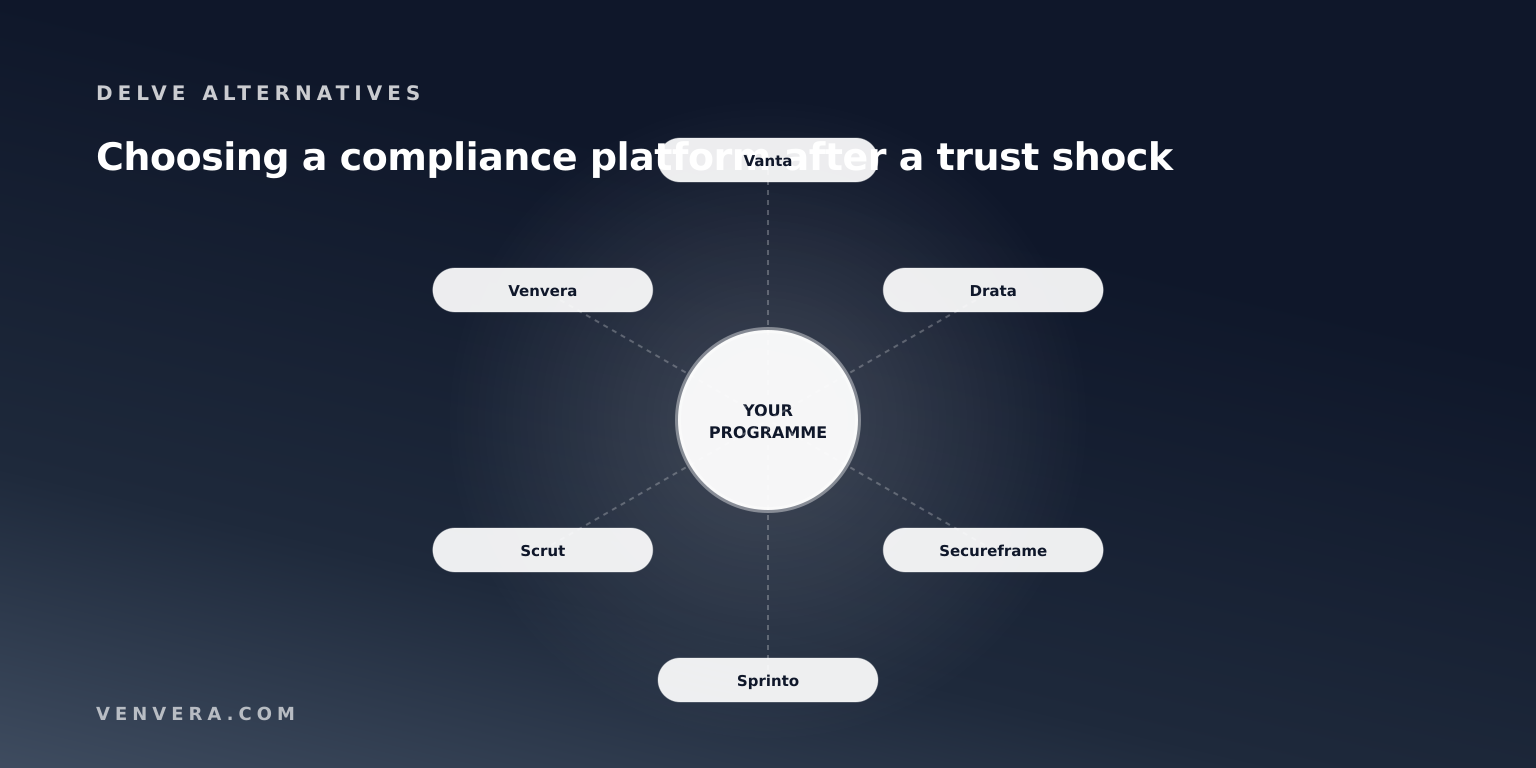
Vanta and Drata are the safest like-for-like replacements: long track records, wide auditor familiarity and large integration libraries. Sprinto suits a small team wanting less product. Venvera fits if your obligations are European or Gulf and end in a filing to a regulator. Whichever you pick, the lesson from this episode is procedural rather than brand-based: buy a platform whose evidence you can open, trace and take with you.
How this page handles the allegations. Venvera competes with the products named here, so the standard we hold ourselves to is higher rather than lower. Everything below separates three things: what has been reported as fact, what has been alleged, and what Delve has said in response. The reporting relied on is TechCrunch, 23 April 2026. The allegations are unproven and Delve denies them. Situations like this move quickly, so check the current position before you act on anything here.
On this page
What has actually been reported
Keeping this precise matters, because the accurate version is serious enough without embellishment. The head-to-head against the market leader is in Vanta vs Delve.
- Y Combinator severed ties with Delve in early April 2026.
- LiteLLM, a Delve customer, was hacked in March 2026, with malware planted in its open source code. It has since ended its relationship with Delve and sought re-certification.
- Context AI, a Delve customer, had a security incident that led to a data breach at Vercel. Context AI has since moved to Vanta for compliance and Insight Assurance for audits.
One clarification worth making, because it is widely garbled in secondhand accounts: the reported incidents happened at Delve's customers. The reporting does not describe a breach of Delve itself. That distinction matters if you are writing a risk memo about this.
What is alleged, and what Delve says
Separately, an anonymous whistleblower using the name DeepDelver alleged that Delve was fabricating customer evidence, routing customers to auditors who rubber-stamped reports, and passing off an open source tool as its own work without proper licence attribution.
These allegations are unproven and Delve denies them. Delve's stated position is that it helps customers prepare for audits such as SOC 2, and that customers "fully build and manage their own codebases, infrastructure, and day to day security operations".
We are a competitor. It would be easy and cheap to write this section differently, and we are not going to. If the allegations are not established, saying so is part of being the kind of vendor this page argues you should buy from.
Why customers are re-evaluating
The practical driver is not the allegation itself. It is that a compliance platform's entire product is trust, and a customer facing a security review now has to answer questions about its tooling as well as its controls.
Three concrete pressures come up:
- Enterprise customers ask. A procurement team that reads industry press will ask how your certification was produced and by whom.
- Auditor continuity. If your audit firm relationship came through the platform, a change of platform can mean a change of auditor mid-cycle.
- Evidence portability. The question nobody asks at purchase becomes urgent at exit: what leaves with you, and in what format.
The replacement shortlist
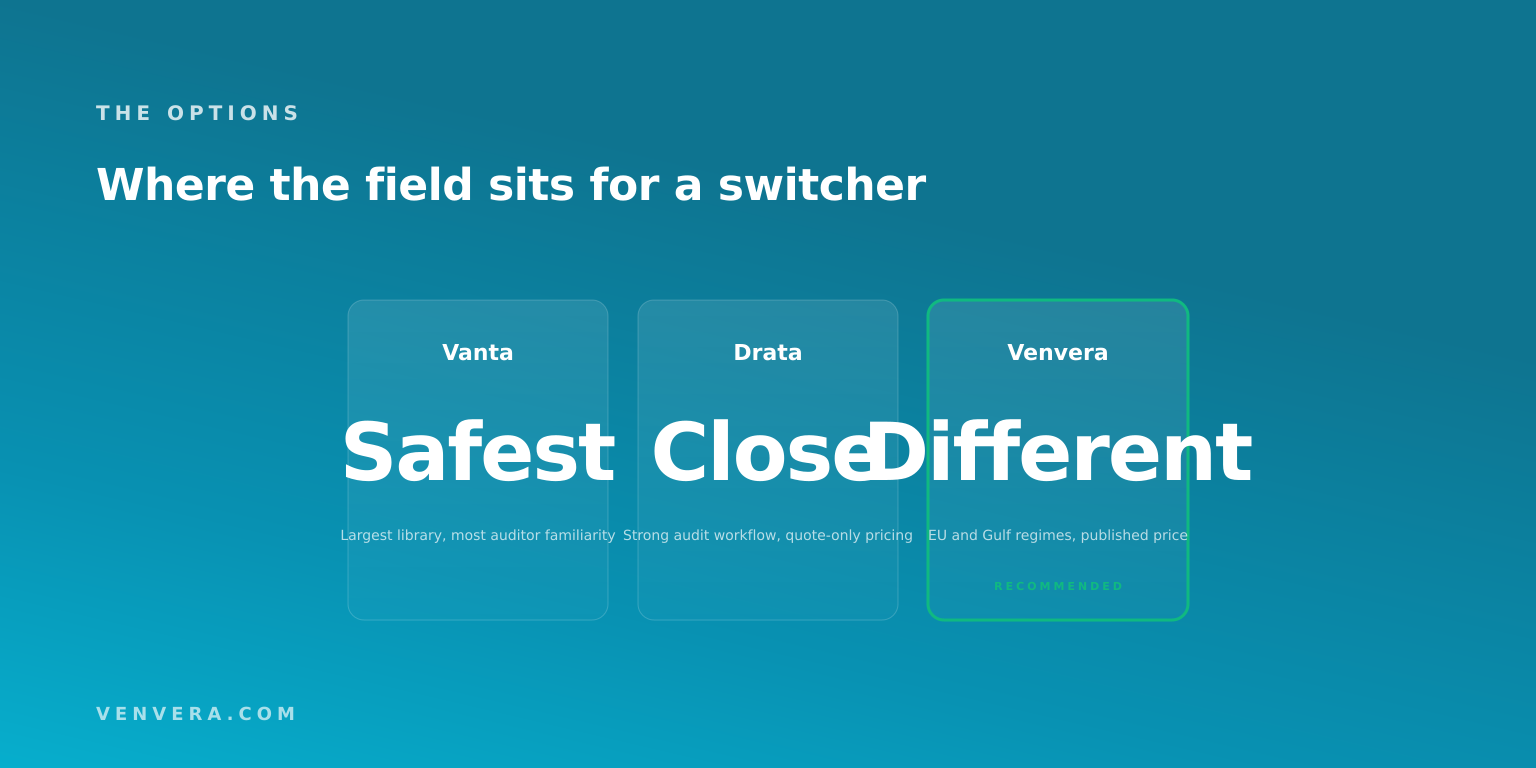
| Option | Best for | The honest catch |
|---|---|---|
| Vanta | The safest like-for-like move: largest integration library, most established trust center, widest auditor familiarity | Quote-only pricing, so expect a negotiation |
| Drata | Close equivalent with a strong audit workflow | Also quote-only pricing |
| Secureframe | Similar capability with a defense and CMMC angle | Also quote-only pricing |
| Sprinto | Small teams wanting less product for less money | Narrower integrations and less to grow into |
| Venvera | EU and Gulf regimes alongside the audit standards, published flat pricing, EU data residency | New product with no customer references yet |
If your requirement is a US SOC 2 and nothing else, Vanta or Drata is the straightforward answer and this page is not trying to talk you out of it. We covered the head-to-head in Drata vs Vanta and the wider field in Vanta alternatives.
Five questions to ask any vendor now
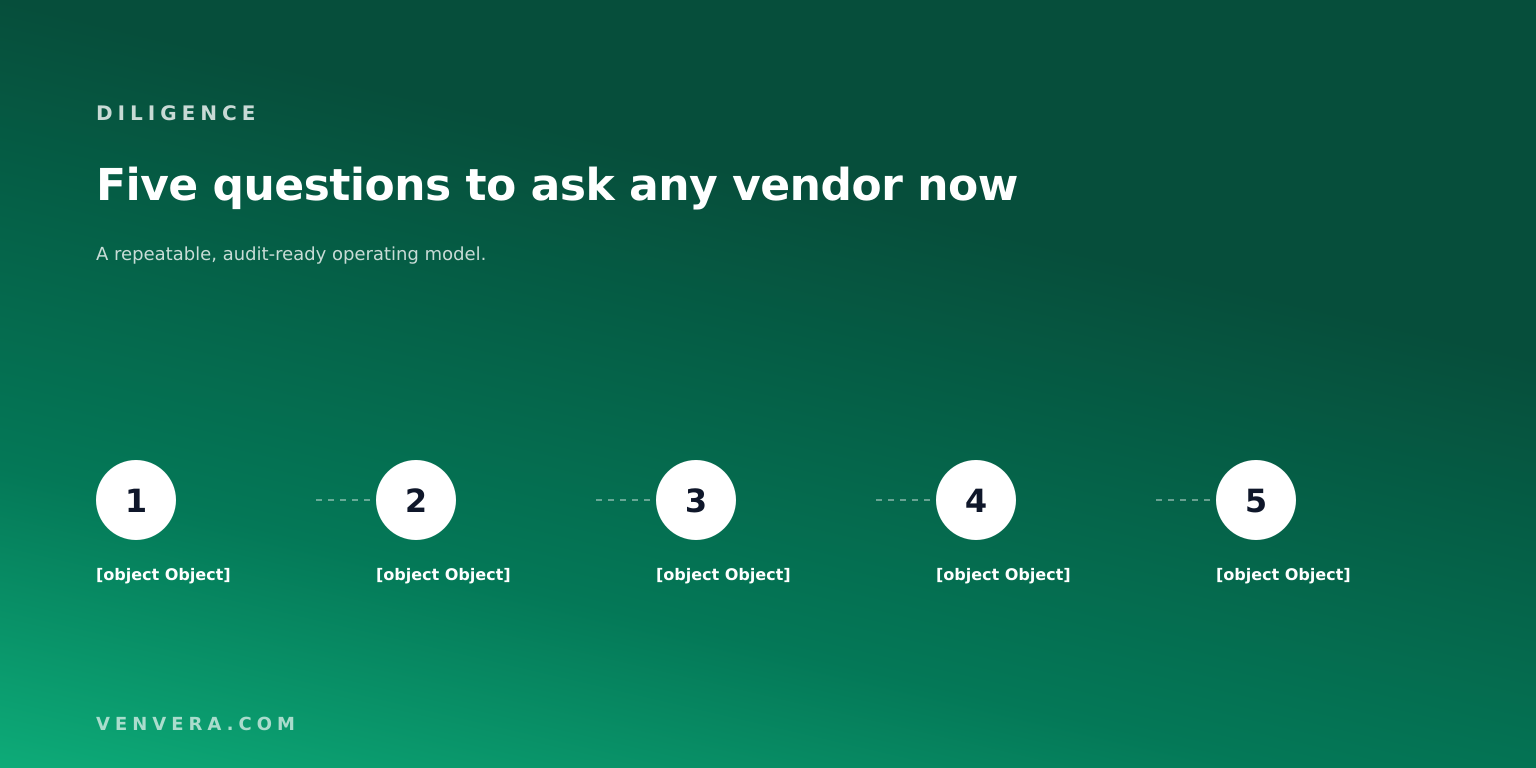
- Name the audit firm, and let me verify its registration myself. A CPA firm's registration is publicly checkable. Do the check rather than accepting a logo.
- Show me a piece of evidence and trace it to the system that produced it. The distinction that matters is between evidence collected from your systems and a document generated for you.
- What does a control look like when it fails? A platform that never shows red is not describing your reality. Ask to see a failing control and the remediation trail.
- What leaves with me if I cancel, and in what format? Get the answer before you sign, in writing.
- What is the price at renewal? The second-year number is the one that produces switching decisions.

What to do if you are on Delve today
Panic-switching mid-audit creates its own risk. A measured sequence:
- Establish what you actually hold. Export your evidence and your report now, whatever you decide next.
- Contact your audit firm directly, rather than through the platform, and confirm the status of your report.
- Decide whether re-certification is needed. LiteLLM sought re-certification; whether you need to is a question for your auditor and your customers.
- Prepare a customer-facing answer before a customer asks. A short, factual note about what you use and what you have verified is worth more than silence.
- Then choose a replacement on fit, and move in a window that does not cut across an active audit.
The wider lesson for compliance buyers
The uncomfortable part of this episode is that it is a category problem rather than one company's problem. Compliance automation sells a green dashboard, and a green dashboard is exactly what a buyer wants to see. That creates a commercial incentive to make things go green, and the buyer usually cannot tell the difference between a control that passes and a control that was made to look like it passes.
The defence is architectural. Evidence should be traceable to a system that produced it, controls should be capable of showing red, the auditor should be independently verifiable, and everything should be exportable. Those four properties are checkable in a demo, and they are worth more than any vendor's assurances, ours included.
If Venvera fits
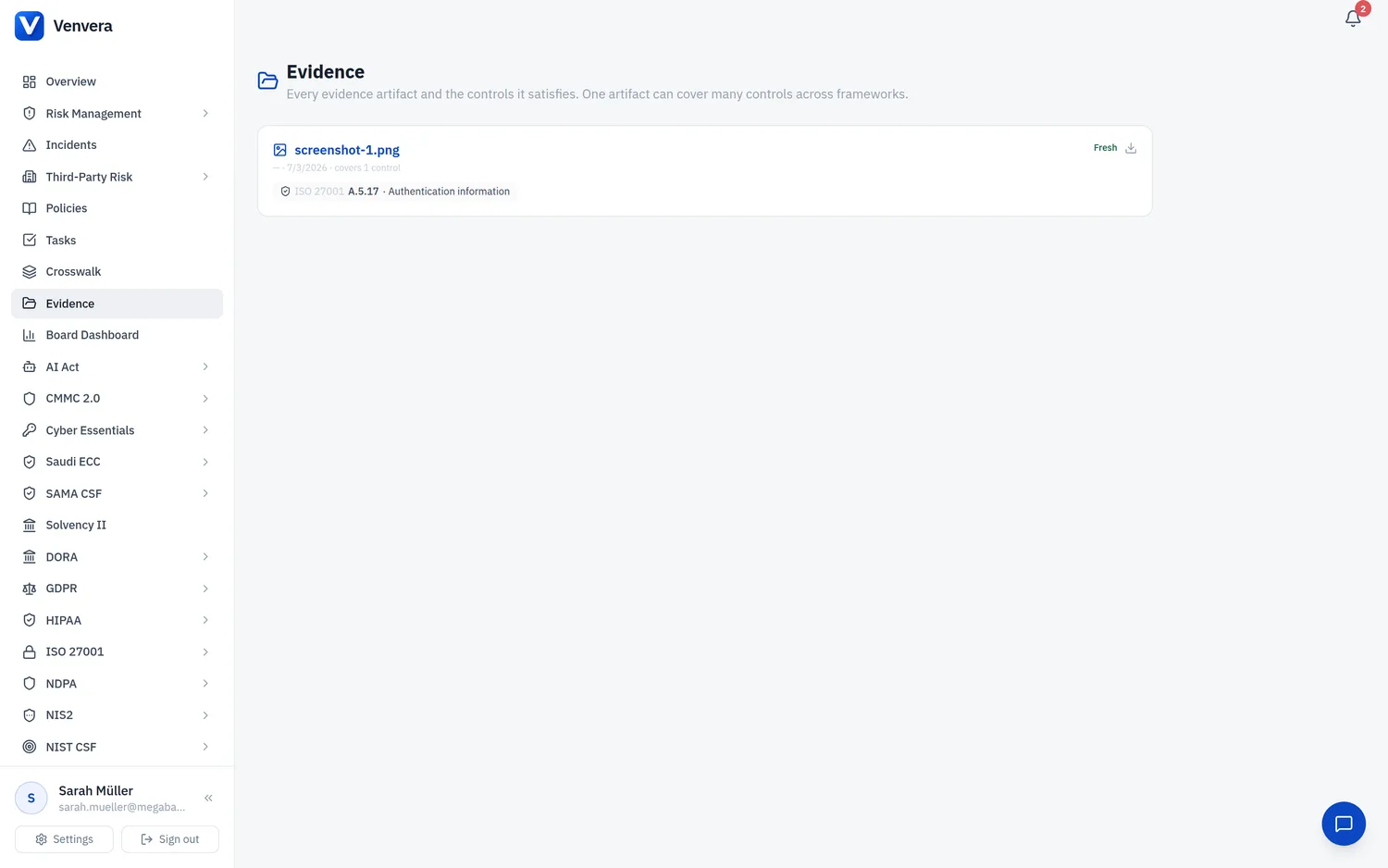
Venvera holds each framework as a maintained control set, keeps evidence traceable to its source, publishes a flat price from EUR 399 per month and stores data in Amsterdam. It suits organisations with European or Gulf obligations alongside the audit standards. We have no customer references yet, which is a fair objection from anyone doing the diligence this page recommends. Start with the free readiness check, and ask us the five questions above.
Frequently asked questions
What happened with Delve?
TechCrunch reported in April 2026 that Y Combinator severed ties with Delve, that Delve customer LiteLLM was hacked in March 2026 with malware planted in its open source code, and that Delve customer Context AI had a security incident that led to a data breach at Vercel. Separately, an anonymous whistleblower alleged fabricated customer evidence and rubber-stamping auditors. Those allegations are unproven and Delve denies them.
Was Delve itself breached?
The reporting describes security incidents at Delve's customers rather than a breach of Delve. That distinction is often lost in secondhand summaries.
What is the best Delve alternative?
Vanta and Drata are the safest like-for-like replacements on track record and auditor familiarity. Sprinto suits smaller teams. Venvera suits organisations with European or Gulf regulatory obligations and publishes its pricing.
Do I need to redo my SOC 2?
That is a question for your audit firm and, ultimately, your customers. At least one affected customer sought re-certification. Contact your auditor directly rather than through any platform.
How do I avoid this with the next vendor?
Verify the audit firm's registration yourself, trace a piece of evidence back to the system that produced it, ask to see a failing control, confirm what you can export, and get the renewal price in writing.