

Learn
The EU AI Act entered into force on 1 August 2024 and applies from 2 August 2026. Almost everything else you have read about its deadlines is now wrong, because Regulation (EU) 2026/1744, the Digital Omnibus on AI, rewrote Article 113 and Article 111 on 24 July 2026. The high risk obligations that were supposed to land on 2 August 2026 now land on 2 December 2027 for standalone systems and 2 August 2028 for product embedded ones.
This page is the date list. It sets out every application date in the consolidated text, including the transitional dates in Article 111 that almost no published timeline carries, and the dates that bind the Commission and Member States rather than you. Two sibling guides cover the neighbouring questions: who is in scope and under which role, and why the August 2026 high risk deadline moved. This one just answers what applies when.
| Date | What applies | Source |
|---|---|---|
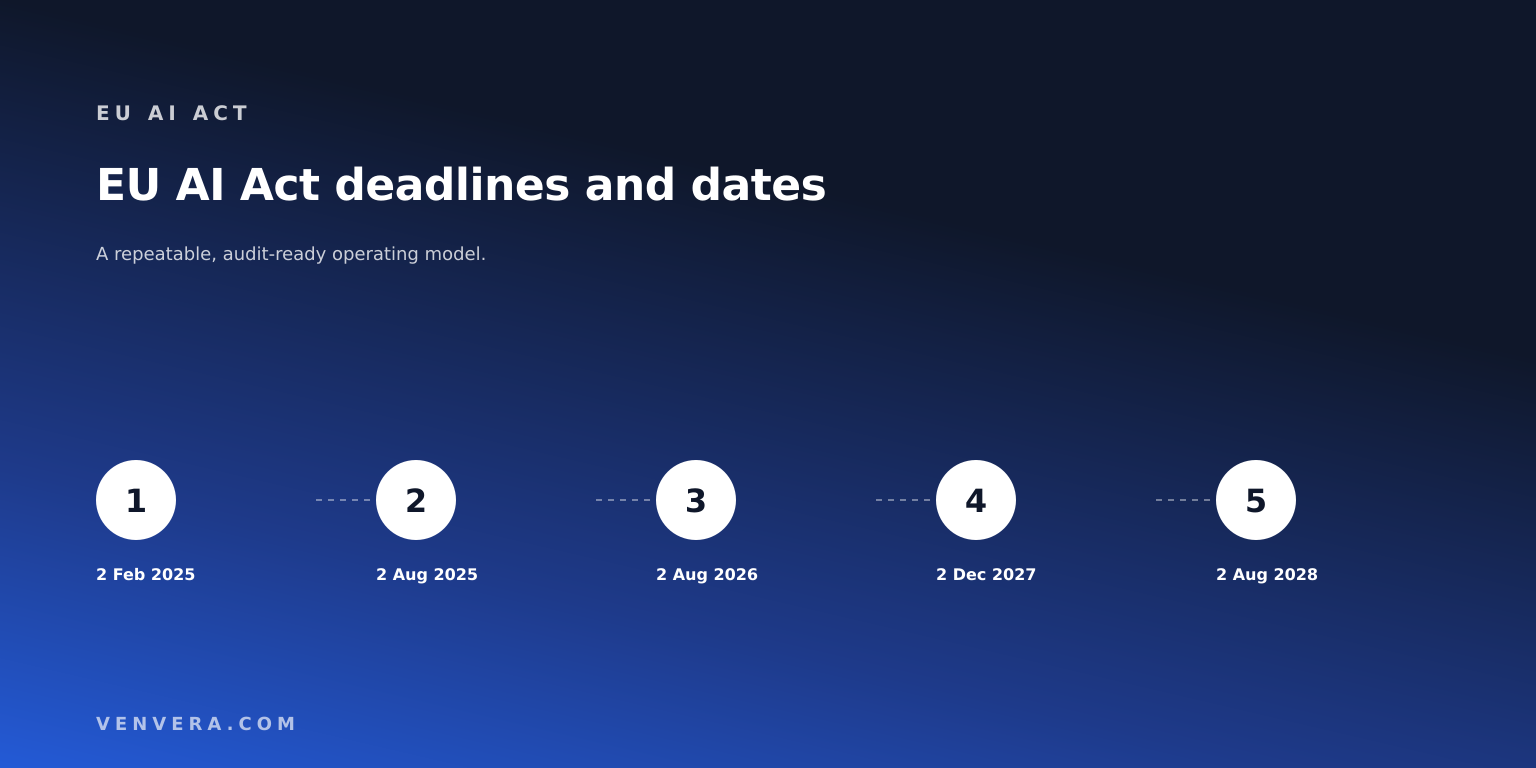
| 1 Aug 2024 | Entry into force, twenty days after publication in the Official Journal on 12 July 2024. | Art. 113, first paragraph |
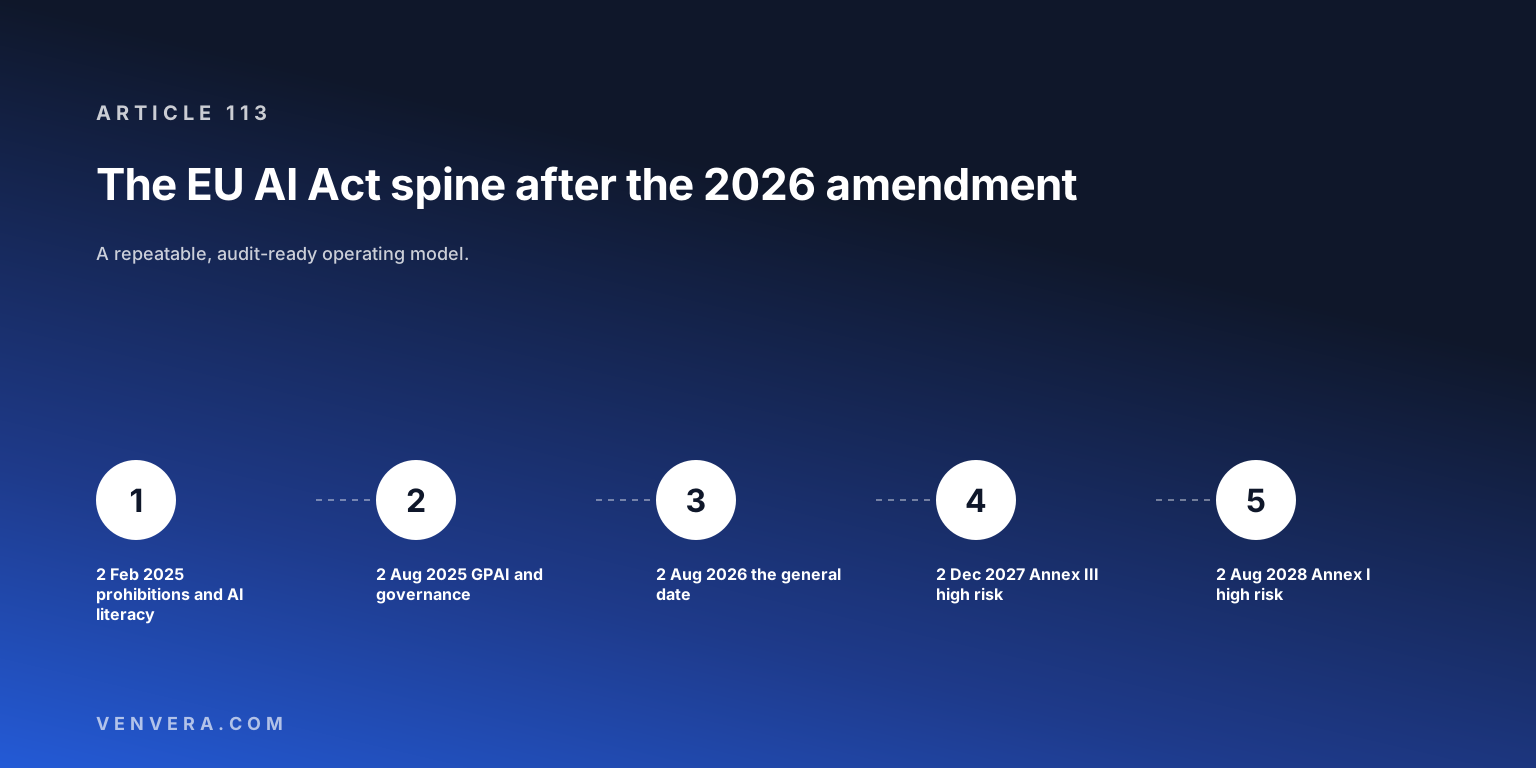
| 2 Feb 2025 | Chapters I and II: definitions, scope, AI literacy under Article 4, and the Article 5 prohibitions. | Art. 113(a) |
| 2 Aug 2025 | Chapter III Section 4 (notified bodies), Chapter V (general purpose AI models), Chapter VII (governance), Chapter XII (penalties) and Article 78, but not Article 101. | Art. 113(b) |
| 27 Jul 2026 | Articles 102 to 110, the amendments the Act makes to other Union legislation. This point was added by the 2026 amendment. | Art. 113(d) |
| 2 Aug 2026 | The general application date. Everything not carved out above or below, including Article 50 transparency and Article 101. | Art. 113, second paragraph |
| 2 Dec 2026 | Article 5(1) points (ba) and (bb) and Article 5(1a) and (1b), the two prohibitions inserted in 2026. | Art. 113(a) |
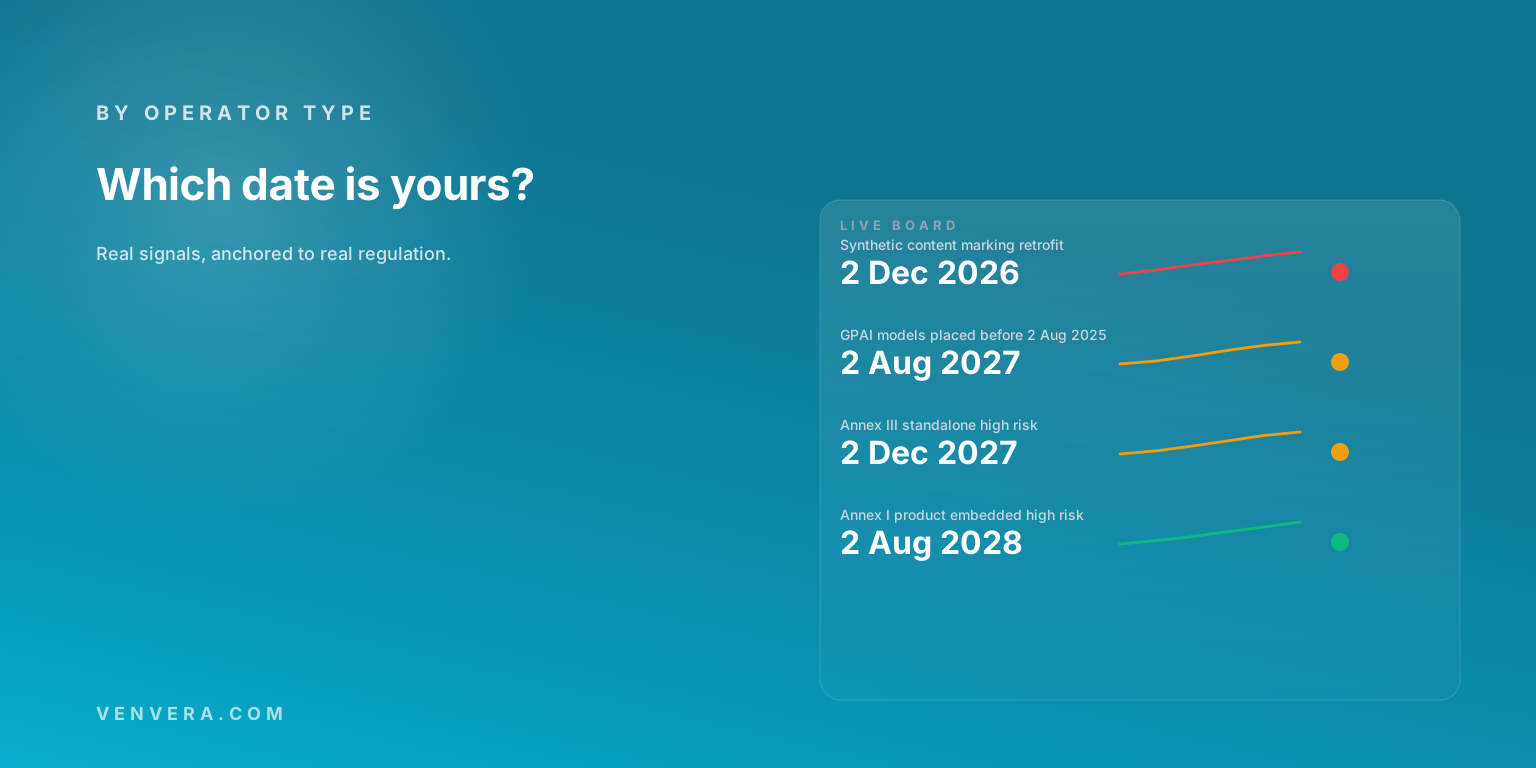
| 2 Dec 2027 | Chapter III Sections 1, 2 and 3 for AI systems classified as high risk under Article 6(2) and Annex III. | Art. 113(c)(i) |
| 2 Aug 2028 | Chapter III Sections 1, 2 and 3 for AI systems classified as high risk under Article 6(1) and Annex I. | Art. 113(c)(ii) |
What are the EU AI Act deadlines?
Article 113 works in three moves, and reading them in order is the only way the dates make sense. First it fixes entry into force, twenty days after publication. Second it fixes one general application date, 2 August 2026, which governs anything the Article does not carve out. Third it lists the carve outs, lettered (a) to (d), which pull specific chapters forward or push them back.
That structure is why so much published guidance is wrong in the same way. Writers treat the carve outs as the whole timeline and forget the general date underneath, so obligations that were never deferred get filed under a deferral that does not cover them.
The 2026 amendment changed three of the four carve outs. Point (a) gained an exception for the two new prohibitions. Point (c) was replaced entirely, swapping a single 2 August 2027 date for a two limb split. Point (d) is new. Point (b), the 2 August 2025 group, was left alone.
What actually applies on 2 August 2026?
More than most summaries suggest, because 2 August 2026 is the default and the deferrals are narrow.
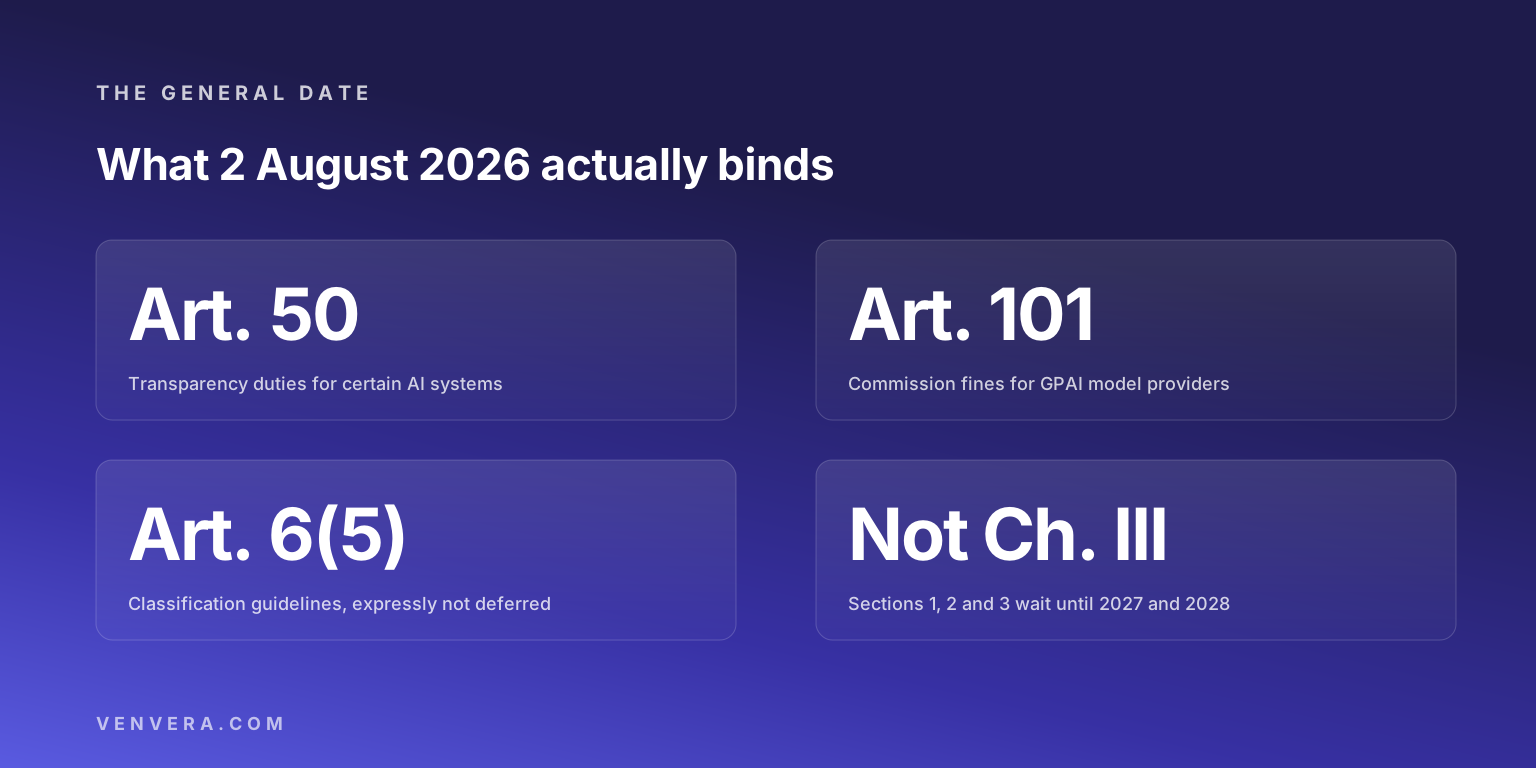
Article 50, the transparency regime in Chapter IV, applies from that date. It is the obligation to tell people they are interacting with an AI system, to mark synthetic audio, image, video and text output in a machine readable format, to disclose emotion recognition and biometric categorisation to the people exposed to them, and to label deep fakes. None of that was touched by the amendment.
Article 101 also applies from that date. It is expressly excepted from the 2 August 2025 group in point (b) and is not named in any other carve out, so it falls to the general date. It is the Commission's own power to fine providers of general purpose AI models up to 3% of worldwide annual turnover or 15 million euros, whichever is higher.
Article 6(5) is the one most people miss. The amended point (c) defers Chapter III Sections 1, 2 and 3 with the exception of Article 6(5), which is the Commission's duty to publish guidelines on the practical implementation of Article 6 together with a list of practical examples of high risk and not high risk use cases. The Act set that duty at no later than 2 February 2026, a date that has now passed. It was not deferred with the rest of the classification rules.
Read point (c) carefully on one more point. It names Sections 1, 2 and 3 of Chapter III only. Section 5, which is Articles 40 to 49 on harmonised standards, conformity assessment, certificates and registration in the EU database, is not named in the deferral, and neither is Section 4, which has applied since 2 August 2025. Do not read that as conformity assessment duties landing on you in August 2026. Section 5 acts on systems that Section 1 has classified as high risk and that Section 2 has set requirements for, and both of those sections are deferred, so Section 5 applies from the general date with nothing yet to act on. The one live thing inside it is the notified body designation deadline covered further down.
Where did the high risk deadlines go?
Point (c) of Article 113, third paragraph, was replaced in full. It now reads that Chapter III Sections 1, 2 and 3, with the exception of Article 6(5), apply from 2 December 2027 for AI systems classified as high risk under Article 6(2) and Annex III, and from 2 August 2028 for AI systems classified as high risk under Article 6(1) and Annex I.
These are flat calendar dates. Earlier drafts of the simplification package discussed tying the delay to the availability of harmonised standards or to a Commission notice. The text that was adopted on 8 July 2026 and published on 24 July 2026 does not do that. There is no condition, no trigger and no notice to wait for. If you are planning around a conditional date you are planning around a draft.
The split matters as much as the dates. Annex III is the standalone use case list, which is where credit scoring, insurance pricing, employment, education and biometrics sit. Annex I is high risk AI embedded as a safety component in products already covered by Union harmonisation legislation. Which limb you fall under decides whether your date is 2027 or 2028, and Article 6 is what makes that call.
What are the transitional dates in Article 111?
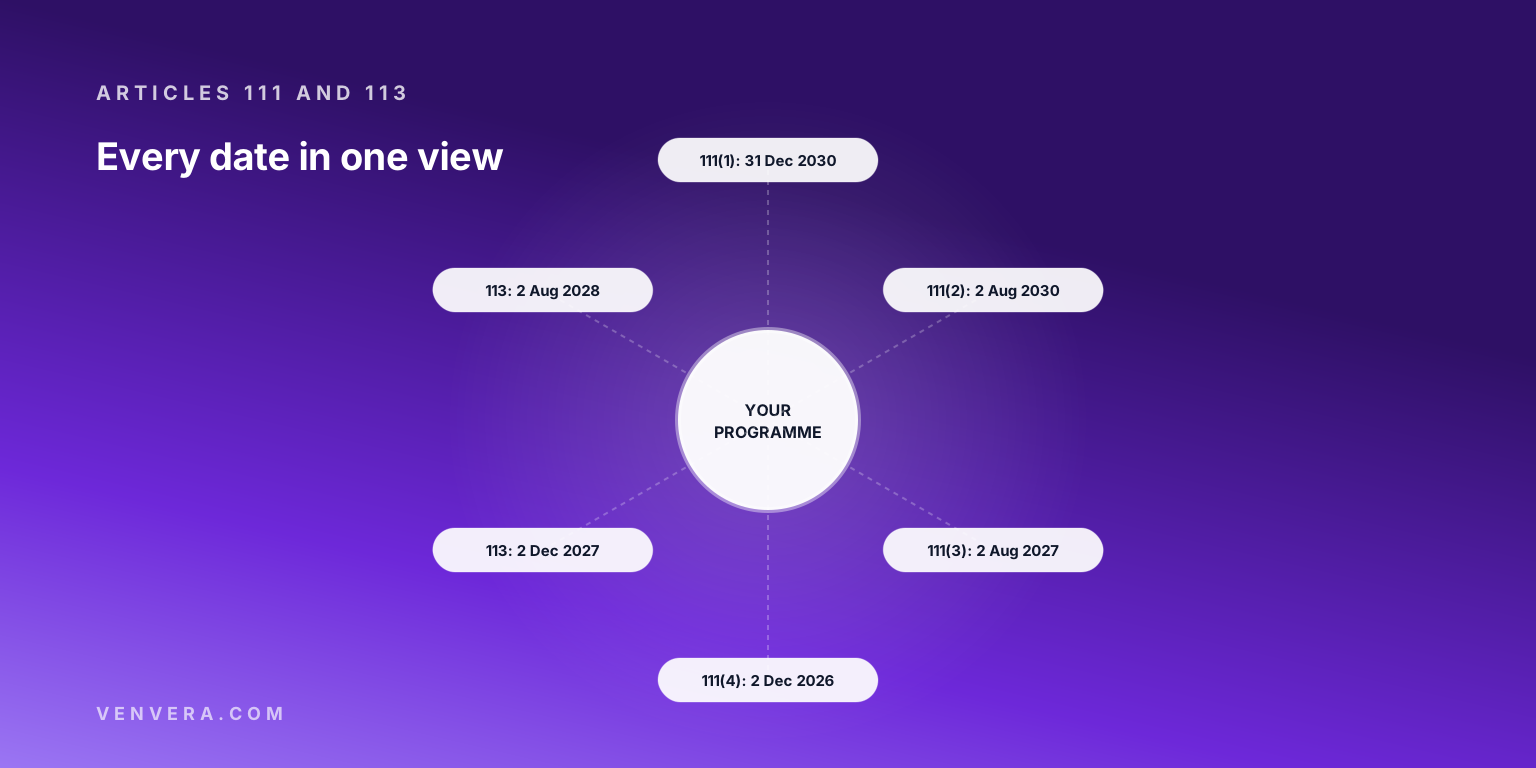
Article 111 is where systems that already exist are dealt with, and it carries four dates that most timelines omit entirely.
Article 111(1): large scale IT systems
AI systems that are components of the large scale IT systems established by the legal acts listed in Annex X, placed on the market or put into service before 2 August 2027, must be brought into compliance by 31 December 2030. The 2026 amendment did not touch this paragraph, so its internal reference date of 2 August 2027 stayed where it was even as the high risk dates moved around it.
Article 111(2): existing high risk systems
This paragraph was replaced. High risk systems other than those in paragraph 1 that were placed on the market or put into service before the date of application of Chapter III are caught only if, from that date, they are subject to significant changes in their designs. The old text named 2 August 2026 outright. The new text cross refers to Article 113 instead, so the grandfathering line moves with the deferral rather than staying behind it. Providers and deployers of high risk systems intended to be used by public authorities have until 2 August 2030 regardless.
Article 111(3): general purpose AI models
Providers of general purpose AI models placed on the market before 2 August 2025 must comply by 2 August 2027. Unamended, and frequently confused with the high risk dates.
Article 111(4): synthetic content, and it is new
The amendment added a fourth paragraph. Providers of AI systems, including general purpose AI systems, generating synthetic audio, image, video or text content that were placed on the market before 2 August 2026 must take the necessary steps to comply with Article 50(2) by 2 December 2026. That is a retrofit obligation on machine readable marking for models that are already shipping, and it is the nearest real deadline on this page for anyone running a generative system today.
Which dates bind the Commission and Member States rather than you?
Several, and they are worth tracking because your own work depends on them landing.
| Date | Who owes it | What is due |
|---|---|---|
| 1 Aug 2027 | Commission | Guidelines on the practical implementation of Article 8(2), Article 9(10) and Article 17(3), published under the new Article 96(1)(g). |
| 2 Aug 2027 | Commission | Delegated acts under the new Article 2(13), limiting requirements for Annex I Section A high risk systems where other Union law already provides equivalent protection. |
| 2 Aug 2027 | Member States | At least one national AI regulatory sandbox operational, under Article 57(1) as replaced. |
| 2 Sep 2027 | Commission | Guidance and a template on the post market monitoring plan, under Article 72(3) as replaced. |
| 28 Jan 2028 | Notified bodies | Bodies notified under Annex I Section A legislation must apply for designation under Chapter III Section 4, under Article 43(3) as replaced. |
The 28 January 2028 date is the one to watch if you are an Annex I manufacturer. It sits after your own 2 August 2028 date, which tells you how tight the conformity assessment capacity picture is expected to be.
What the other results get wrong
Four errors dominate, and the first is simply staleness.
The most cited implementation timeline in this category still shows 2 August 2026 as the high risk application date and 2 August 2027 for Article 6(1). Those were the dates in the original Act. They were replaced in July 2026. A timeline that has not been revised since is not slightly out of date, it is pointing at the wrong year for the single obligation people search for.
The second is treating 2 August 2026 as either everything or nothing. It is neither. It is the general date, and after the amendment it carries Article 50, Article 101, Article 6(5) and the parts of Chapter III that were not deferred, while carrying none of the high risk requirements in Sections 1 to 3.
The third is the Article 111(3) confusion. Guidance keeps stating that general purpose AI models placed on the market before 2 December 2027 have until that date. The paragraph says before 2 August 2025, and the deadline is 2 August 2027. Those are different models and a different year.
The fourth is silence on Article 111(4). It was inserted in July 2026, it applies on 2 December 2026, and it reaches back to every generative system already on the market. It is the closest date on the whole list and it appears in almost none of the published timelines.
Which of these dates are actually yours?
Fill this in against your own AI inventory. A row you cannot answer is a date you cannot plan.
| Question | Your answer | Date it engages |
|---|---|---|
| Do you ship a system that generates synthetic audio, image, video or text? | 2 Dec 2026 under Art. 111(4) if it was on the market before 2 Aug 2026, and Art. 50(2) from 2 Aug 2026 either way. | |
| Did you place a general purpose AI model on the market before 2 August 2025? | 2 Aug 2027 under Art. 111(3). | |
| Does any system fall in an Annex III use case under Article 6(2)? | 2 Dec 2027 under Art. 113(c)(i). | |
| Is any AI a safety component of a product under Annex I? | 2 Aug 2028 under Art. 113(c)(ii). | |
| Was that high risk system already on the market before the Chapter III date? | Art. 111(2). You are outside scope until a significant design change, unless a public authority is the intended user. | |
| Does any system interact directly with people, or infer emotion? | 2 Aug 2026 under Art. 50. Not deferred. |
If most rows are blank, the gap is an inventory rather than a calendar. Our guide to EU AI Act policies and documentation sets out what a provider and a deployer each have to hold, Article 5 prohibited practices covers the screening that already binds, and a free compliance check gives you a starting position across the EU AI Act obligations.
Frequently asked questions
When does the EU AI Act come into effect?
It entered into force on 1 August 2024 and applies from 2 August 2026. The prohibitions and AI literacy duties in Chapters I and II have applied since 2 February 2025, and the general purpose AI, governance and penalty provisions since 2 August 2025.
Is the high risk deadline still 2 August 2026?
No. Regulation (EU) 2026/1744 replaced Article 113, third paragraph, point (c). Standalone high risk systems under Article 6(2) and Annex III apply from 2 December 2027, and product embedded high risk systems under Article 6(1) and Annex I from 2 August 2028.
Are the new high risk dates conditional on harmonised standards?
No. The adopted text sets flat calendar dates with no condition attached. Proposals to tie the delay to standards availability did not survive into the final wording.
What is the nearest EU AI Act deadline right now?
2 December 2026, and it carries two separate things: the two prohibitions inserted into Article 5, and the Article 111(4) retrofit requiring providers of generative systems placed on the market before 2 August 2026 to comply with the Article 50(2) marking obligation.
Did the amendment change the penalties?
Not the ceilings. Article 99 gained a new paragraph 6a applying the lower of the percentage or the amount to small mid cap companies, mirroring the existing rule for SMEs. The tiers themselves are covered in our guide to EU AI Act penalties and fines.
Primary sources
The dates above are taken from Articles 111 and 113 of the consolidated text of Regulation (EU) 2024/1689 as at 27 July 2026, read with the amending points 39 and 40 of Regulation (EU) 2026/1744 of 8 July 2026, the Digital Omnibus on AI, published in the Official Journal on 24 July 2026. The original Article 113 wording is in Regulation (EU) 2024/1689 as first published. Confirm the current consolidated text before relying on a specific date.