
Learn
If you are searching for NIS2 solutions for banks, start with a fact that saves most banks months of wasted effort: for the core of what NIS2 asks, a bank is usually governed by DORA instead. NIS2 names banking as an essential sector, but the EU wrote a financial-services-specific law, the Digital Operational Resilience Act (DORA), and made it the governing regime for the ICT risk and incident-reporting obligations that NIS2 would otherwise impose. So a genuinely useful NIS2 solution for a bank is not a NIS2-only tool. It is a platform that runs DORA as the operative regime, evidences that DORA satisfies NIS2, and still covers the parts of your banking group where NIS2 applies on its own. This guide explains exactly where each law bites and what your solution has to do about it.
Are banks in scope for NIS2?
Yes, in principle. NIS2 (Directive (EU) 2022/2555) lists banking (credit institutions) and financial market infrastructures in Annex I as sectors of high criticality, which means an in-scope bank is treated as an essential entity. Essential entities face the full weight of the directive: the Article 21 cybersecurity risk-management measures, the Article 23 incident-reporting timelines (early warning within 24 hours, notification within 72 hours, final report within one month), management-body accountability and training under Article 20, and proactive supervision. NIS2 is also transposed into national law by each member state, so the exact registration and supervisory touchpoints differ by country. On its face, then, a bank looks like a textbook NIS2 entity.
Which is exactly why banks buy the wrong thing. A procurement process that starts from the Annex I listing ends with a NIS2 tool, a NIS2 project plan and a NIS2 budget line, and then the ICT risk work gets done again under DORA anyway. Read the next section before you write the requirements document.
The rule that changes everything for banks: DORA is lex specialis
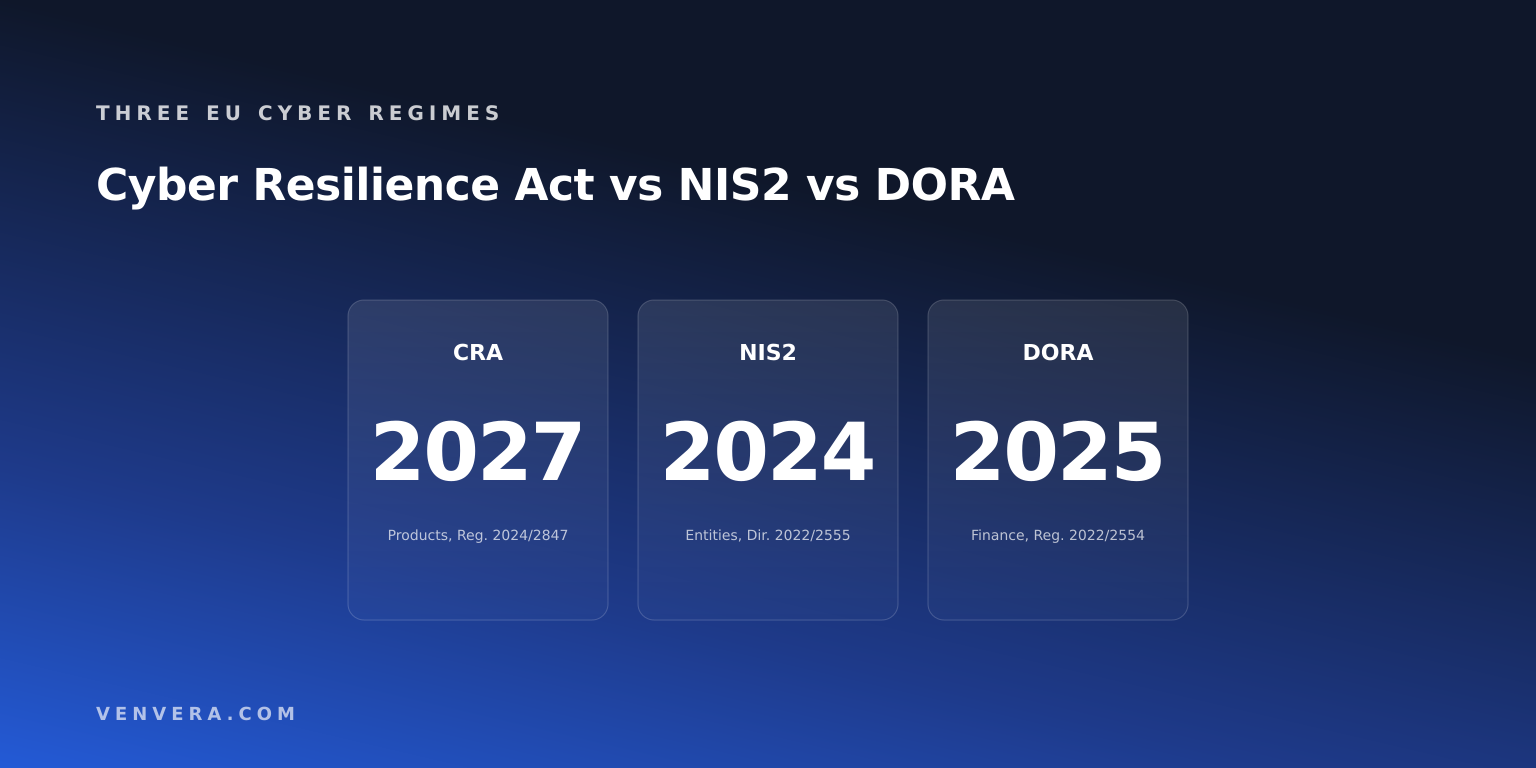
Here is the part most NIS2 buyer guides for banks miss. NIS2 Article 4 contains a lex specialis rule: where a sector-specific Union legal act requires essential or important entities to adopt cybersecurity risk-management measures or to notify significant incidents, and those requirements are at least equivalent in effect to NIS2, then the corresponding NIS2 provisions (Articles 21 and 23) do not apply. DORA (Regulation (EU) 2022/2554), which applies from 17 January 2025, is exactly such an act for financial entities, and it is expressly recognised as the lex specialis for them. In plain terms: for ICT risk management and incident reporting, a bank that is a DORA financial entity follows DORA, not NIS2 Articles 21 and 23. DORA is more prescriptive than NIS2 here (ICT risk framework, the Register of Information, threat-led penetration testing, third-party oversight, its own incident classification and reporting clocks), so it substitutes for, rather than adds to, the NIS2 measures.
This is one of the better-drafted pieces of EU cyber law. The alternative, two regimes stacked on the same bank with overlapping incident clocks, would have produced duplicate reporting and no additional safety. The catch is that the relief is conditional and you have to be able to show it holds. Nobody issues you a certificate saying DORA covers your NIS2 obligations. You evidence the equivalence yourself, control by control, and you do it before a supervisor asks rather than while one is asking.
That is why a NIS2 solution for a bank is, operationally, mostly a DORA solution. The searcher looking for "NIS2 for banks" almost always needs DORA delivered well, plus a clear line back to NIS2 to satisfy auditors and boards that the equivalence holds.
So what does a NIS2 solution for a bank actually need to do?
Judged against the reality above, a credible NIS2-and-DORA solution for a bank has five jobs:
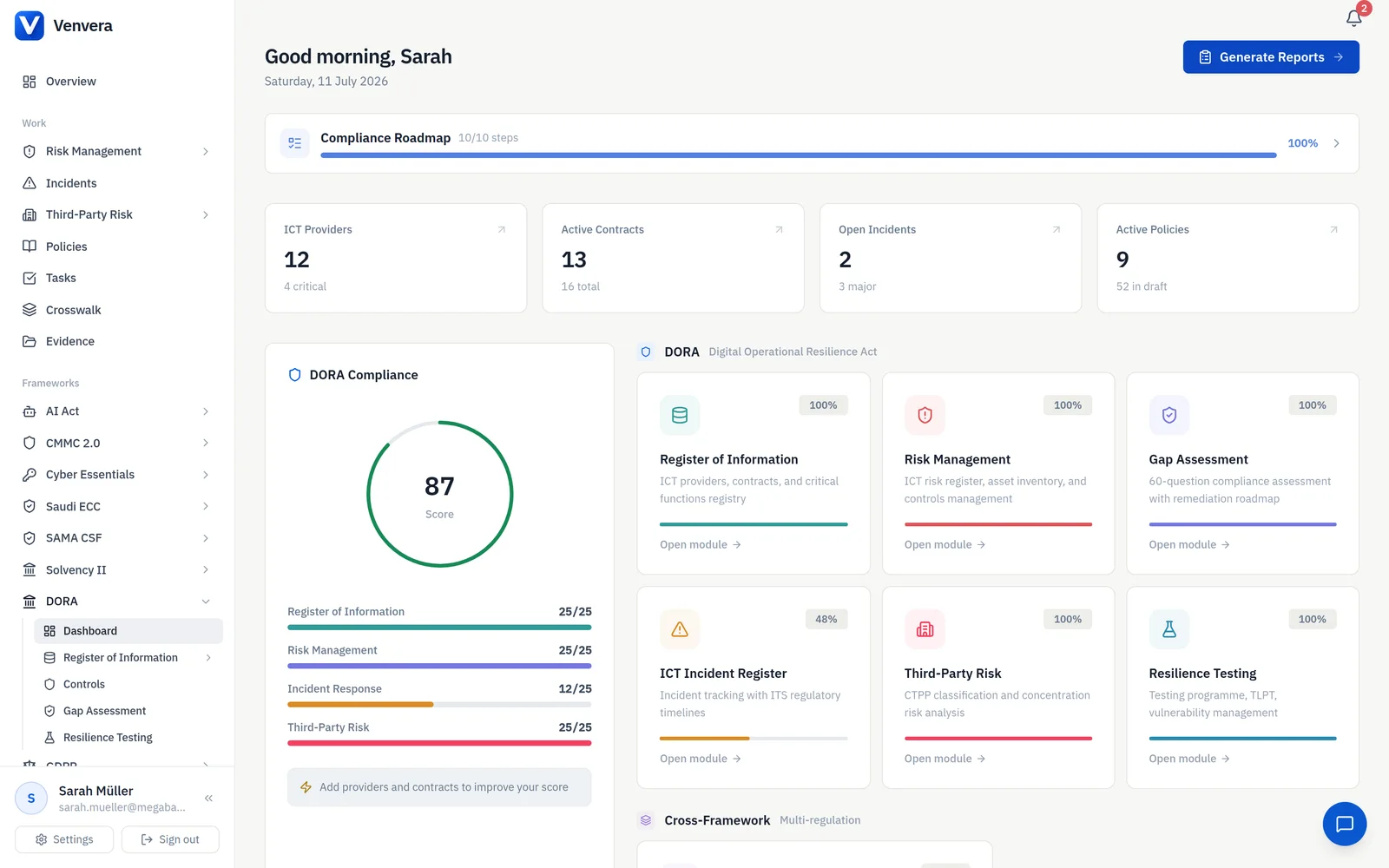
- Run DORA as the primary regime - ICT risk-management framework, the Register of Information, resilience testing, and DORA incident classification and reporting. Of those four, the Register of Information is the one that consumes a team. It is straightforward until you reach sub-outsourcing, at which point you are asking vendors to name their own providers and finding out that contracts signed years ago never gave you the right to ask.
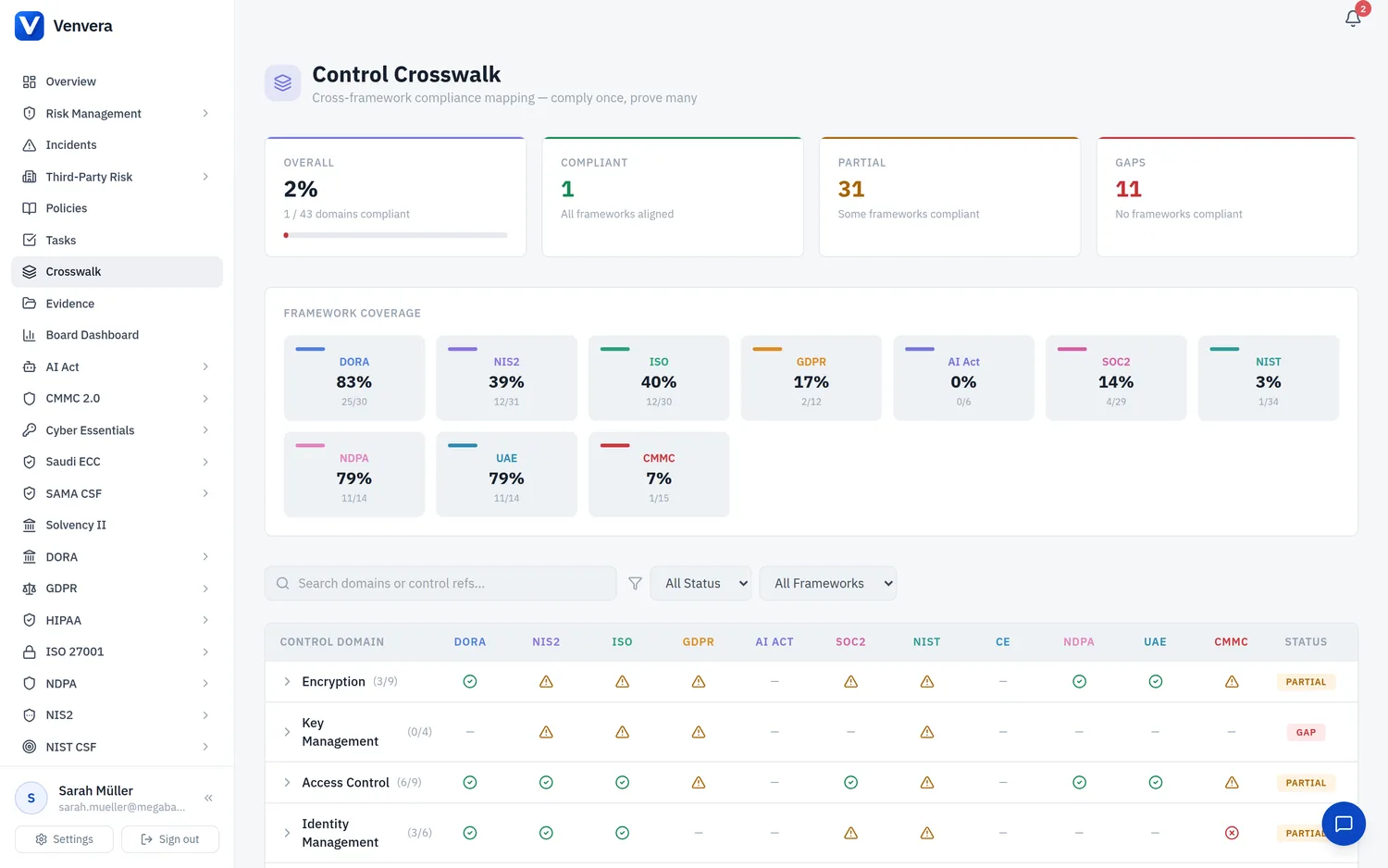
- Prove equivalence to NIS2 - map your DORA controls to the NIS2 Article 21 measures so you can show a supervisor, in one view, that the sector-specific regime covers the directive.
- Cover the group entities NIS2 still reaches - not every company in a banking group is a DORA financial entity (see below).
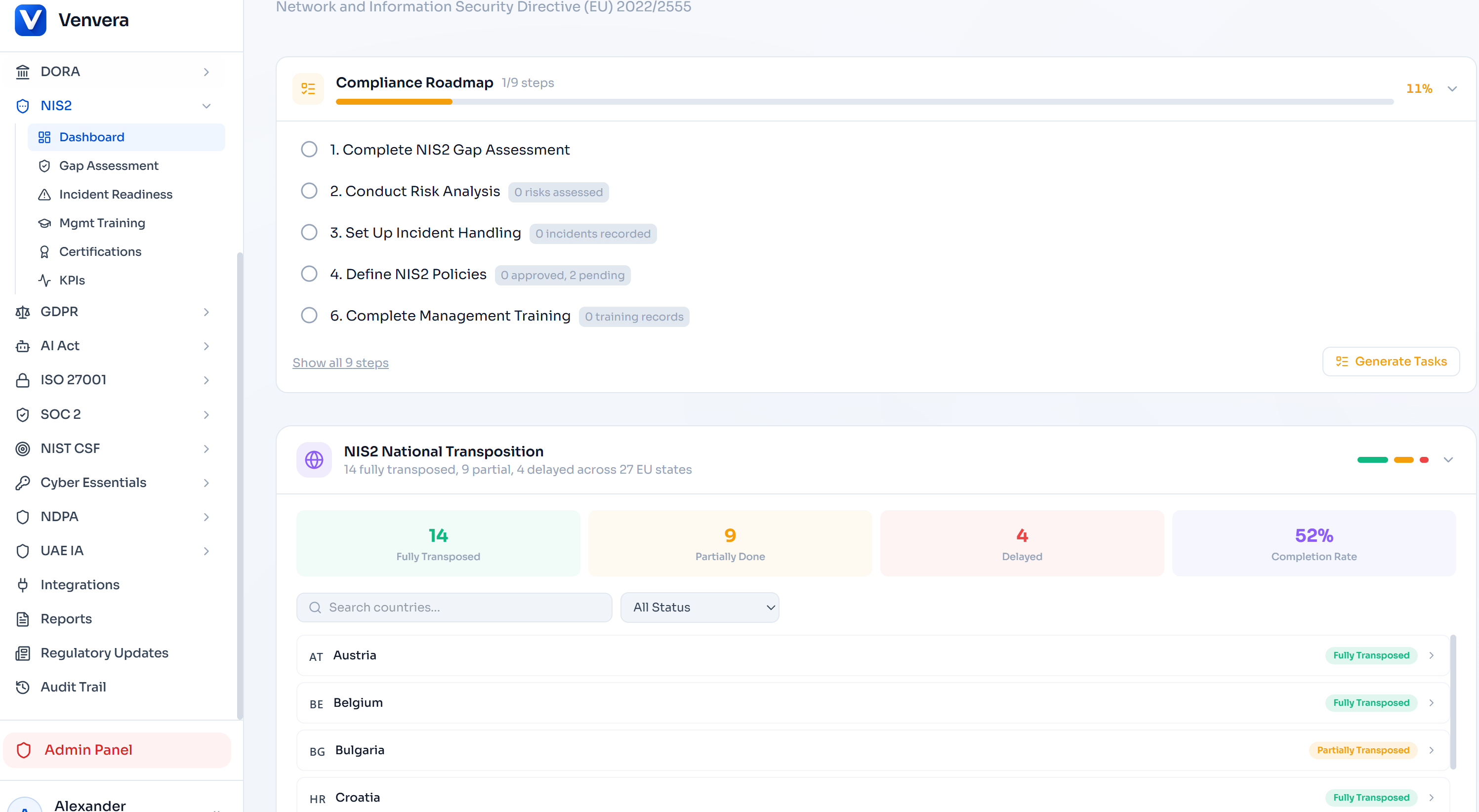
- Handle national transposition - NIS2 registration and reporting details vary by member state, which matters for a bank operating across borders.
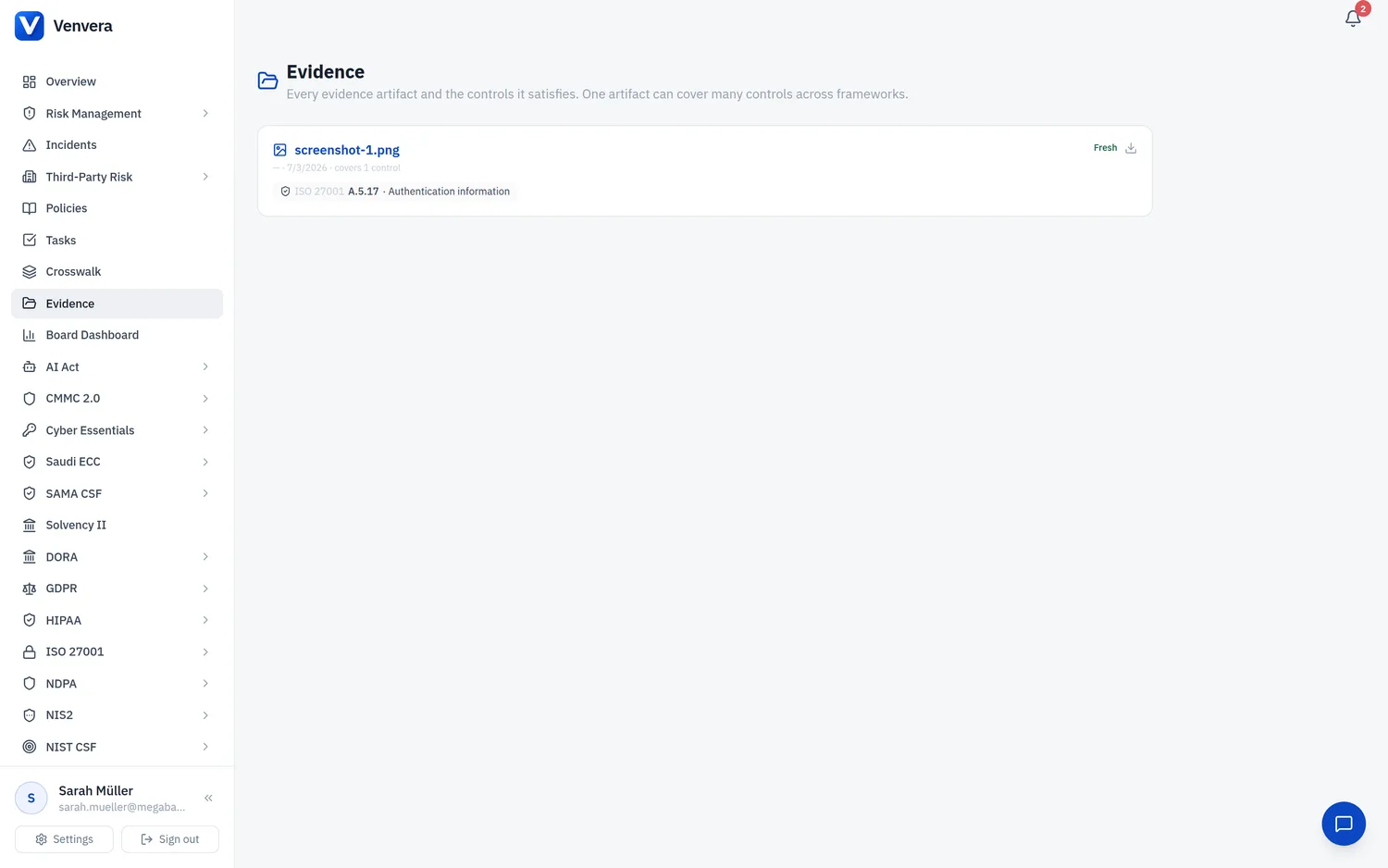
- Keep the management body evidenced - both NIS2 Article 20 and DORA put accountability and training on the board; you need the record.
The banking-group problem: not every entity is a DORA financial entity
DORA applies to defined financial entities. A banking group, though, is rarely a single credit institution. It often includes holding companies, a group ICT or shared-services company, insurance or asset-management arms, and non-regulated subsidiaries. Some of those are DORA financial entities; some are not; and an entity that falls outside DORA but sits in a NIS2 sector (or is an important entity by size) can still owe NIS2 Articles 21 and 23 in its own right. The result is a mixed estate: parts of the group on DORA, parts on NIS2, and a board that needs one coherent picture. A NIS2 solution for a bank has to model that mix rather than assume the whole group is on one regime.
Do the entity-by-entity scoping first and write it down as a table. It is unglamorous and it is the highest-value week in the whole programme, because everything downstream depends on it: which clock applies, who files, what the board sees. The group ICT or shared-services company is the one to check first, since it is rarely a regulated entity in its own right while often carrying the most operationally critical systems in the group.
How Venvera covers NIS2 and DORA for banks
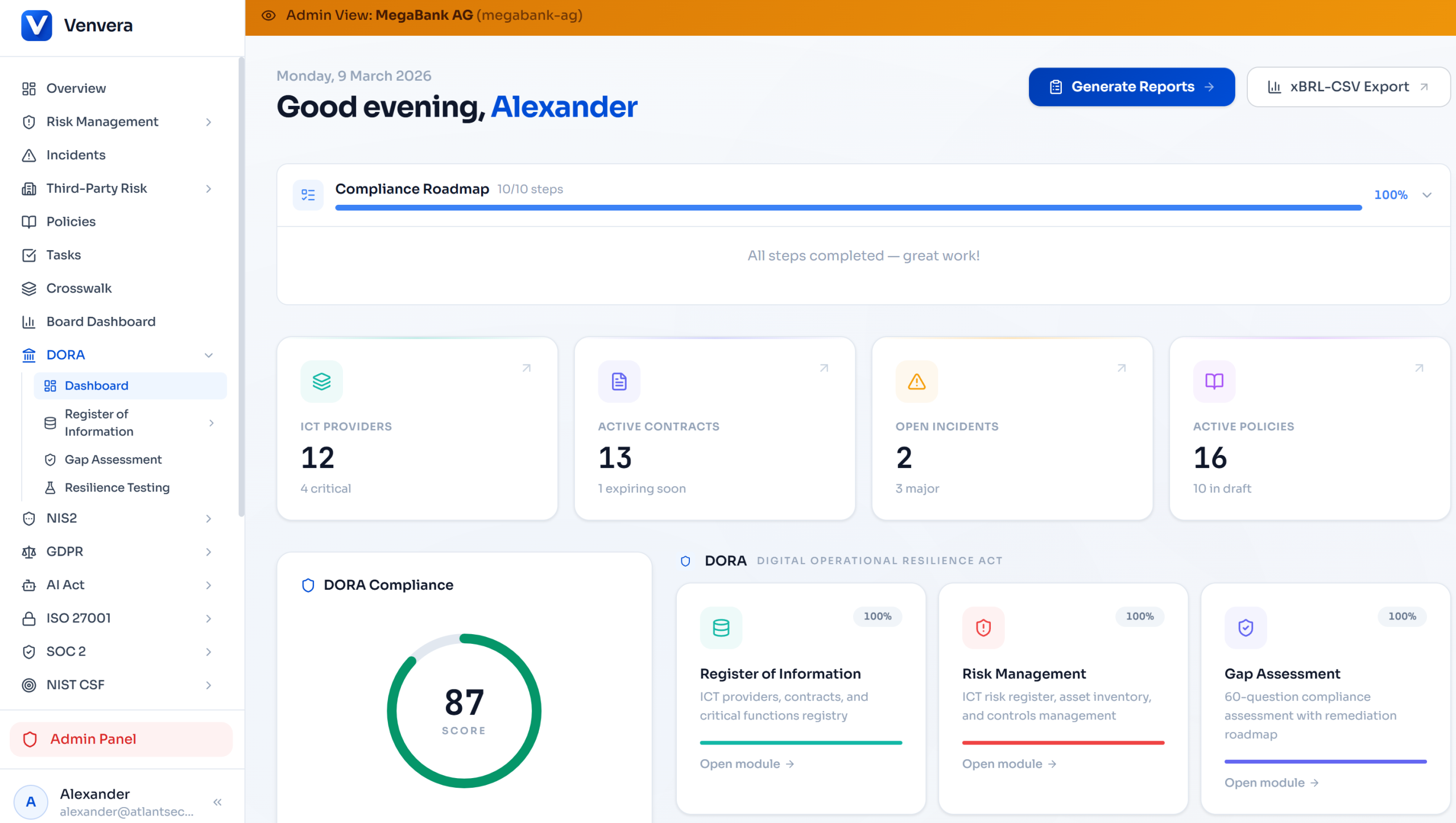
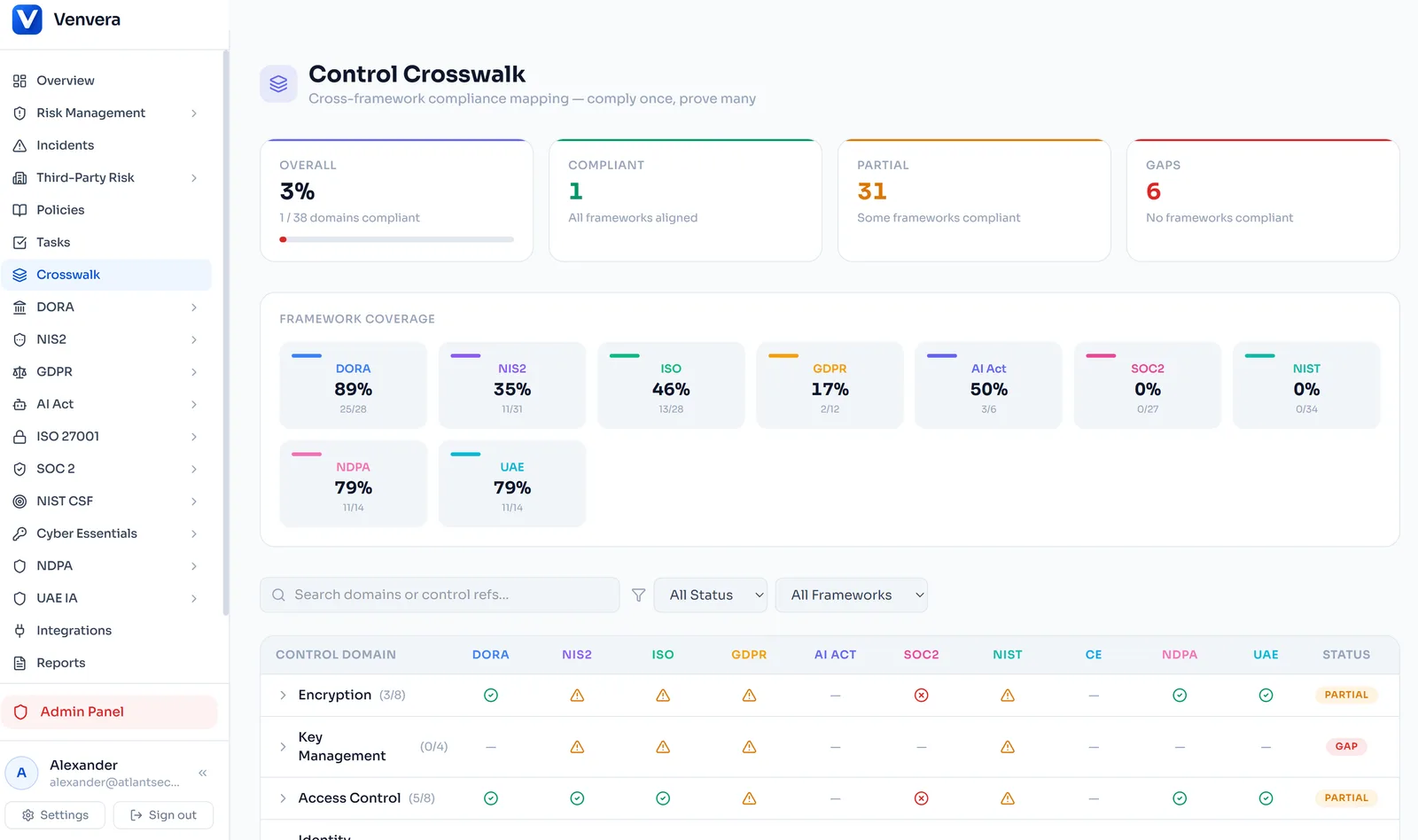
Venvera treats NIS2 and DORA as what they are for a bank: one operational-resilience programme run under DORA, mapped to NIS2, across a group with mixed scope. You maintain one control base and evidence library; a crosswalk maps each control to both the DORA articles and the NIS2 Article 21 measures, so the work you do for one counts for the other and the equivalence is visible on a single screen. The DORA Register of Information and resilience-testing and incident modules run as first-class features, and the NIS2 framework carries the directive scoping, the Article 23 clocks, and the management-body training record for the group entities where NIS2 applies directly. Because it is multi-tenant and multi-entity, it handles the banking-group mix rather than forcing one regime on everything. Plans start from EUR 399/month. It is not a shortcut around the law; it is the system of record that makes running both regimes together auditable.
Managing more than one legal entity? See how Venvera handles compliance software for groups of companies - author policies once at the parent and let each subsidiary prove them with its own evidence.
Frequently Asked Questions
Do banks need to comply with NIS2 or DORA?
Both are relevant, but for the ICT risk-management and incident-reporting obligations, a bank that is a DORA financial entity follows DORA, not NIS2 Articles 21 and 23. Under NIS2 Article 4, DORA acts as the lex specialis for financial entities. NIS2 still matters for group entities outside DORA and for national registration and supervision.
Does DORA replace NIS2 for banks entirely?
No. DORA replaces the specific NIS2 provisions it covers (the Article 21 measures and Article 23 reporting) for financial entities in scope of DORA. A banking group usually still has entities that are governed by NIS2 directly, and member-state transposition can create NIS2 touchpoints, so banks need to track both.
What are the NIS2 incident-reporting deadlines?
Under NIS2 Article 23: an early warning within 24 hours of becoming aware, an incident notification within 72 hours, and a final report within one month. For a bank operating under DORA, the DORA incident clocks apply instead for ICT-related major incidents. The deadline that hurts is the first one. Twenty-four hours sounds generous until you count the approval steps: someone has to notice, someone has to decide it is reportable, and someone senior has to sign off the wording that goes to a supervisor. If those three steps belong to three people who are not on a rota, the clock has already beaten you.
What should a NIS2 solution for a bank include?
DORA as the operative regime (ICT risk framework, Register of Information, resilience testing, incident reporting), a crosswalk that proves equivalence to the NIS2 Article 21 measures, coverage of group entities that NIS2 reaches directly, national-transposition handling, and a management-body accountability record.