

Learn
The short answer
Article 4 of the EU AI Act requires providers and deployers to take measures to ensure, to their best extent, a sufficient level of AI literacy among their staff and other people operating AI systems on their behalf. It applies whatever risk tier your systems fall into, it applied earlier than the high-risk regime, and it has no prescribed curriculum. It is the cheapest obligation in the Act to satisfy and one of the easiest to evidence.
On this page
What Article 4 actually says
Providers and deployers of AI systems must take measures to ensure, to their best extent, a sufficient level of AI literacy among their staff and other persons dealing with the operation and use of AI systems on their behalf. The measures should take account of those people's technical knowledge, experience, education and training, and the context in which the systems are used.
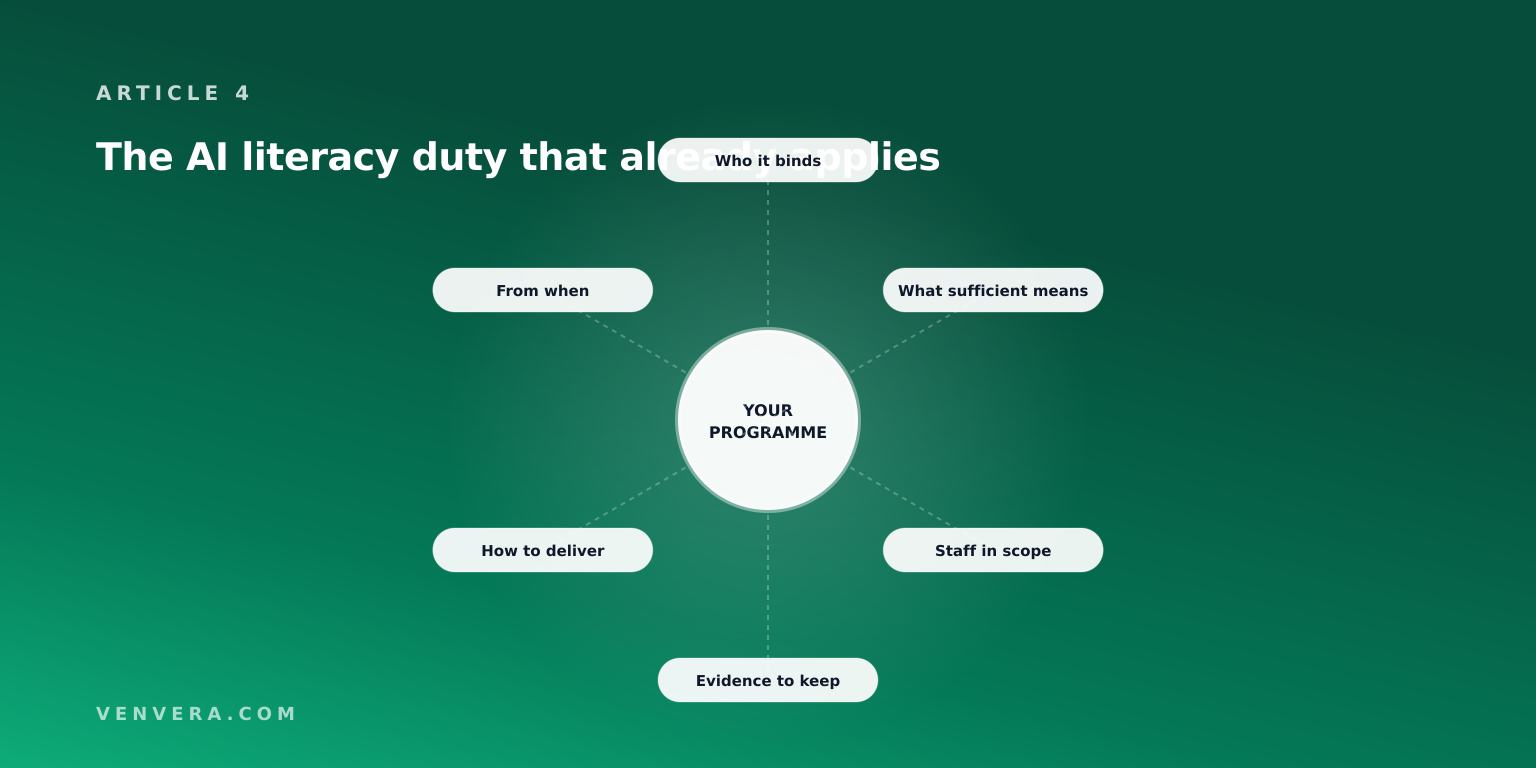
Three features make this unusual among the Act's obligations. It applies regardless of risk tier, so a company using only limited-risk systems still carries it. It binds deployers as well as providers, which most obligations do not. And it came into application ahead of the high-risk regime, so it is live now rather than a future problem.
Who is covered
Your own staff, and other people operating AI systems on your behalf. That second category is the one organisations miss: contractors, agency staff and outsourced teams operating systems for you are inside the obligation.
The scope is people "dealing with the operation and use" of the systems. In practice that includes the engineers building or integrating them, the staff using outputs to make or inform decisions, and the people assigned human oversight duties. It does not sensibly extend to every employee who has once used a chatbot, though a general awareness baseline is cheap and rarely wasted.
What 'sufficient' means when nothing is prescribed
The Act sets an outcome rather than a syllabus, which unsettles people who want a checklist. Read the qualifiers and it becomes workable: measures must be proportionate to the audience's existing knowledge and to the context of use. A machine learning engineer and a claims handler need different things, and delivering identical training to both satisfies the letter while missing the point.
A workable interpretation of sufficient: the person can explain what the system does, recognise where it is likely to be wrong, knows what they are permitted to do with its output, and knows how to escalate. If your training produces that, you are meeting the intent.
Building a defensible programme
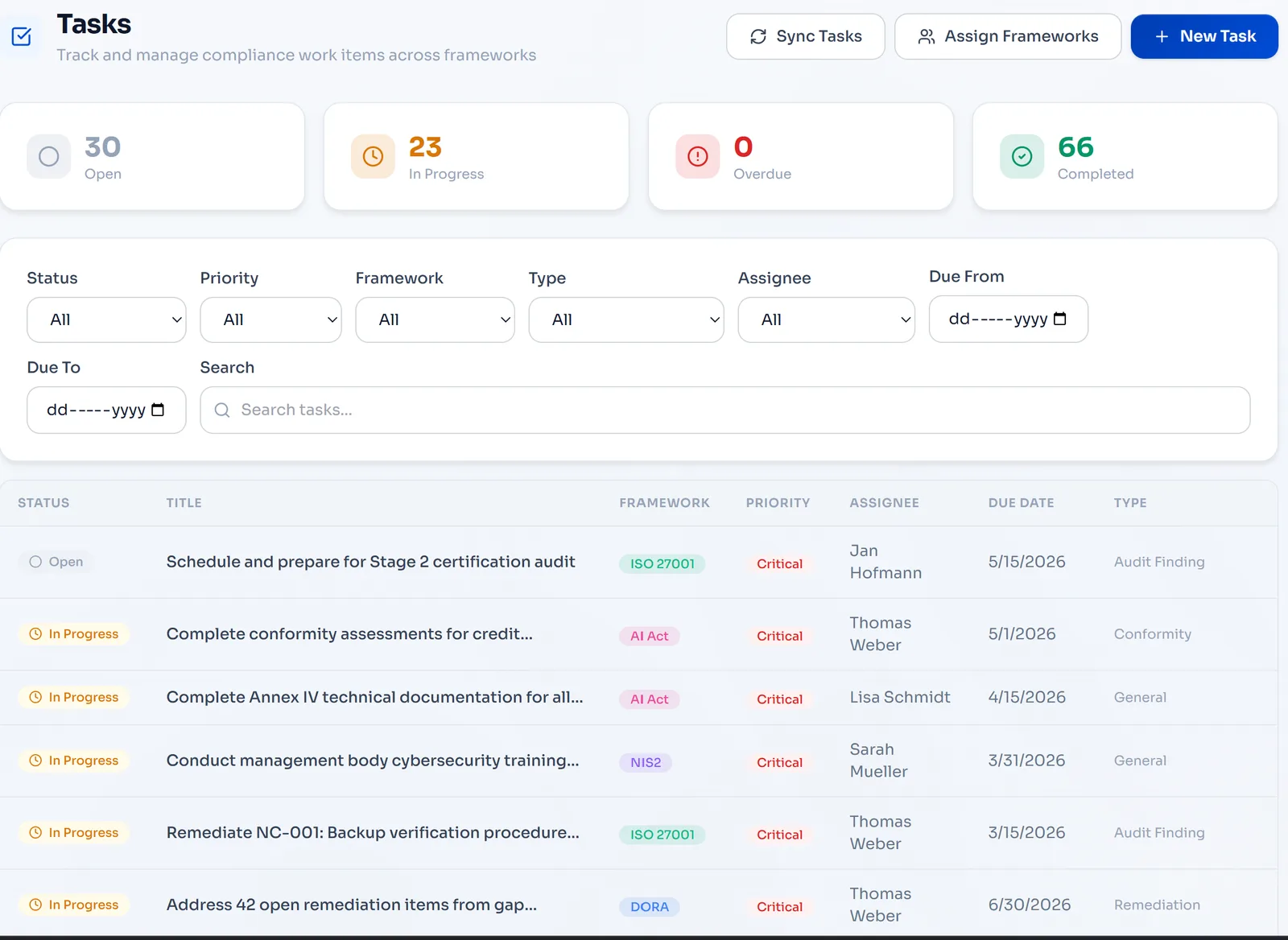
- Inventory the systems and the people. You cannot scope training without knowing which systems are in use and who touches them. This inventory is needed for the rest of the Act anyway.
- Segment by role. Three audiences usually suffice: builders and integrators, decision-makers using outputs, and those holding formal oversight duties.
- Tie content to the systems you actually run. Generic AI awareness training is weak evidence. Training that names your systems, their known limitations and your escalation route is strong evidence.
- Include the rules as well as the concepts. What staff may and may not put into a model matters as much as how the model works.
- Refresh it. Your systems change, so annual is a reasonable default and any material change should trigger an update.
What evidence to keep
The obligation is to take measures, so your evidence is the measures and their reach.
- The training content itself, versioned and dated.
- Who was assigned it, who completed it, and when.
- The reasoning behind your role segmentation, written down once.
- Coverage of contractors and outsourced staff operating systems on your behalf.
- The refresh schedule and evidence it has actually run.
Common mistakes
- Treating it as a future obligation. Article 4 applied ahead of the high-risk regime.
- Covering employees but not contractors. The Article reaches people operating systems on your behalf.
- One generic module for everyone. It satisfies the letter and fails the proportionality test the Article sets out.
- No records. Training that happened but cannot be evidenced is indistinguishable from training that did not.
- Stopping at literacy. Article 4 is a small obligation next to the document set high-risk providers carry, set out in EU AI Act policies and documentation.
Do this in Venvera
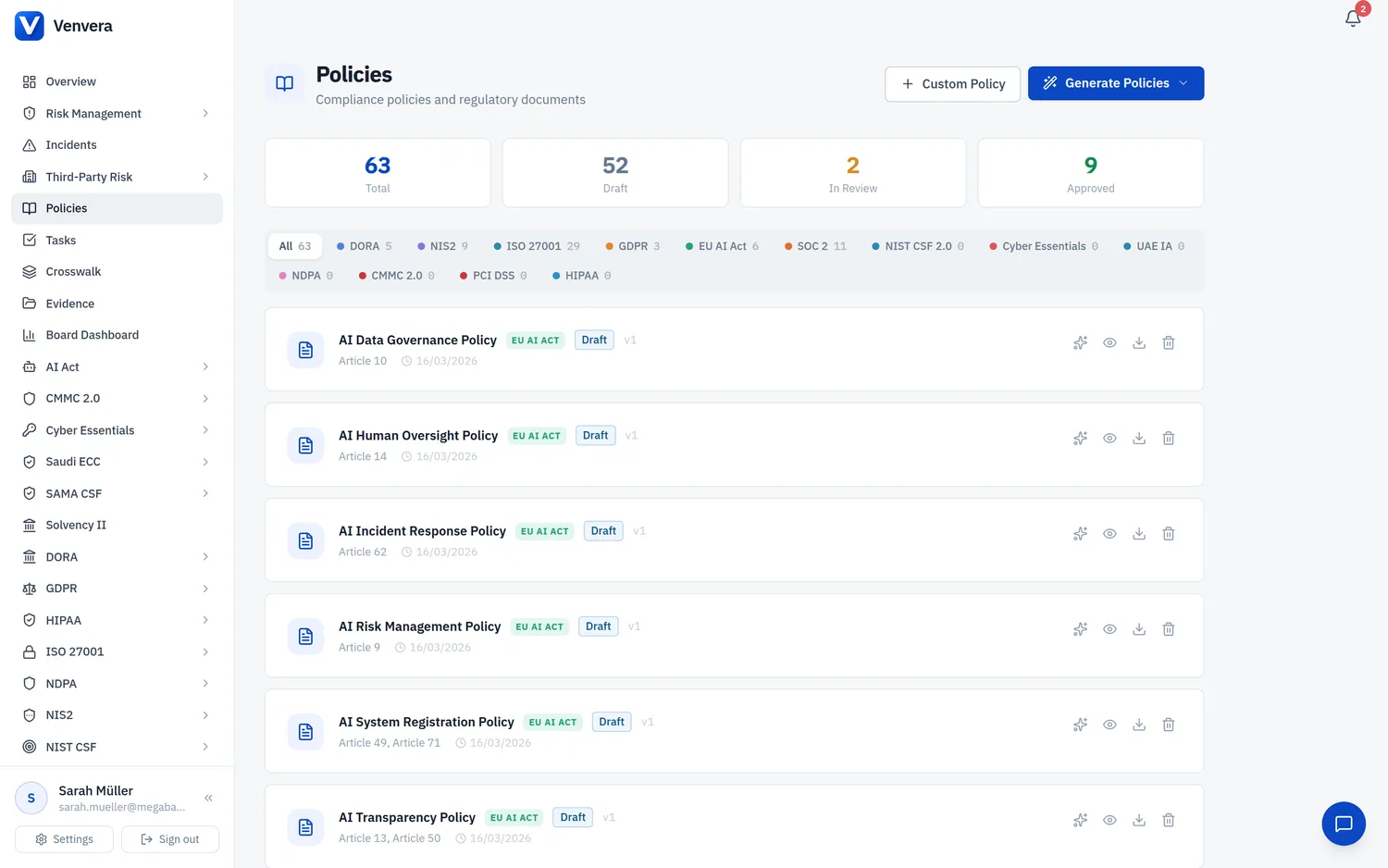
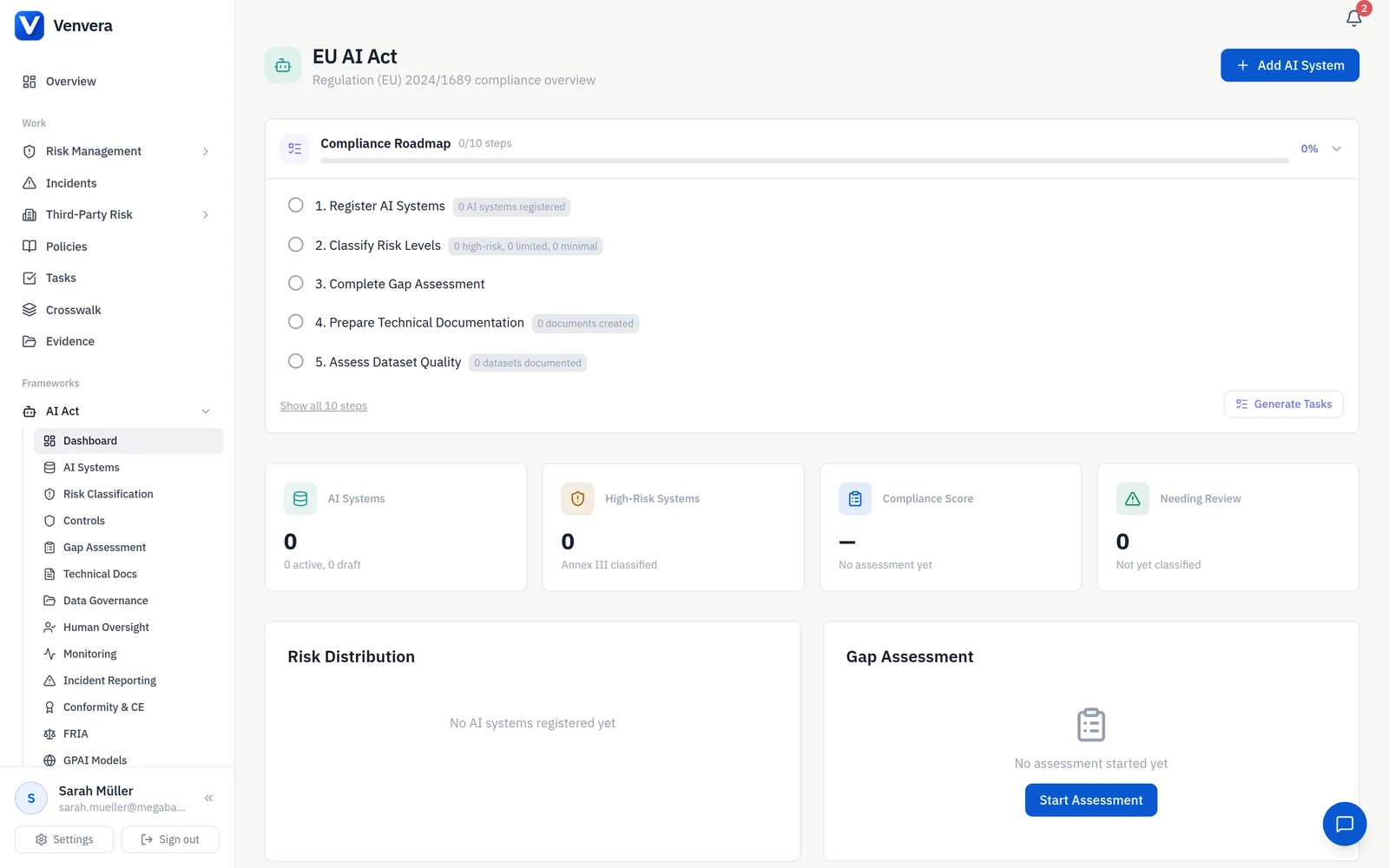
Venvera tracks the EU AI Act as a maintained control set and handles security and compliance training with assignment and completion records, so the Article 4 evidence is a report rather than a spreadsheet reconstruction. See the EU AI Act workspace, or the free EU AI Act compliance checklist to find the rest of your gaps. Pricing is published and flat, from EUR 399 per month.
Frequently asked questions
What does the EU AI Act say about AI literacy?
Article 4 requires providers and deployers to take measures to ensure, to their best extent, a sufficient level of AI literacy among staff and other people operating AI systems on their behalf, proportionate to their knowledge and the context of use.
Does AI literacy apply to all AI systems?
Yes. Article 4 is not limited to high-risk systems, so it applies whatever tier your systems fall into.
Is there a required AI literacy curriculum?
No. The Act sets an outcome and requires proportionality rather than prescribing content, which is why role-segmented training tied to the systems you actually run is the defensible approach.
Do contractors need AI literacy training?
If they operate AI systems on your behalf, they fall within the wording of Article 4. This is the most commonly missed part of the scope.
What happens if we ignore it?
Failure to meet operator obligations sits in the middle penalty tier under Article 99, up to EUR 15,000,000 or 3% of worldwide turnover, with a lower cap for SMEs. Given how cheap the obligation is to satisfy, it is an inefficient risk to carry. See EU AI Act penalties and fines.