

Learn
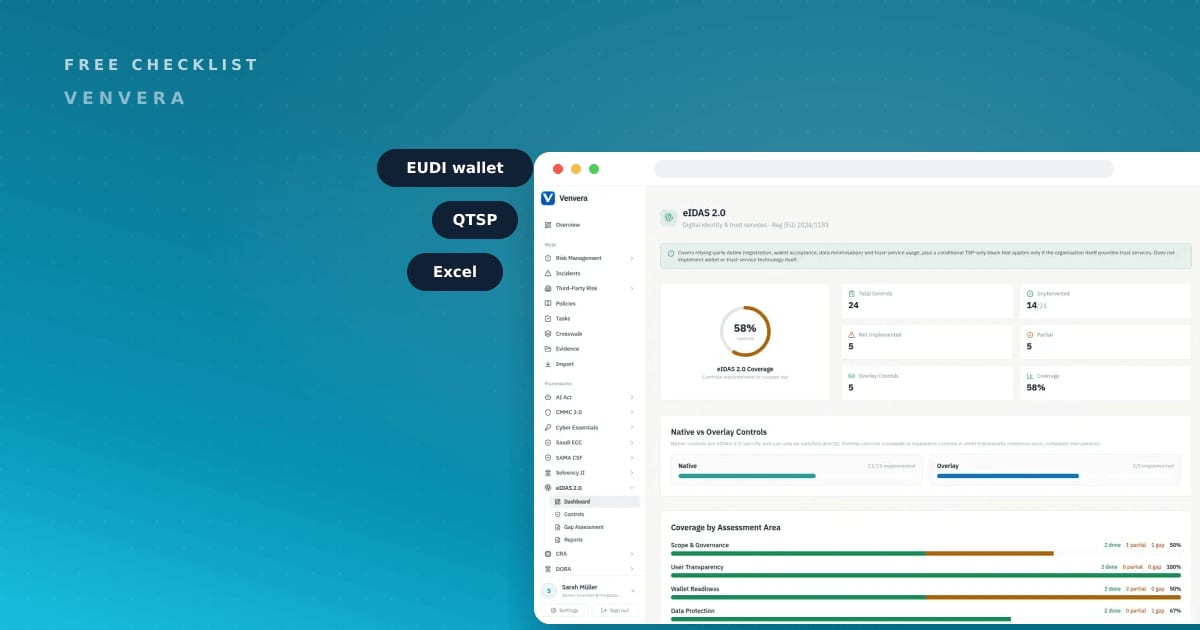
The eIDAS 2.0 readiness checklist on this page is a free Excel workbook that turns Regulation (EU) 2024/1183 into 24 concrete preparation steps. If you run a qualified trust service, or your service will need to accept the EU Digital Identity Wallet, this eIDAS 2.0 readiness checklist gives you a single place to track what changes, who owns each task, and where the evidence lives. It is built for compliance leads, CISOs, and product owners who need to move from reading the regulation to actually preparing for the wallet rollout. Download it below, share it with your legal, security, and engineering teams, and use it to scope the work before the implementing acts and ETSI standards land in full. The only gate is the short form.
Free download
Get the eIDAS 2.0 Readiness Checklist
Prepare for the EU Digital Identity Wallet and QTSP obligations under eIDAS 2.0. 24 items.
What the eIDAS 2.0 Readiness Checklist covers
The workbook is one tab, 24 rows, and columns you can actually work in: item, obligation area, what to do, owner, status, and an evidence link. It splits the preparation into the two roles eIDAS 2.0 creates work for.
Qualified trust service providers (QTSPs). Rows that walk through the updated obligations under the amended framework, including where a service may need to re-certify against the new requirements, how conformity assessment and supervisory reporting change, and how your existing qualified certificates and services map to eIDAS 2.0.
Relying parties. Rows for organisations that will need to accept the EU Digital Identity (EUDI) Wallet: registering as a relying party, integrating credential verification, deciding which attributes you request and why, and handling wallet-presented credentials in your identity and onboarding flows.
The attribute question in that list looks like the soft item and is the one worth arguing about hardest. A wallet makes it trivial to ask for more than you need, and a justification written after the fact never reads well. Do that thinking while the integration is still on a whiteboard.
A short reference column points each row at the relevant part of the regulation and the ETSI standards the implementing acts reference, so the checklist stays a working tool rather than a summary you read once.
eIDAS 2.0 the honest way: what actually matters
eIDAS 2.0 is Regulation (EU) 2024/1183, which amends the original eIDAS Regulation. Two things drive almost all of the practical work: the new European Digital Identity (EUDI) Wallet, and an updated trust services framework. Here is what that means without the noise.
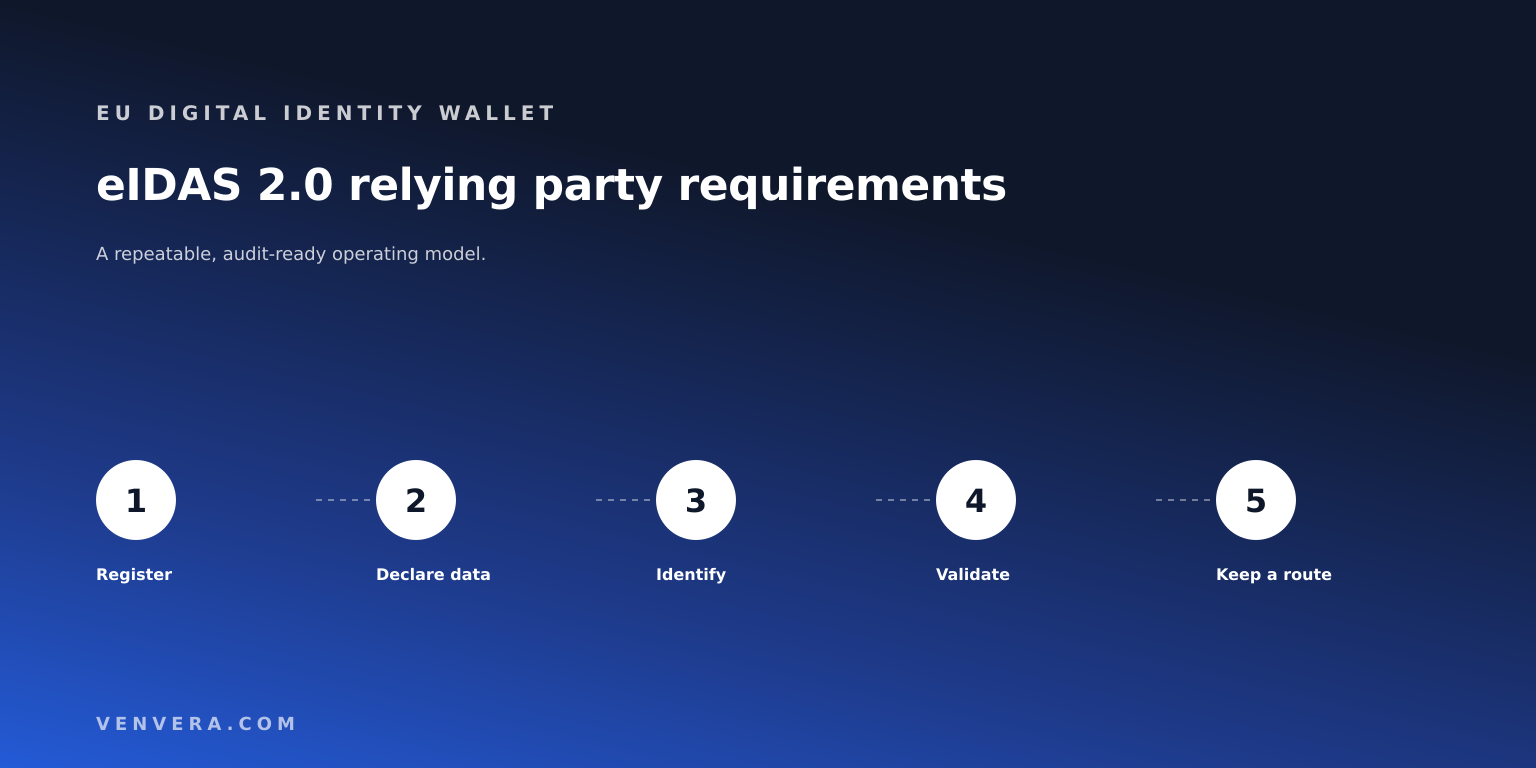
The wallet changes who has obligations. The original eIDAS was mostly a concern for trust service providers and public-sector identity schemes. eIDAS 2.0 pulls in relying parties too. If your service accepts identity or attribute credentials, you will need to accept the wallet, integrate credential verification, and register as a relying party. That registration and integration work is new, and it sits with product and engineering as much as with compliance.
If you are a relying party, that is the sentence to take to your engineering lead this quarter. The work the regulation creates is a change to a live onboarding flow, and changes to live onboarding flows compete with the product roadmap and lose unless someone raises them early. The regulation is reasonable here, since the obligation follows from choosing to accept credentials at all. The friction is entirely internal.
QTSPs face updated obligations and, in some cases, re-certification. If you are a qualified trust service provider, the amended framework updates your obligations, and some services will need to re-certify to stay qualified. Treat this as a gap assessment against your current conformity assessment rather than a rewrite, but do not assume your existing qualified status carries over untouched.
Budget for the assessment body's calendar, which is the constraint nobody plans for. Audit slots are finite, and a queue forms whenever a framework changes and everyone needs the same thing in the same window. Booking early costs you nothing. Discovering late that the diary is full is a self-inflicted problem.
It arrives in phases, not on one deadline. The detail lands through implementing acts, and those acts reference ETSI standards for the technical specifics. That means the exact requirements for wallet integration and credential formats are being set incrementally. The honest posture is to prepare the organisational and architectural groundwork now, so that when a given implementing act is final, you are configuring rather than starting.
Planning against a phased rollout is genuinely awkward, and it is fair to say so. You are being asked to build for requirements whose technical detail is still being written, which makes budget hard to win and deferral easy to justify. The defensible answer is to fund the parts that will hold: who owns wallet acceptance, where credential verification sits in your onboarding flow, and what you do with the attributes you receive. None of that changes when the technical specifics land.
What this checklist deliberately does not do is invent deadlines or article-level requirements that are not yet fixed. It maps the preparation steps that are already clear from the regulation so you can start the work that will not change.

How to use the eIDAS 2.0 Readiness Checklist
- Confirm your role. Decide whether you are a QTSP, a relying party, or both, and hide the rows that do not apply to you. The easy misread here is assuming that relying party means somebody else. If any of your flows accept identity or attribute credentials, the relying-party rows are yours.
- Assign an owner to every row. Registration and verification usually belong to product and engineering; conformity and supervisory items belong to compliance. Name a specific person as the owner.
- Set a status. Mark each item not started, in progress, or done, so the tab doubles as your live readiness view.
- Attach evidence. Link the design doc, registration record, or conformity report in the evidence column so the claim is auditable, not asserted.
- Re-check against new implementing acts. When an implementing act or ETSI standard is finalised, revisit the affected rows and tighten the technical detail.
- Review it quarterly until the wallet rollout is complete in your market.
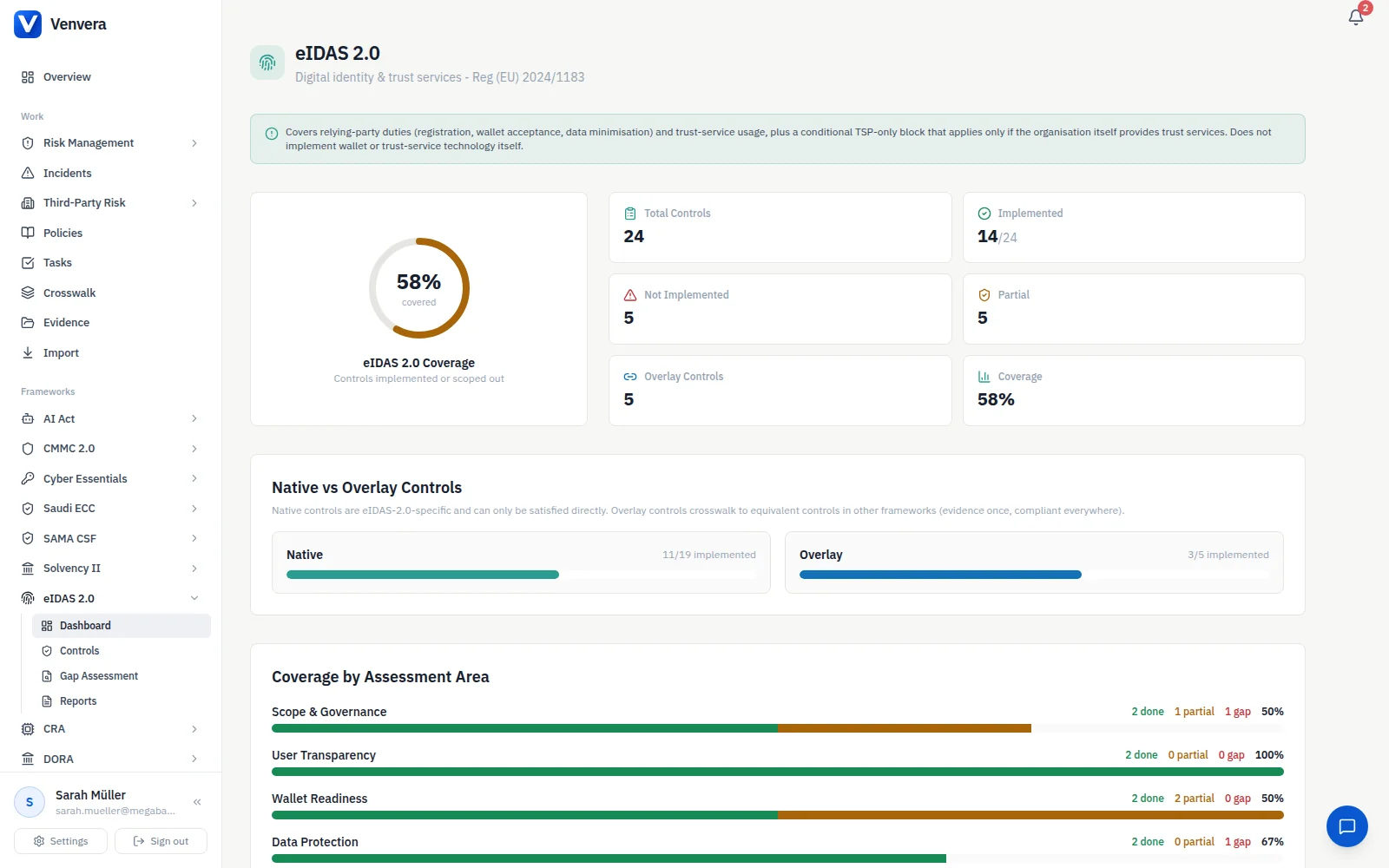
Do this automatically in Venvera
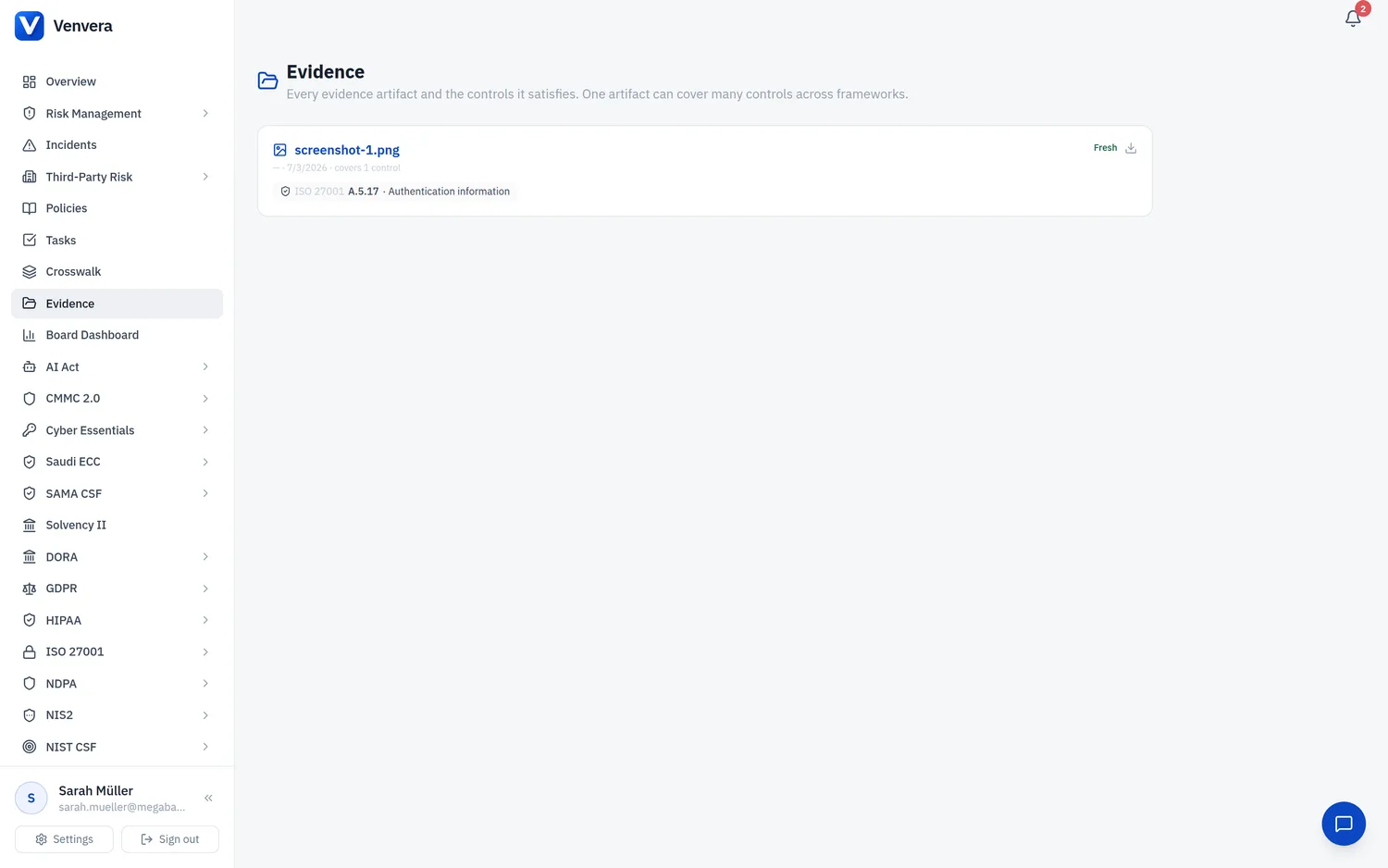
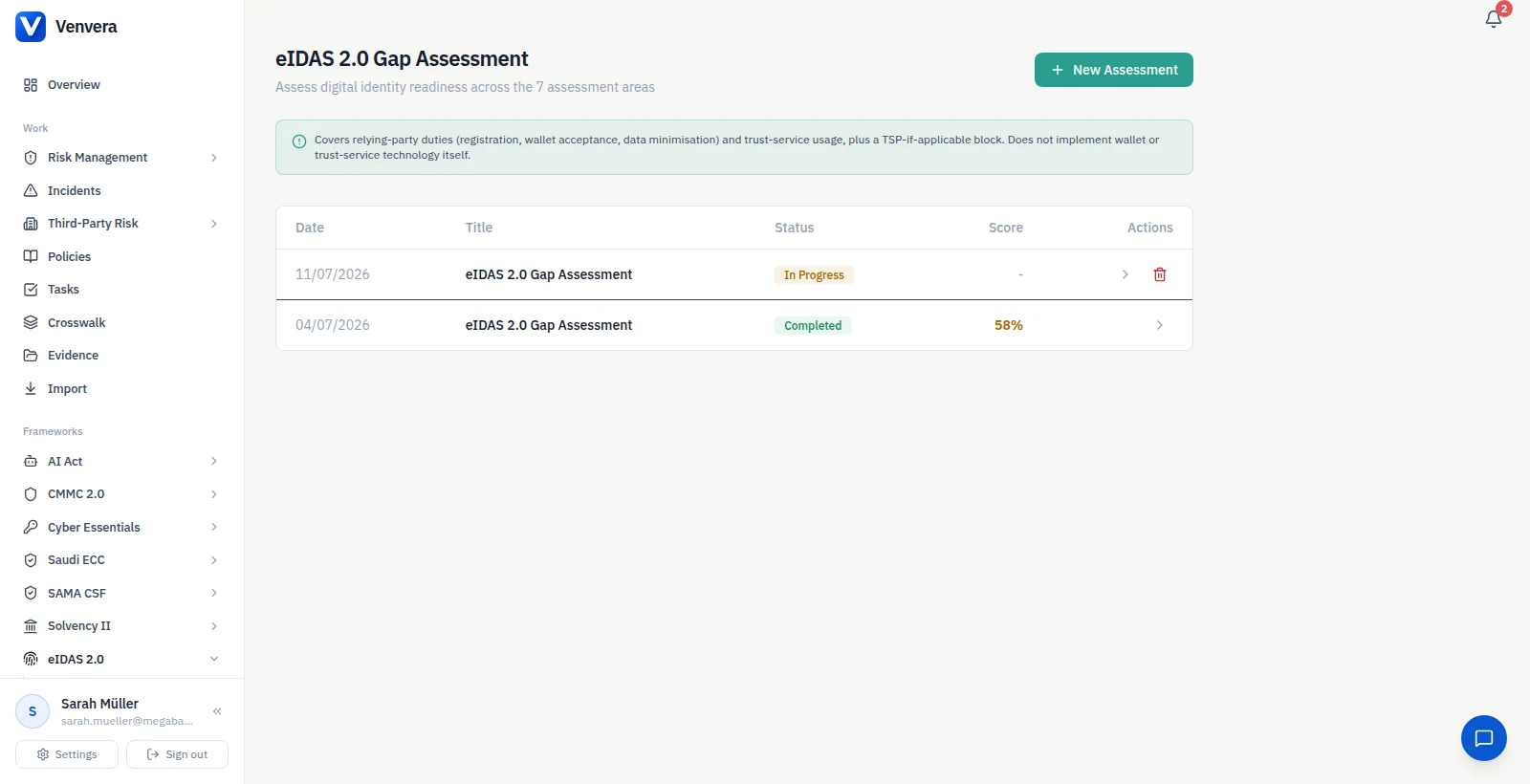
A spreadsheet is a good place to start and a poor place to stay: it goes stale the moment an implementing act moves. In Venvera, the same preparation lives in the eIDAS 2.0 framework as tracked controls, so status, owners, and evidence stay current instead of drifting in a file on someone's laptop. Evidence you attach for one obligation is reused across the other frameworks you already run, so a control you prove once counts everywhere it applies. Plans start from EUR 399/month, and you can map your existing controls to eIDAS 2.0 before the wallet rollout reaches your market.
Frequently Asked Questions
What is eIDAS 2.0?
eIDAS 2.0 is Regulation (EU) 2024/1183, which amends the original eIDAS Regulation. It introduces the European Digital Identity (EUDI) Wallet and updates the trust services framework, adding obligations for qualified trust service providers and for relying parties that will accept the wallet.
Who needs to prepare for eIDAS 2.0?
Two groups. Qualified trust service providers face updated obligations and, in some cases, re-certification. Relying parties, meaning organisations whose services accept identity or attribute credentials, will need to accept the wallet, integrate credential verification, and register as relying parties.
Is the eIDAS 2.0 Readiness Checklist free?
Yes. The Excel checklist with all 24 items is free to download through the form above. There is no charge and no trial requirement to use it.
When does eIDAS 2.0 take effect?
It is being implemented in phases through implementing acts that reference ETSI standards, ahead of the EU Digital Identity Wallet rollout. This checklist focuses on the preparation steps that are already clear so you can act before the technical detail is fully finalised.