
Learn
Search for eIDAS compliance software and you will get three different kinds of product wearing the same two words. One vendor sells a cryptographic engine that creates qualified electronic signatures, seals and timestamps. Another sells a wallet and verification toolkit that integrates the EU Digital Identity Wallet and checks the credentials people present. A third sells a governance and compliance platform that keeps your controls, your duties, your evidence and your deadlines in order. All three legitimately answer to the phrase. None of them does the other two jobs. Buy the wrong category and you either pay for cryptography you will never operate, or you reach 24 December 2027 with a signing tool and no proof that your organisation actually meets its obligations.
This guide is written for the person who owns the eIDAS 2.0 compliance decision: the compliance lead, the data protection officer, the CISO, or a key person at a trust service provider. It explains the categories in plain language, tells you what the governance layer specifically has to cover, and shows how the right tooling reuses work you have already done for DORA, NIS2 and ISO 27001. It is deliberately scope-honest, because with a supervisor, the fastest way to lose credibility is to claim your software does something it does not.
What eIDAS 2.0 actually is, and why the phrase is ambiguous
eIDAS 2.0 is Regulation (EU) 2024/1183, which amends the original eIDAS Regulation (Regulation (EU) No 910/2014) and establishes the European Digital Identity Framework and the EU Digital Identity Wallet (the EUDI Wallet). It entered into force on 20 May 2024. The first wallet implementing regulations were published in the Official Journal on 4 December 2024 and entered into force on 24 December 2024. From there the framework runs on a sequence of fixed milestones rather than one switch-on date.
The date that binds private organisations is 24 December 2027. On that day, private relying parties that are required (by EU or national law, or by contract) to use strong user authentication for online identification must also accept the EU Digital Identity Wallet whenever a user chooses to present one. That single obligation is what turns eIDAS 2.0 from a policy headline into a project with a deadline, and it is the reason "eIDAS compliance software" is suddenly a category people shop for. Article 5f is clear about the duty and awkward about the trigger. Accepting the wallet when a user offers one is easy to understand. Working out whether you are caught is the hard part, because the test turns on whether some other law or contract already requires strong user authentication, so your scope answer sits in sectoral rules and customer contracts rather than in eIDAS itself. If you are still working out whether the regulation reaches you, start with our companion guides on who must comply with eIDAS 2.0 and what happens by 24 December 2027, then come back here for the tooling question.
The three categories of eIDAS software
Most of the confusion in the market comes from buyers who type "eIDAS software" expecting one product and finding vendors from three different disciplines competing for the click. Here is the clean division. If you can only fund one of the three this year, fund the governance layer first: it produces the scope decision that tells you what to buy in the other two categories, and doing it the other way round risks wiring wallet acceptance into a service you later find was out of scope.
1. Trust-service and signing engines
These platforms create qualified electronic signatures, electronic seals, timestamps and electronic registered delivery, and issue the certificates behind them. They are the cryptographic heart of the trust-service side of eIDAS. If you need to sign or seal a document to a qualified standard, you need one of these, and no governance tool replaces it. Buyers evaluate them on cryptographic conformance, qualified status, hardware security modules and signing throughput.
2. Wallet and verification toolkits
These are the SDKs and services that build or integrate the EU Digital Identity Wallet, request attestations, and cryptographically verify the authenticity, integrity and revocation status of a credential a user presents. If you are a relying party wiring wallet acceptance into your login or checkout flow, this is the layer that does the actual verification handshake. Buyers evaluate them on protocol conformance, wallet interoperability and integration effort.
3. Governance and compliance software
This is the layer that manages your eIDAS 2.0 obligations: applicability by role, the control set, the written policies, the evidence, the incident and reporting duties, and the countdown to the deadline. This is where eIDAS 2.0 compliance software like Venvera sits. It does not sign documents, it does not issue certificates, and it does not cryptographically verify a wallet credential. It complements your signing engine and your wallet toolkit by proving that the organisation operating them is in scope-correct, controlled, documented and ready. Being explicit about that boundary matters: a governance platform that claimed to perform cryptographic verification would be misrepresenting itself, and a supervisor would find that out fast.
Who is in scope, and what eIDAS compliance software does for each role
eIDAS 2.0 scope is set by the role you play, not by the industry label on your accounts. Three roles matter for the buying decision.
- Private relying parties. If you are legally or contractually required to use strong user authentication for online identification, Article 5f requires you to accept the EU Digital Identity Wallet by 24 December 2027 when a user presents one. Microenterprises and small enterprises are carved out. For a relying party, the governance software job is to prove applicability per entity and per service, to evidence wallet-acceptance readiness, and to hold the data-minimisation and transparency records the regulation expects.
- Trust service providers (TSPs) and qualified trust service providers (QTSPs). If you provide signatures, seals, timestamps, delivery or website authentication certificates, you carry the trust-service duties: security and incident reporting, and, for qualified providers, periodic conformity assessment. The governance software job here is to keep those duties owned, evidenced and on the clock.
- Wallet providers. Member States provide the wallets themselves. Most organisations reading this are not wallet providers, so this role rarely drives a software purchase, but it defines the ecosystem your relying-party obligations plug into.
The practical point is that one organisation can wear more than one hat. A bank can be a relying party at login and a trust service provider for its sealing service at the same time. Good eIDAS compliance software scopes each duty independently so you are neither over-claiming obligations that do not apply nor missing ones that do. For the full role-by-role test, see who must accept the EUDI Wallet.
What eIDAS governance software has to cover
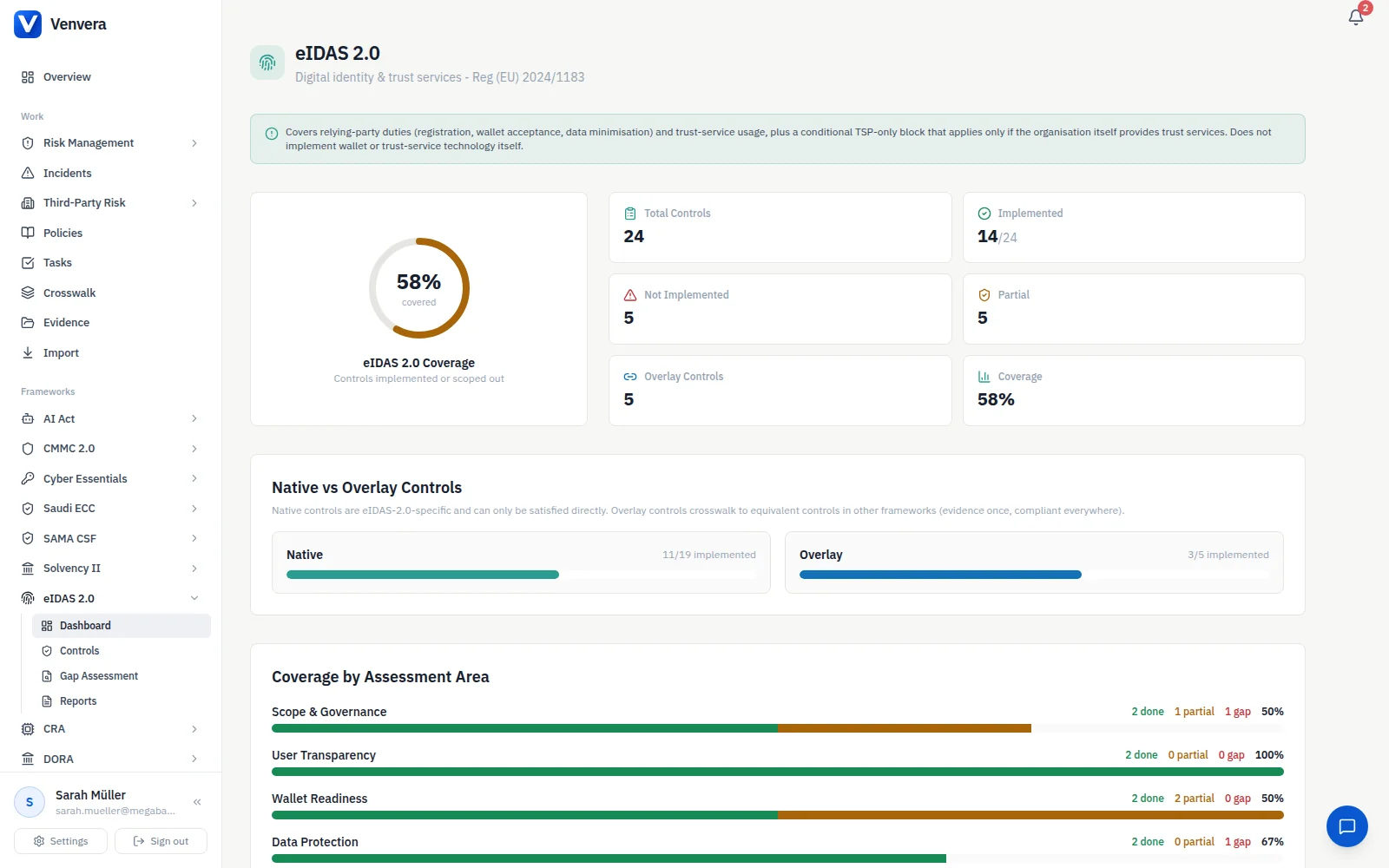
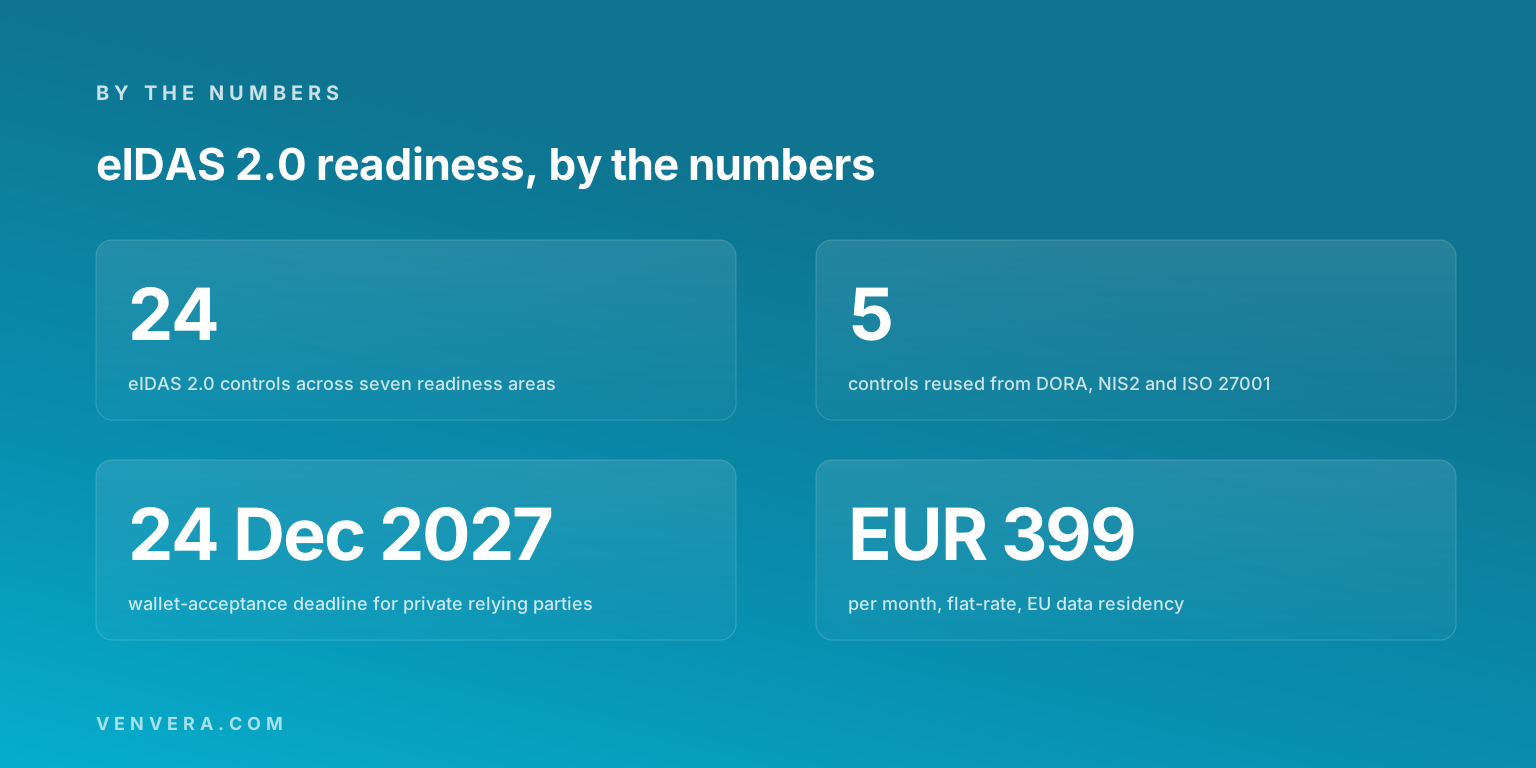
The obligations are not a single deliverable. They are a standing set that a supervisor can test at any time. Good eIDAS 2.0 software turns each into something structured, owned, evidenced and reviewable rather than a slide someone made in 2025. Venvera organises the surface into seven readiness areas, mapped to 24 controls.
| Readiness area | What the software manages |
|---|---|
| Scope & governance | Article 5f applicability per entity and service, ownership, policy set |
| User transparency | What you tell users about identity data, consent and purpose |
| Wallet readiness | Acceptance capability, attestation validation as a checked control, fallback |
| Data protection | Data minimisation, retention and the GDPR overlap on identity data |
| Trust services | Governance of signatures, seals, timestamps and certificates (if you provide them) |
| Security & incidents | Identity-incident response and the breach-notification duty on a clock |
| TSP duties (conditional) | Reporting and conformity-assessment duties, scoped only if you are a TSP |
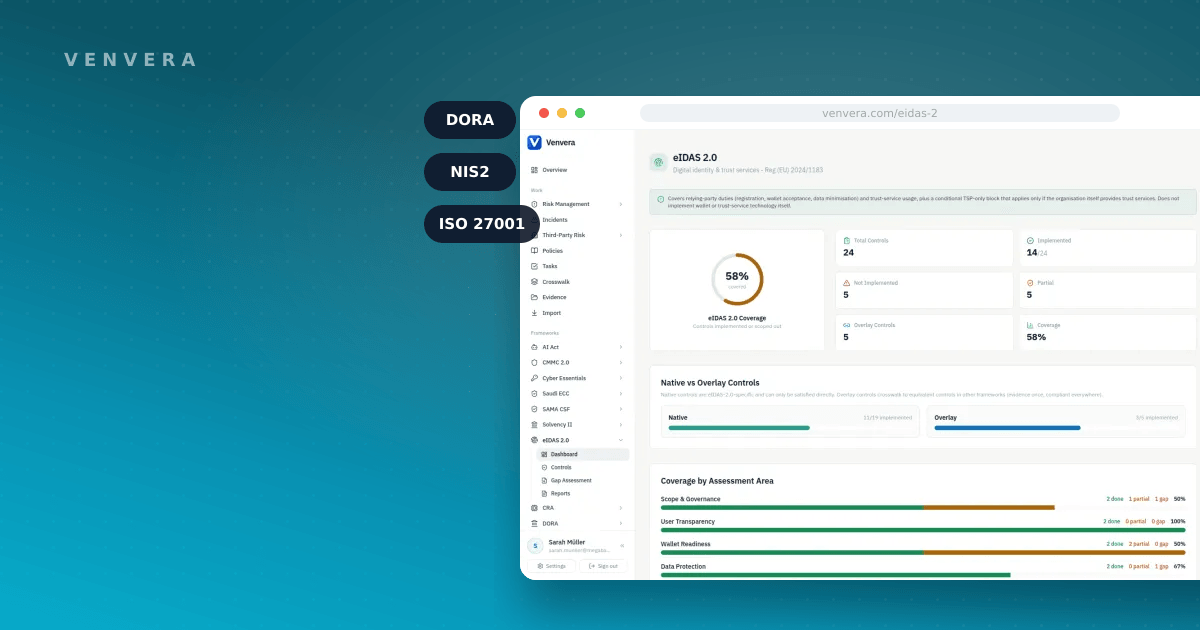
Venvera's eIDAS 2.0 module covers this surface with 24 controls across those seven areas. The point of counting controls is that every obligation has a home, an owner, a piece of evidence and a review date, instead of living in someone's memory three weeks before a deadline.
Wallet acceptance is a control you evidence, not cryptography you buy here
This is the single most important boundary to get right when you shop for eIDAS compliance software, and it is the direct analogue of the well-worn rule that a governance tool does not compute your capital or run your penetration test. The wallet-readiness area includes attestation validation: checking the authenticity, integrity and revocation status of a credential a user presents. That cryptographic check is done by your wallet toolkit or verifier, category two above. It is not something a governance platform performs.
What the governance layer owns is the proof around it. That means the record that your acceptance capability exists and was tested, the evidence that your validation process runs the way your policy says, the data-minimisation controls that stop you from collecting more identity data than the transaction needs, and the fallback path for when a user does not present a wallet. Article 5f is about being able to accept the wallet and doing so lawfully. The governance software proves you meet that duty. It does not, and should not claim to, perform the verification handshake itself. A vendor that blurs this line is selling you a credibility problem in front of your supervisor.
The crosswalk: reuse DORA and NIS2 evidence, never fake the eIDAS-specific duties
Here is the insight that changes the economics of eIDAS 2.0 for most organisations. If you are large enough to be a relying party under Article 5f, you are very likely already carrying other EU obligations with heavy governance requirements. The Digital Operational Resilience Act (DORA) has applied to financial entities since January 2025. Many organisations hold ISO 27001. Plenty fall under NIS2. Each of those regimes demands organisational controls that genuinely overlap with parts of eIDAS 2.0: incident response and reporting governance, access and identity governance, records management, and board accountability.
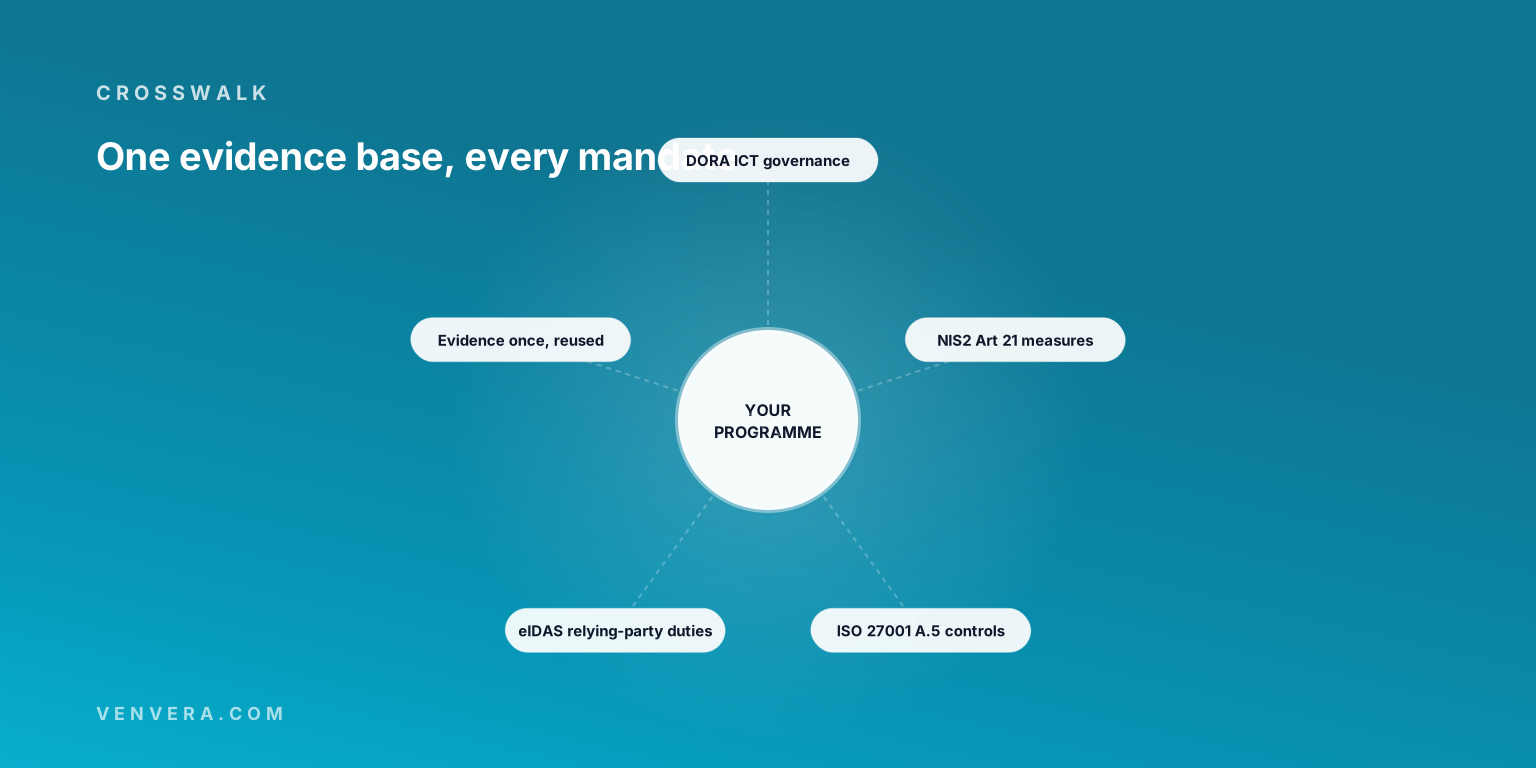
Without a crosswalk you evidence each of these separately, once per framework, in a different tool or folder, reviewed on a different cadence. That is duplicated work and duplicated drift risk. A crosswalk maps a single piece of evidence to every framework it genuinely satisfies. Prove your incident-response governance once for DORA and NIS2, and the overlapping eIDAS control is satisfied from the same evidence. Evidence once, compliant everywhere it honestly applies.
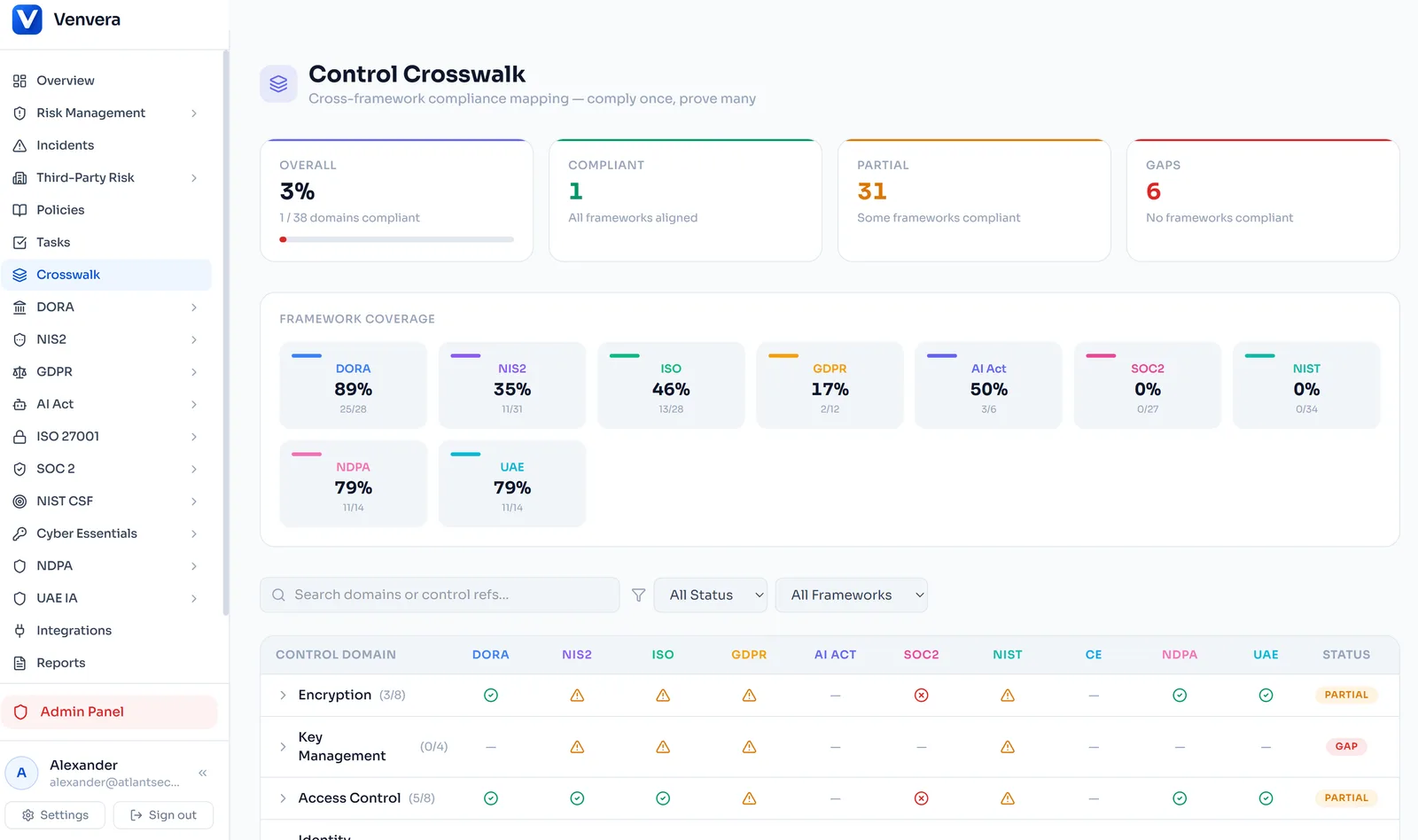
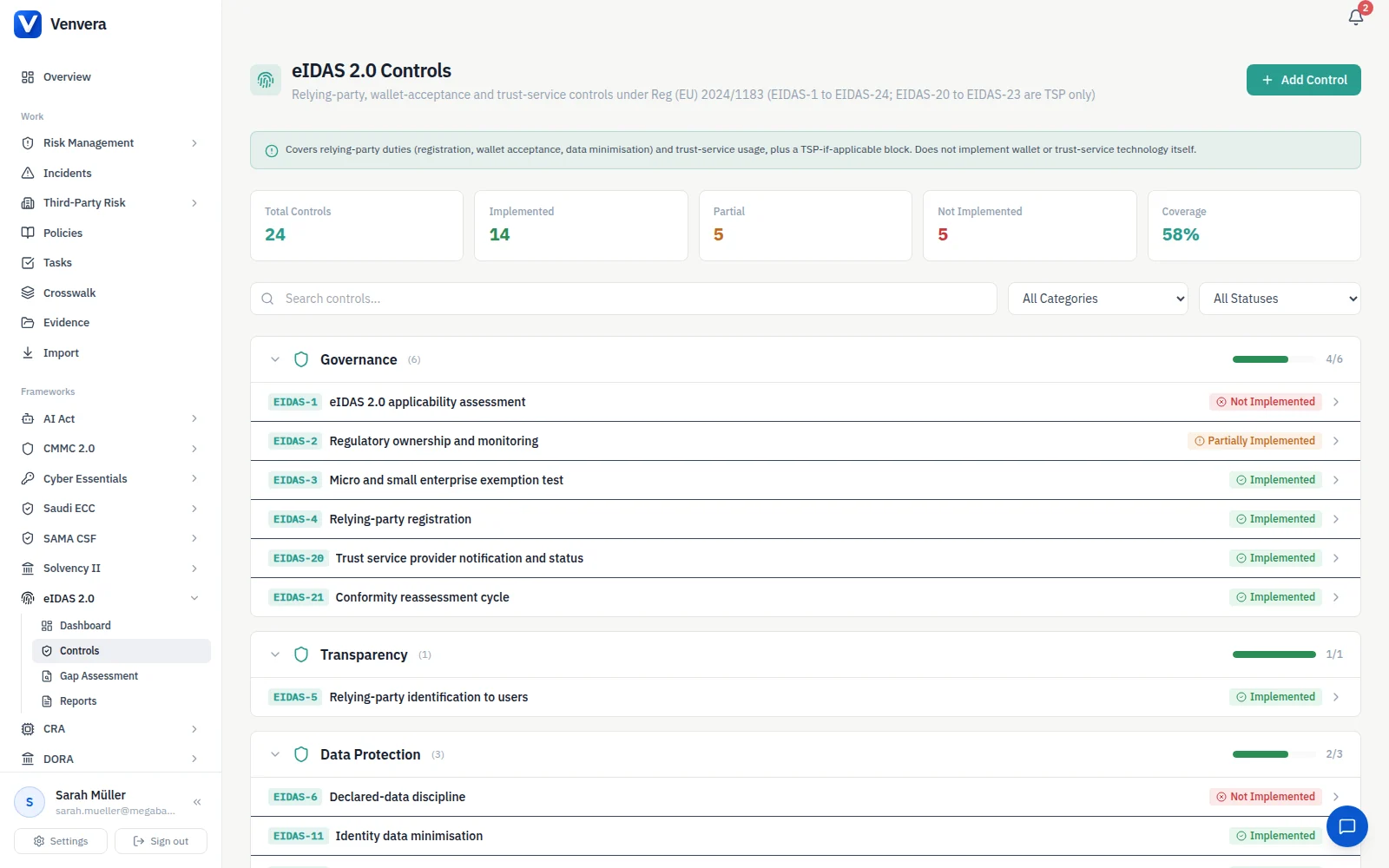
The discipline that keeps this honest is knowing what must never be auto-satisfied. In Venvera's eIDAS 2.0 module, only 5 of the 24 controls are genuine organisational-process overlaps that reuse DORA, NIS2 or ISO 27001 evidence. The other 19 are eIDAS-specific and native: they must be evidenced directly, because no DORA or ISO control proves them. There is no incident-management policy that proves "we can accept the EU Digital Identity Wallet," and no ISO access-control document that proves "we registered as a relying party." Pretending otherwise creates fake coverage, and fake coverage is worse than no coverage because it hides the gap. A serious tool reuses what genuinely overlaps and refuses to auto-claim what does not. Read that split as an effort forecast. The overlapping controls are ones you already know how to evidence, so they cost you an export. The eIDAS-specific ones are fresh work, and the slowest are the applicability determination and the data-minimisation discipline on identity attributes, because both need decisions from people outside compliance.
Trust service providers: the 24-hour clock and conformity assessment
If you are a trust service provider, eIDAS adds duties that a relying party does not carry, and your eIDAS compliance software has to treat them as first-class, time-bound obligations rather than generic tasks.
- The breach-notification clock. A significant security breach or loss of integrity must be reported to the supervisory body without undue delay and within 24 hours of becoming aware of it, with affected parties informed where required. That is a clock, and the software should run it as one. Of the trust-service duties this is the one that fails in practice, and it rarely fails because nobody knew the rule. It fails because the person who first sees the problem is an engineer on a Saturday who has no idea a clock has started.
- Conformity assessment. Qualified trust service providers are assessed by an accredited conformity assessment body at least every 24 months, with findings remediated and the assessment report retained as evidence. The software should track the cadence, the findings and the evidence, so the next assessment does not start from a cold spreadsheet.
- Conditional scope. These duties apply only if you are a TSP. The right tool scopes them in when they apply and out when they do not, so a relying party is not staring at trust-service controls it will never own.
The general rule holds across both roles: supervisors test embedding, not intention. When someone asks "show me you reported that incident inside the window" or "show me your last conformity assessment and what you did about the findings," the answer should be a few clicks away.
The eIDAS 2.0 operating model
For most organisations the path to 24 December 2027 is a short, repeatable sequence rather than a scramble. Scope your role, map the controls, reuse what you already hold, close the genuinely eIDAS-specific gaps, and carry the evidence into readiness.
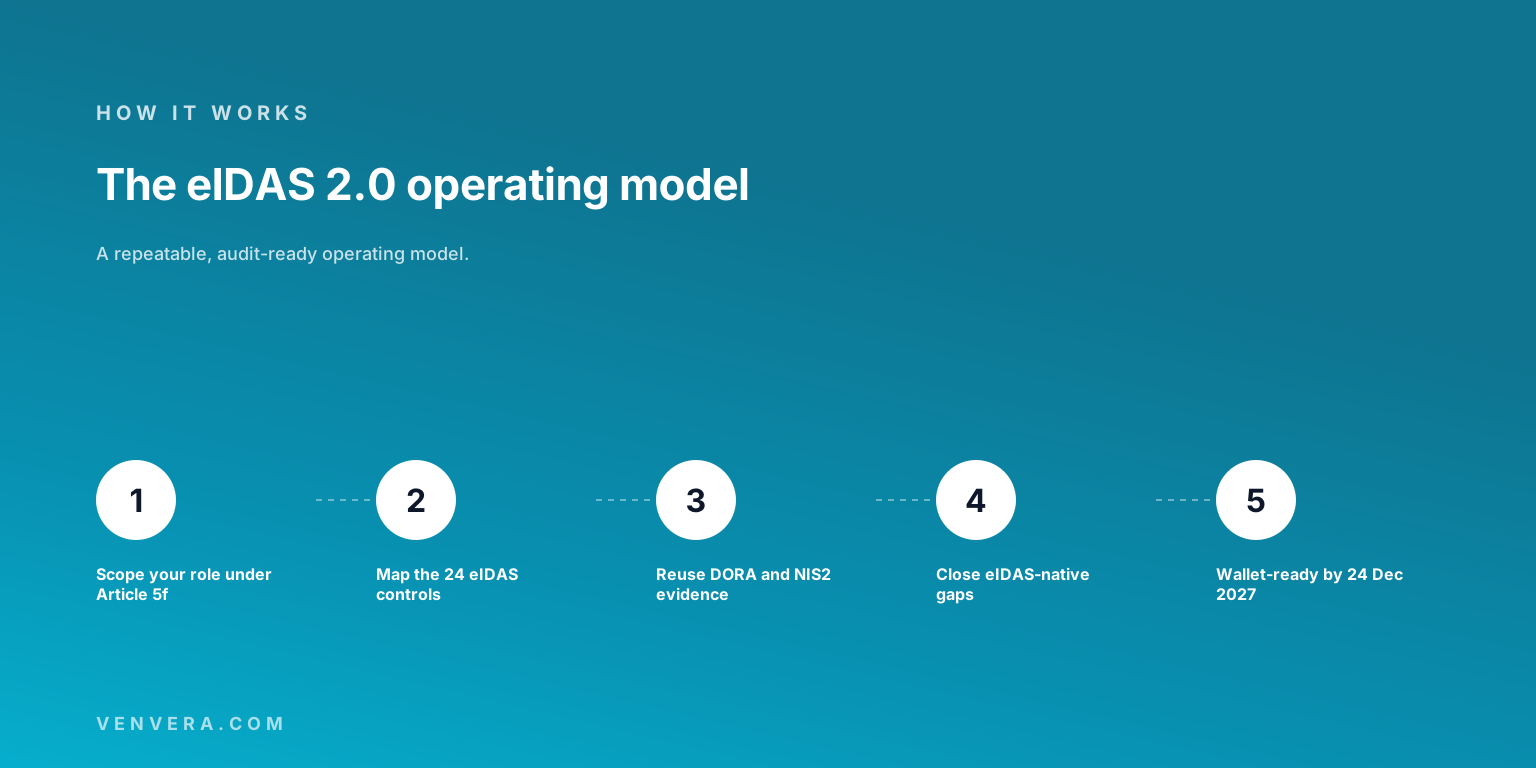
The efficiency gain hides in step three. If you already carry DORA, NIS2 or ISO 27001, the overlapping controls carry across, so the incremental work to stand up eIDAS 2.0 is concentrated on the genuinely identity-specific pieces: applicability, wallet acceptance, attestation validation as a checked control, and (if you are a TSP) the trust-service duties. That is the difference between an eIDAS programme that takes months and one that reuses what you already have. Be honest about the shape of the remaining work. Scoping and mapping is short: a few sessions of reading and arguing with the people who own the login flow. Wallet acceptance is an engineering project with a dependency on a toolkit vendor, and that is the part you cannot compress at the end. The deadline mechanics are covered in full in our 24 December 2027 timeline guide.
What to look for when you buy eIDAS compliance software
Once you have established that you are shopping in the governance category, use this checklist to separate serious platforms from a generic GRC tool with an eIDAS label bolted on.
Role-based scoping under Article 5f
The tool should determine applicability per entity and per service, apply the microenterprise and small-enterprise exemption, and separate relying-party duties from trust-service duties. If it treats eIDAS as one undifferentiated checklist, it will make you carry obligations that do not apply and miss ones that do. Of everything on this list, scoping is worth the most. The rest are conveniences; getting scope wrong is the failure that surfaces in front of a supervisor.
An honest scope boundary
The vendor should tell you plainly that the platform governs and evidences your obligations and complements, rather than replaces, your signing engine and your wallet toolkit. A vendor who claims to sign, issue certificates or cryptographically verify credentials from within a GRC product is overreaching, and that overreach will cost you credibility with a supervisor.
A real crosswalk that refuses fake coverage
Ask how the tool handles overlap with DORA, NIS2 and ISO 27001. A genuine crosswalk reuses shared governance evidence and clearly refuses to auto-satisfy eIDAS-specific duties like wallet acceptance and registration. If everything is "auto-satisfied," walk away, that is posture inflation.
The incident clock and conformity cadence
The 24-hour trust-service breach-notification duty should run as a live clock, and the conformity-assessment cadence should be tracked with its findings and evidence. Time-bound duties handled as ordinary tasks are the ones that get missed.
EU data residency
You are managing identity-related governance data under an EU regulation. It should stay in the EU, and the vendor should be able to say so plainly.
The bottom line
eIDAS compliance software is three markets wearing one name. Know which one you are buying for. If you need to sign or seal, you need a trust-service engine; if you need to accept and verify the wallet in your login flow, you need a wallet toolkit. But the piece most organisations are missing as 24 December 2027 approaches is the governance layer: the proof that you are in scope-correct, that your controls are owned and evidenced, that your incident and reporting duties run on a clock, and that you are genuinely ready. A purpose-built governance platform closes that gap, and a real cross-framework crosswalk closes it without making you re-evidence the DORA and NIS2 work you have already done. Just make sure the vendor is honest about the boundary: it complements your cryptographic tools, it does not replace them.
Primary sources
The scope, roles and deadline cited above trace to the following primary sources.
- Regulation (EU) 2024/1183 - amends Regulation (EU) No 910/2014 and establishes the European Digital Identity Framework and the EU Digital Identity Wallet. Entered into force 20 May 2024. EUR-Lex.
- Article 5f (relying-party acceptance). Private relying parties required to use strong user authentication for online identification must accept the EU Digital Identity Wallet by 24 December 2027; microenterprises and small enterprises are exempt.
- Regulation (EU) No 910/2014 (the original eIDAS Regulation) - the trust-service framework that eIDAS 2.0 amends, including the trust-service security-breach notification duty and qualified-provider conformity assessment. EUR-Lex.
- Wallet implementing regulations - the first were published in the Official Journal on 4 December 2024 and entered into force on 24 December 2024. European Commission.
- DORA - Regulation (EU) 2022/2554 - the ICT and incident-governance overlap reused through the crosswalk; it has applied to financial entities since 17 January 2025. EUR-Lex.
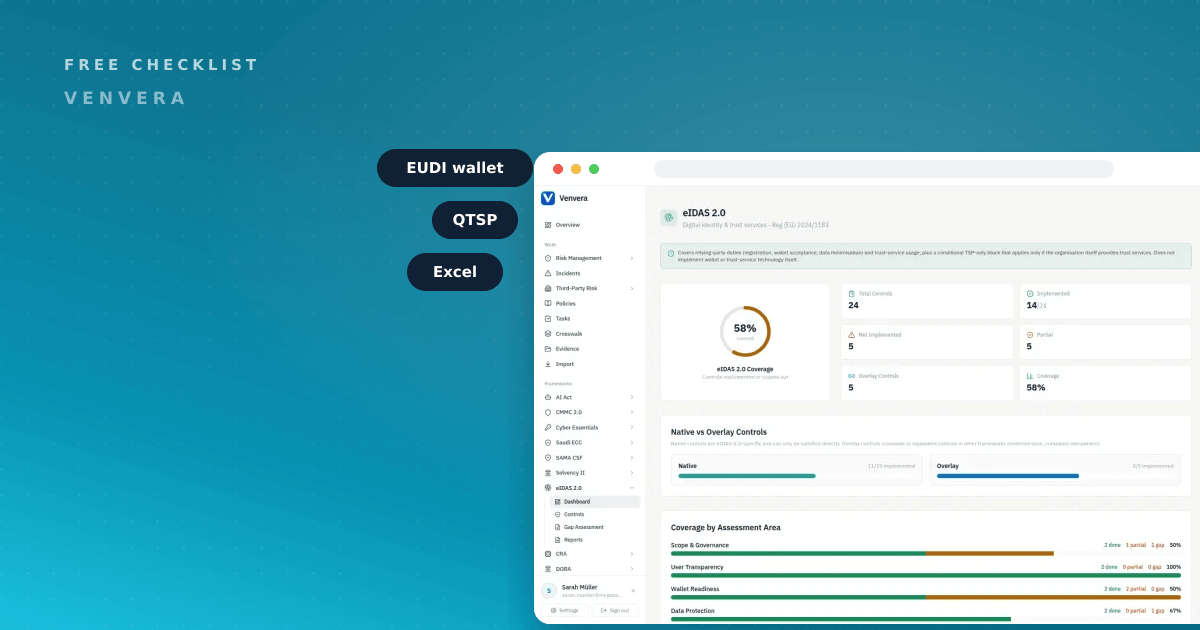
Scope note. Venvera's eIDAS 2.0 module is a governance and controls layer. It covers relying-party and trust-service obligations with 24 controls across seven readiness areas, scopes trust-service duties conditionally, and runs the 24-hour incident duty on a clock. It does not sign documents, issue certificates, build the EU Digital Identity Wallet, or perform the cryptographic verification of wallet credentials; it governs and evidences that you meet those obligations. This boundary is shown in-product as a scope banner.
See where you stand against the 24 December 2027 deadline.
Venvera manages eIDAS 2.0 with 24 controls across seven readiness areas, role-based Article 5f scoping, the 24-hour incident duty on a clock, and a cross-framework crosswalk that reuses your DORA and NIS2 evidence. Flat-rate from EUR 399/month, no per-user fees, EU data residency, 14-day free trial. Start with a free gap report on the eIDAS 2.0 module.