
Learn
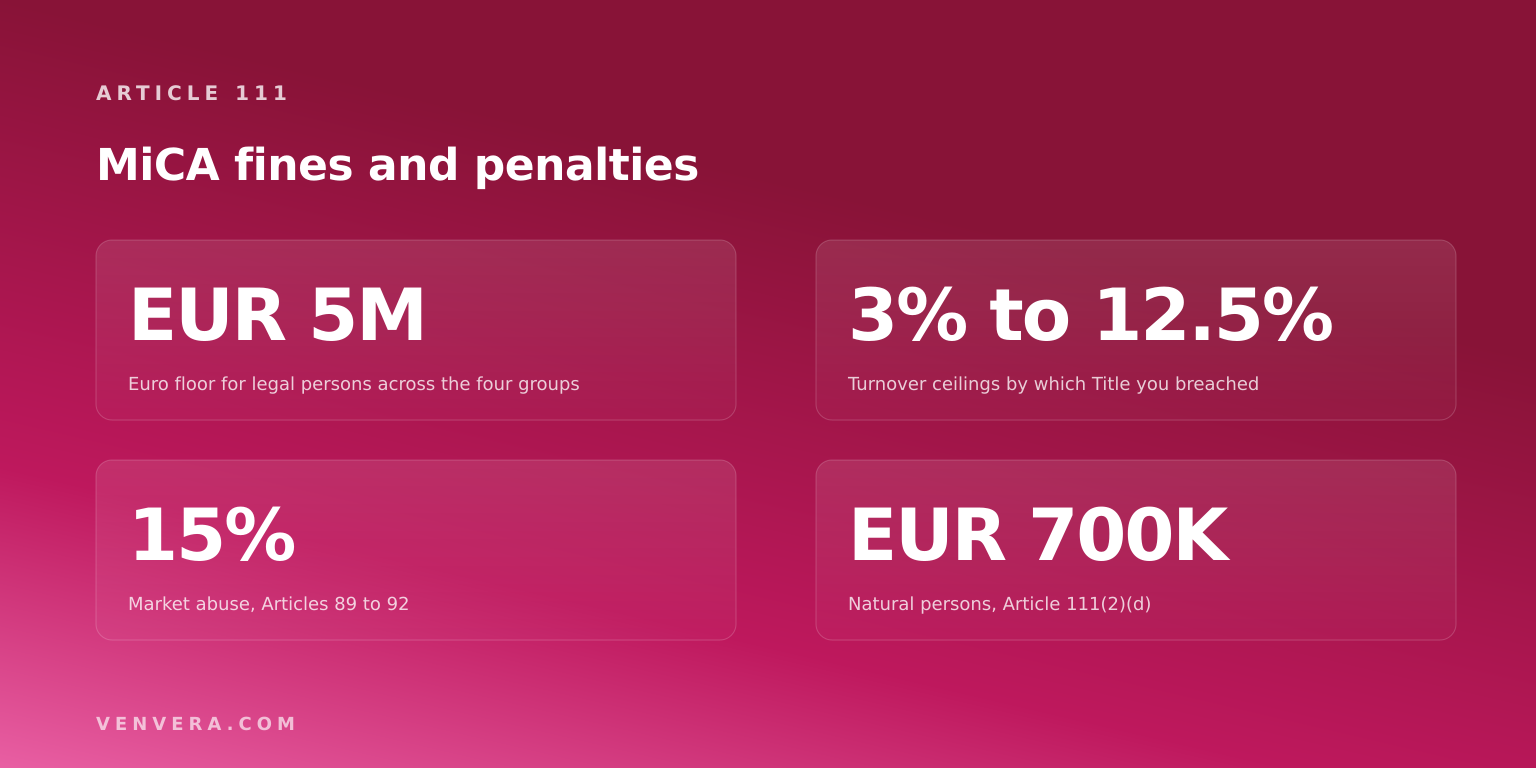
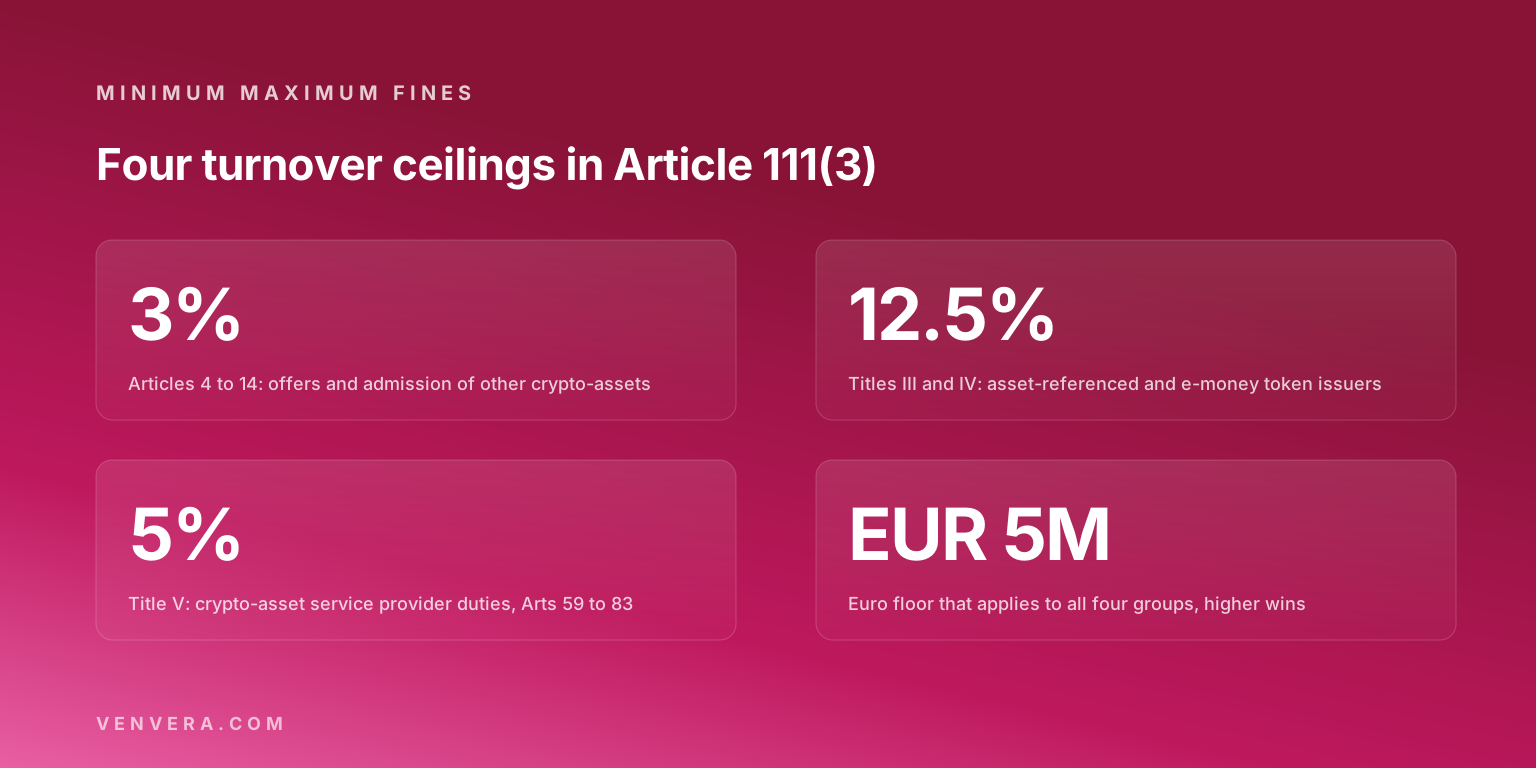
The Markets in Crypto-Assets Regulation does not set a single maximum fine. Article 111 sets a set of floors that every Member State's maximum must reach, and the floor depends on which part of the Regulation you broke. For a company, the lowest of those floors is EUR 5 000 000 or 3% of total annual turnover, for breaches of the rules on offering and admitting ordinary crypto-assets. The highest is EUR 15 000 000 or 15% of turnover, for market manipulation and insider dealing. In between sit 5% for crypto-asset service provider duties and 12.5% for issuers of asset-referenced and e-money tokens. In each case the higher of the euro figure and the percentage applies, and Article 111(6) lets Member States go above all of them.
Two things make MiCA penalties different from the other EU regimes on this site. First, the fines are not the only sanction, and for an authorised firm they are rarely the most damaging one: Article 111 also puts withdrawal of authorisation, management bans and public naming in the same list. Second, for issuers of significant tokens the enforcer is not a national authority at all but the European Banking Authority, under Articles 130 to 132, with its own fine scale.
| Breach group | Minimum maximum fine for a company | Source |
|---|---|---|
| Offers and admission to trading of crypto-assets other than ARTs and EMTs, Articles 4 to 14 | EUR 5 000 000 or 3% of total annual turnover | Art. 111(3)(a) and (b) |
| Asset-referenced token issuers, Articles 16 to 47 as listed | EUR 5 000 000 or 12.5% of total annual turnover | Art. 111(3)(a) and (d) |
| E-money token issuers, Articles 48 to 55 as listed | EUR 5 000 000 or 12.5% of total annual turnover | Art. 111(3)(a) and (d) |
| Crypto-asset service providers, Articles 59, 60, 64 and 65 to 83 | EUR 5 000 000 or 5% of total annual turnover | Art. 111(3)(a) and (c) |
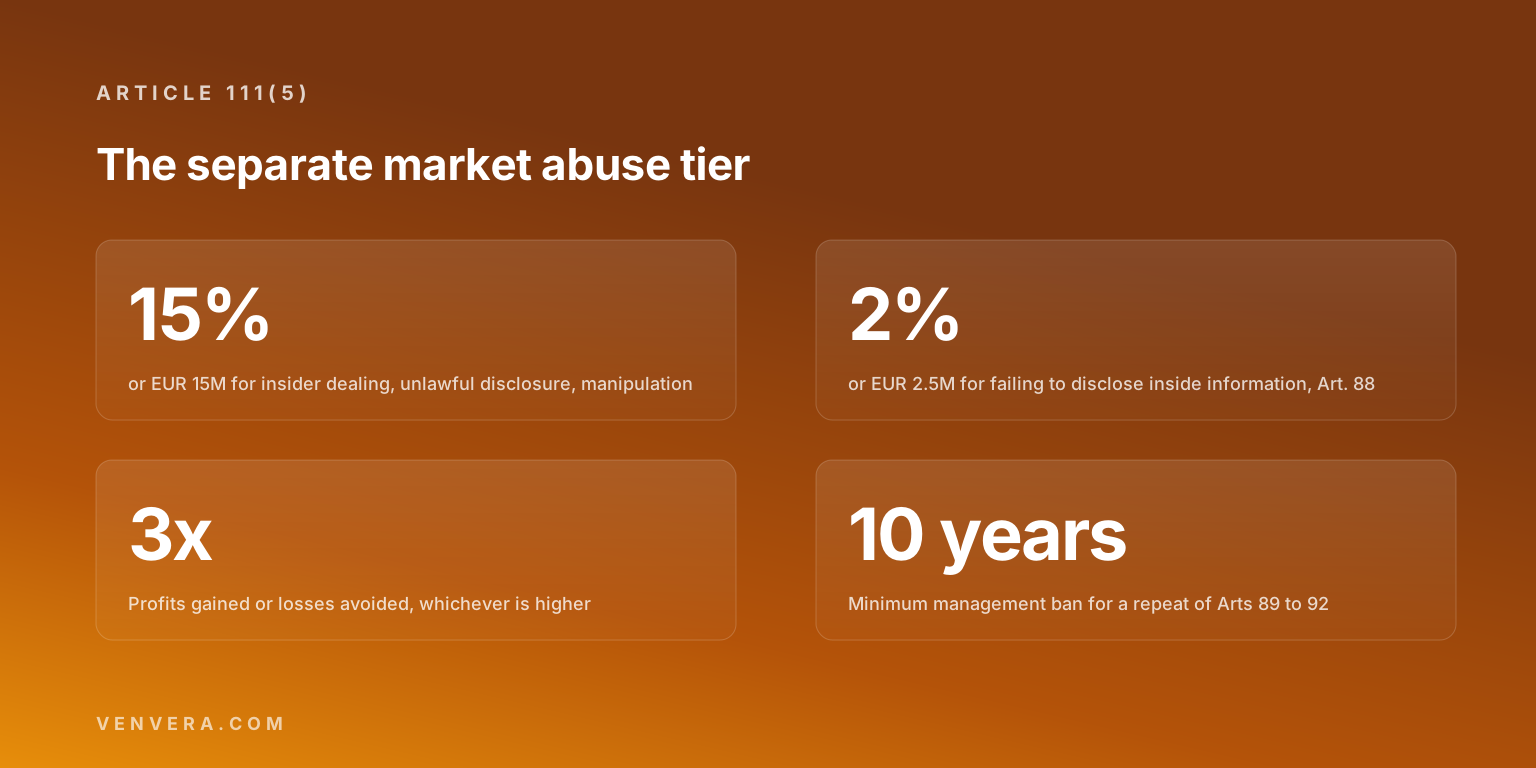
| Failure to disclose inside information, Article 88 | EUR 2 500 000 or 2% of total annual turnover | Art. 111(5)(j) |
| Insider dealing, unlawful disclosure and market manipulation, Articles 89 to 92 | EUR 15 000 000 or 15% of total annual turnover | Art. 111(5)(j) |
Turnover is measured on the last available financial statements approved by the management body, and where the firm belongs to a group that prepares consolidated accounts, the relevant figure is the consolidated turnover of the ultimate parent. A small EU subsidiary of a large international group is therefore measured against the group.
What are the fines under MiCA?
Article 111 works in two layers. Paragraph 1 lists the infringements that Member States must be able to penalise, grouped by which Title of the Regulation they sit in. Paragraphs 2, 3 and 5 then set the minimum sanctions for each group. The wording throughout is maximum fines of at least a given amount. That is a floor under the national ceiling, not the ceiling itself, and it is the most misread phrase in the whole penalty regime.
For the four groups covering crypto-asset offers, token issuers and service providers, Article 111(2) requires at least a public statement naming the person and the infringement, an order to cease the conduct, and fines of at least twice the profits gained or losses avoided where those can be worked out, even if that exceeds the fixed maximum. Natural persons face a floor of EUR 700 000. Legal persons face the EUR 5 000 000 floor and the turnover percentages in the table above. For crypto-asset service provider breaches specifically, Article 111(4) adds a temporary ban on any responsible member of the management body from exercising management functions in any crypto-asset service provider.
Article 111(1)(f) also covers failure to cooperate with an investigation, inspection or information request under Article 94(3). No fixed amount is attached to that group. Member States must provide for appropriate penalties, but the Regulation leaves the figure to them.
Why is market abuse a separate tier?
Because Title VI of MiCA imports the logic of the Market Abuse Regulation, and its penalties are scaled accordingly. Article 111(5) sets the sanctions for Articles 88 to 92: public disclosure of inside information, the prohibition of insider dealing, the prohibition of unlawful disclosure, the prohibition of market manipulation, and the duty on service providers to prevent and detect abuse.
The financial floors are higher than for any other group: fines of at least three times the profits gained or losses avoided, EUR 15 000 000 or 15% of turnover for a company that breaches Articles 89 to 92, and EUR 2 500 000 or 2% for a failure to disclose inside information under Article 88. For individuals the floors are EUR 5 000 000 and EUR 1 000 000 respectively. The non-financial measures are also heavier: disgorgement of profits, withdrawal or suspension of a crypto-asset service provider's authorisation, a temporary ban on dealing on own account, and for a repeat breach of Articles 89 to 92, a ban of at least ten years from management functions in any crypto-asset service provider.
Who imposes MiCA penalties?
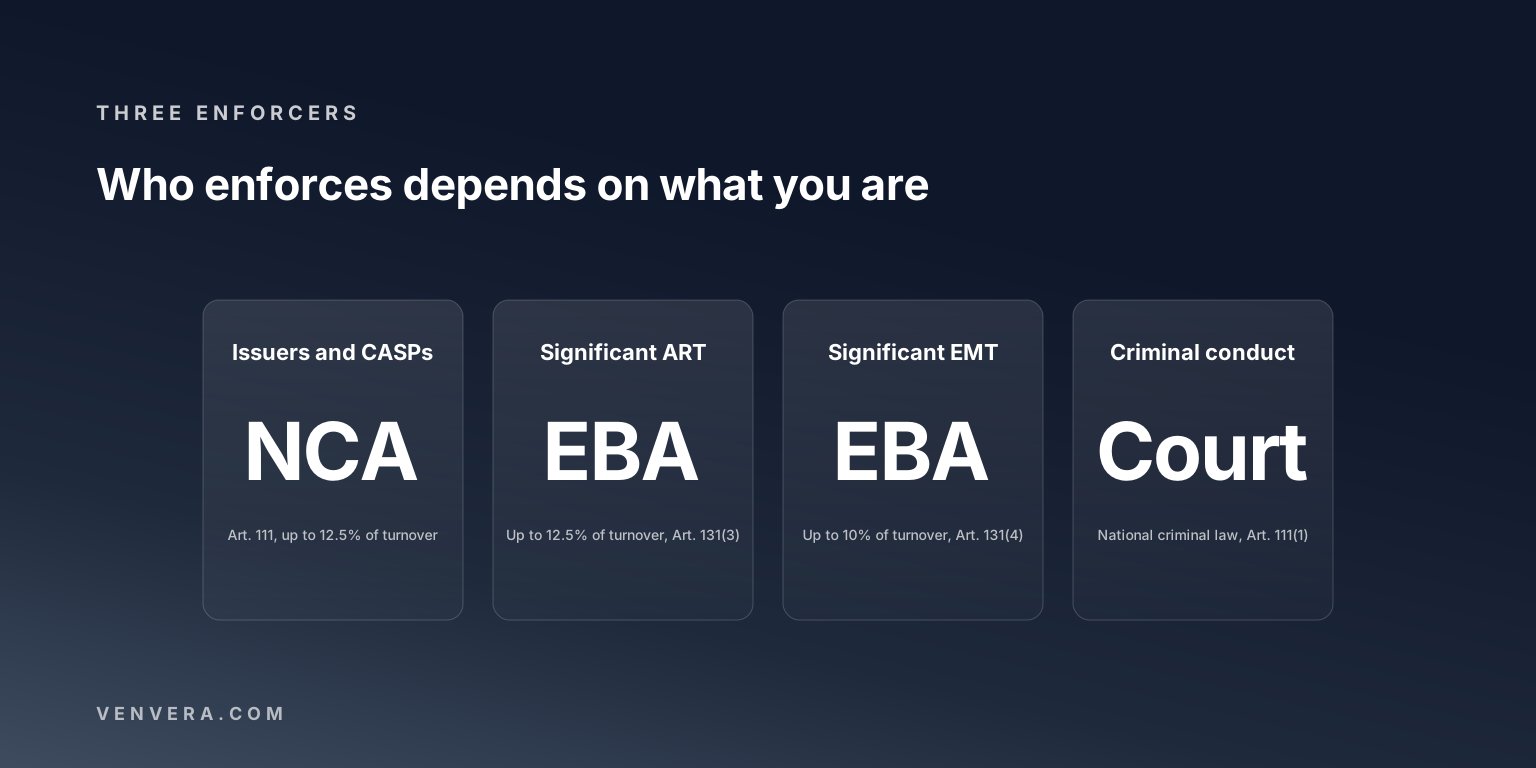
Three different bodies, depending on what you are.
National competent authorities
For most issuers and every crypto-asset service provider, the enforcer is the competent authority designated by the home Member State under Article 93. Article 111 gives that authority the powers described above, and Article 114 requires it to publish penalty decisions on its website, including the identity of the person responsible, subject to the deferral and anonymisation grounds in that Article. The publication is, for a regulated firm, often the more expensive part of the sanction.
The European Banking Authority
Issuers of significant asset-referenced tokens and significant e-money tokens are supervised directly by EBA. Article 130 lists its supervisory measures, and Article 131 sets its fine scale: up to 12.5% of annual turnover in the preceding business year for an issuer of a significant asset-referenced token, up to 10% for an issuer of a significant e-money token, or in either case twice the profits gained or losses avoided where they can be determined. Article 132 adds periodic penalty payments of 3% of average daily turnover, or 2% of average daily income for a natural person, for up to six months, to compel compliance with an EBA decision.
Criminal courts
Article 111 is expressly without prejudice to criminal penalties, and the second subparagraph of Article 111(1) lets a Member State decline to lay down administrative penalties for an infringement group that was already a criminal offence in its national law by 30 June 2024. In those jurisdictions the route for the same conduct runs through the criminal courts rather than the regulator.
Which non-financial sanctions matter more than the fine?
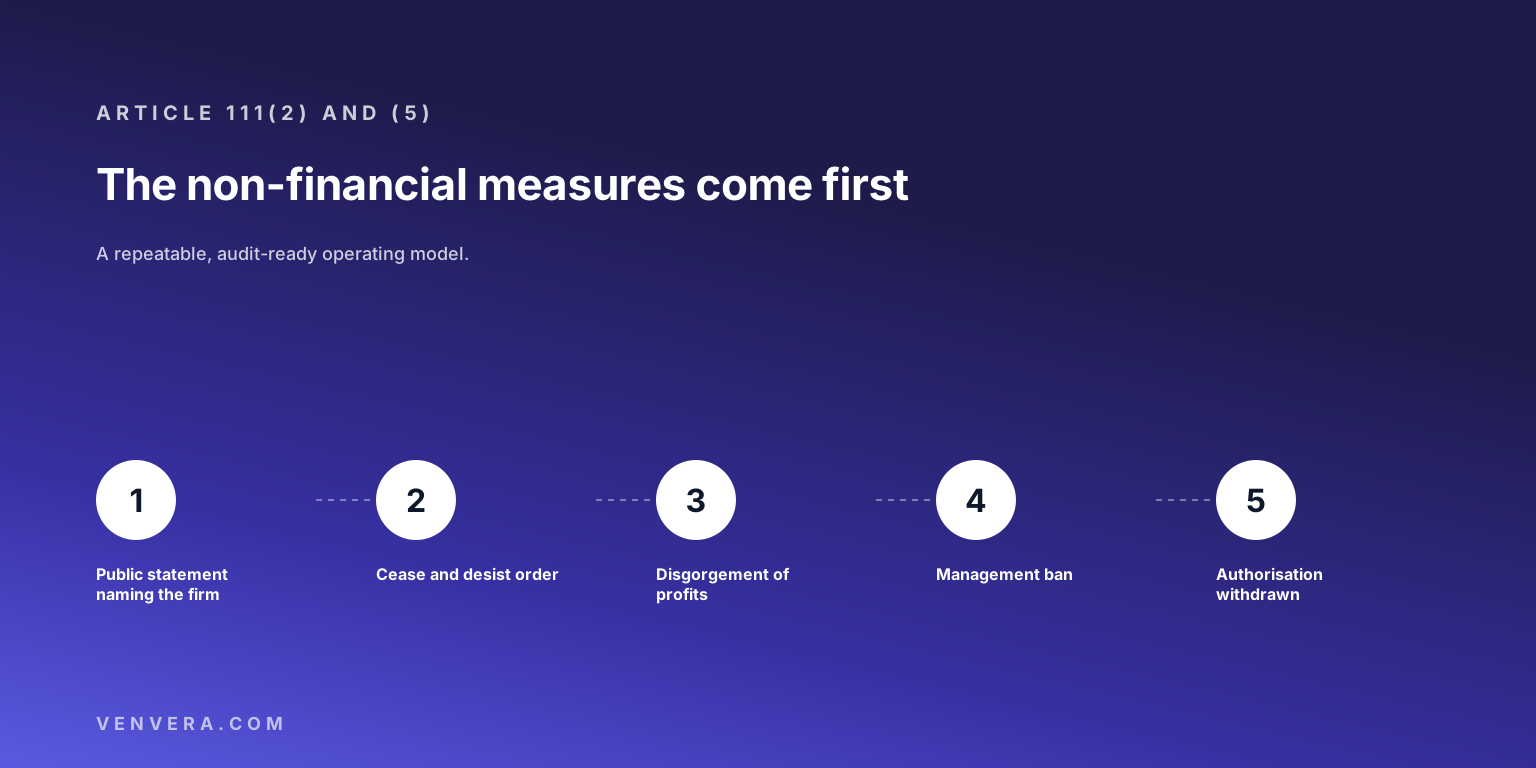
For a firm that depends on its authorisation, the order of pain is roughly the reverse of the order in which most summaries list the sanctions. A public statement naming the firm arrives first and is the cheapest to impose. A cease and desist order follows. Disgorgement removes the gain. A management ban removes the people. Withdrawal of authorisation, which Article 111(5)(d) lists for market abuse and Article 64 provides for more generally, removes the business.
Since the Article 143(3) transitional period ended on 1 July 2026, there is no national permission to fall back on. A crypto-asset service provider whose MiCA authorisation is withdrawn cannot serve EU clients at all, which is why the fine ceilings, however large, understate the exposure of an authorised firm.
How is the amount decided?
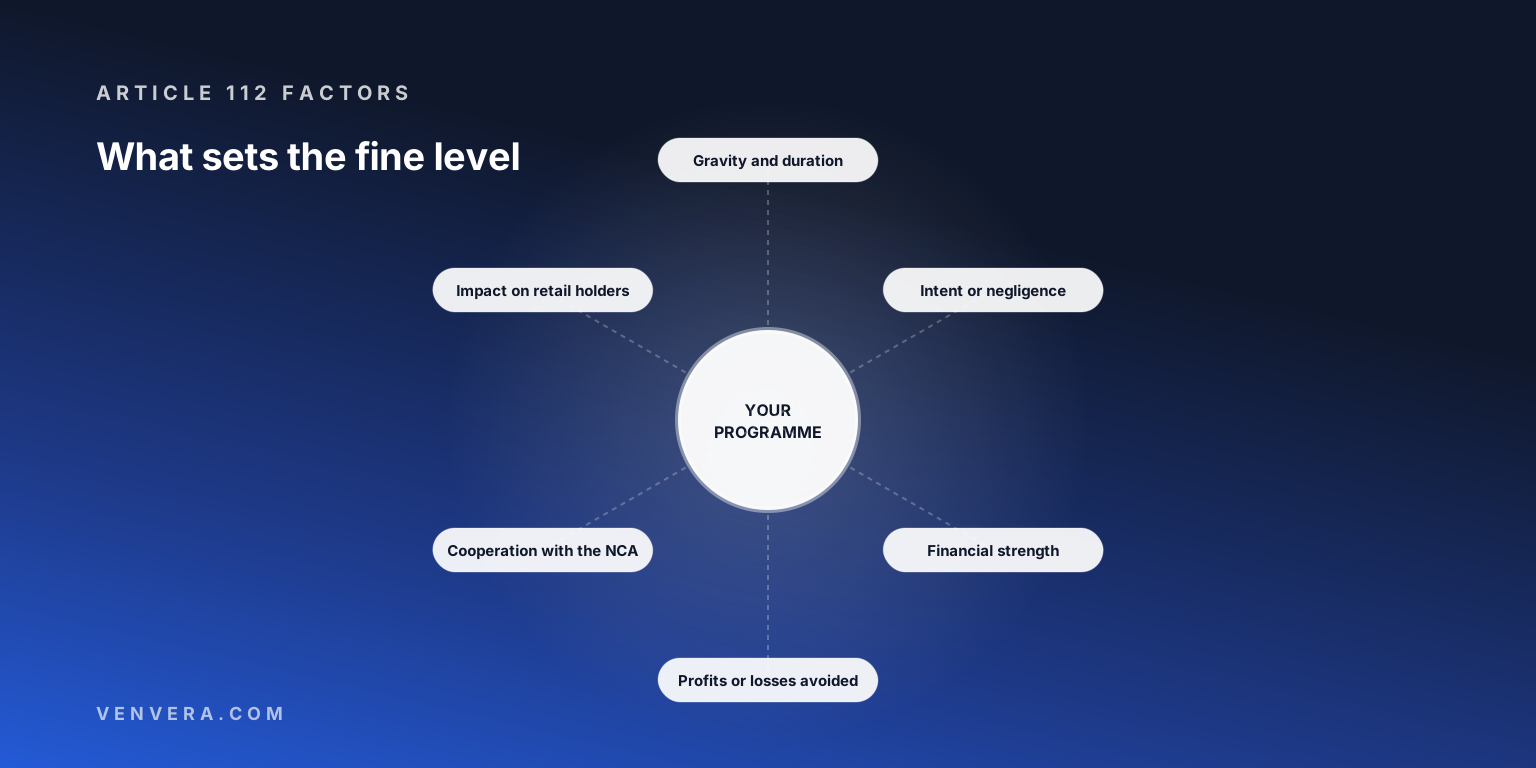
Article 112(1) lists what the competent authority must take into account: the gravity and duration of the infringement, whether it was intentional or negligent, the degree of responsibility, the financial strength of the person as shown by turnover or income and net assets, the profits gained or losses avoided, losses caused to third parties, the level of cooperation with the authority, previous infringements, measures taken to prevent repetition, and the impact on holders and clients, in particular retail holders.
Two of those cut in a direction firms do not always expect. Cooperation counts, but Article 112(1)(g) says it is weighed without prejudice to the need to ensure disgorgement, so cooperating does not keep the profit. And retail impact is singled out, which means a breach affecting a small number of professional clients and the same breach affecting many retail holders are not the same case.
What the other results get wrong
Four errors recur in the published summaries.
The first is presenting the percentages as a single range. Pages that say MiCA fines are 3% to 12.5% of turnover are quoting the floors for three different groups of firms as though they were one sliding scale. A crypto-asset service provider that is not an issuer sits at 5%, not 12.5%, unless the conduct is market abuse, in which case the 15% tier applies and the 12.5% figure is irrelevant.
The second is calling EUR 5 000 000 the maximum. It is the minimum that a Member State's maximum must reach. Article 111(6) expressly allows higher levels, and the disgorgement based limbs in Article 111(2)(c) and 111(5)(h) can exceed any fixed figure where the profit can be determined.
The third is omitting the market abuse tier entirely, which is odd given that it carries the largest numbers in the Regulation.
The fourth is applying EBA's fine scale to everyone. Articles 130 to 132 reach only issuers of significant asset-referenced and e-money tokens. Every other firm answers to a national authority, and the national ceiling is whatever that Member State set above the Article 111 floor.
Working out your own exposure
The point is not to arrive at a number. It is to find out which group your likely failure sits in, and which enforcer would act.
| Question | Your answer | Why it matters |
|---|---|---|
| Which Title of MiCA do you operate under: II, III, IV or V? | Sets the turnover floor: 3%, 12.5%, 12.5% or 5%. | |
| Has your token been classified as significant under Article 43 or 56? | Moves you from a national authority to EBA and the Article 131 scale. | |
| What is the consolidated turnover of your ultimate parent? | Art. 111(3) measures group turnover where consolidated accounts exist, not the EU entity's. | |
| Can you evidence your Article 92 market abuse prevention and detection arrangements? | The 15% tier is the one most likely to be triggered by a control gap rather than by intent. | |
| Was the infringement group already a criminal offence in your home Member State by 30 June 2024? | If so, the route may run through criminal courts rather than administrative fines. | |
| Has your Member State published its penalty rules above the Article 111 floor? | The floor is not your ceiling. Your national law is. |
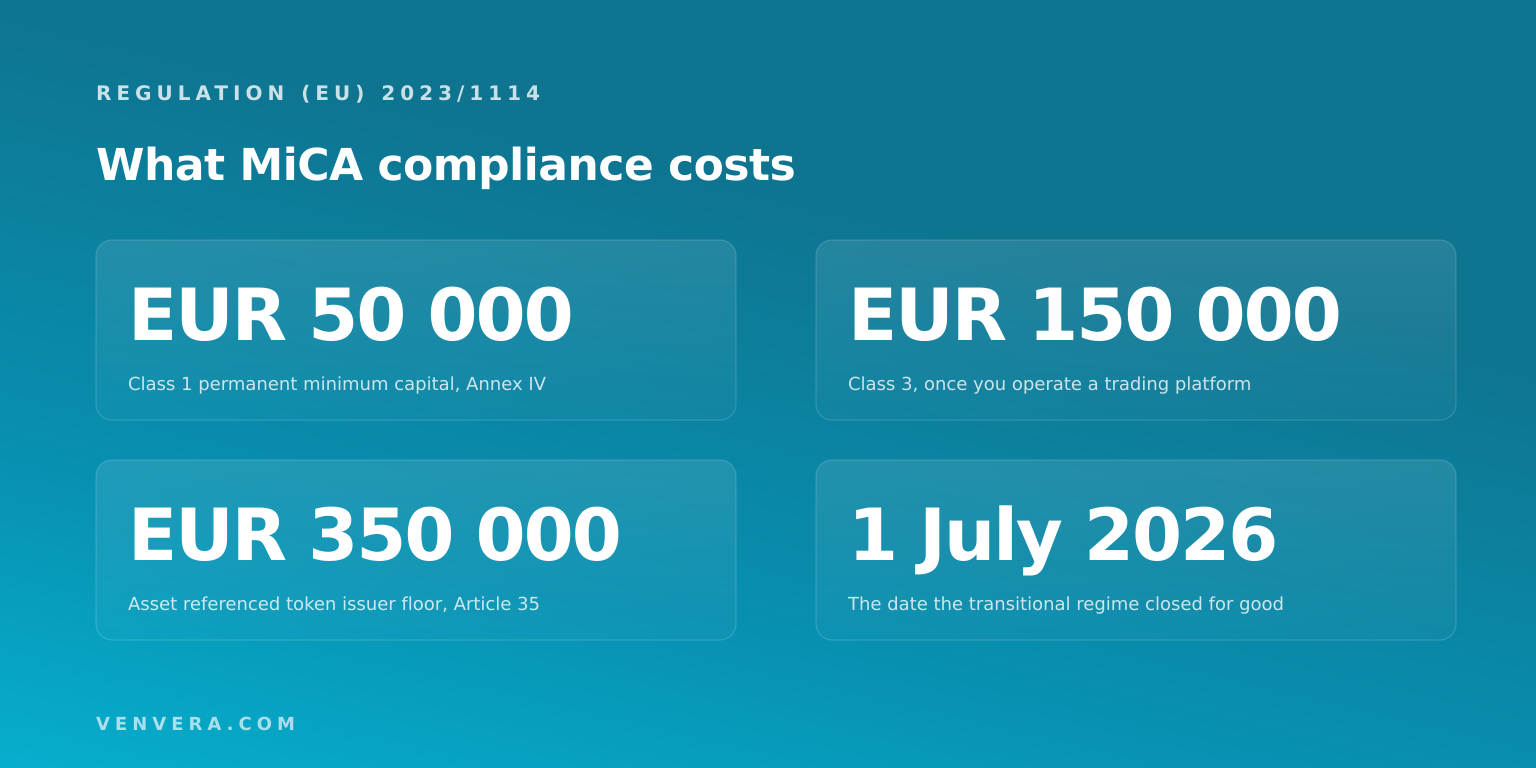
If most rows are blank, the useful next step is a baseline rather than a legal opinion. Our guide to what MiCA compliance costs sets out the requirements that generate the recurring evidence, and a free compliance check across the six areas on the MiCA framework page shows which ones you cannot currently prove.
Frequently asked questions
What is the maximum fine under MiCA?
There is no single EU maximum. Article 111 sets minimum maxima: for a company, EUR 5 000 000 or 3%, 5% or 12.5% of total annual turnover depending on the breach group, rising to EUR 15 000 000 or 15% for market manipulation and insider dealing. Member States may set higher figures, and disgorgement based fines can exceed any fixed amount.
Can individuals be fined?
Yes. Article 111(2)(d) sets a floor of EUR 700 000 for natural persons in the main groups, and Article 111(5)(i) sets EUR 1 000 000 for Article 88 and EUR 5 000 000 for Articles 89 to 92. Management bans apply on top, and for repeat market abuse the ban is at least ten years.
Does EBA fine crypto-asset service providers?
No. EBA's fining powers in Articles 130 to 132 reach issuers of significant asset-referenced and e-money tokens. Service providers are supervised and sanctioned by their home Member State's competent authority.
Is a MiCA fine calculated on EU turnover or worldwide turnover?
On the total annual turnover in the last approved financial statements, and where the firm is part of a group that prepares consolidated accounts, on the consolidated turnover of the ultimate parent. Article 111(3) does not limit the figure to EU revenue.
Since when can MiCA fines be imposed?
Titles III and IV, covering asset-referenced and e-money tokens, have applied since 30 June 2024 under Article 149(3). The rest of the Regulation, including the service provider and market abuse rules, has applied since 30 December 2024. The Article 143(3) transitional period for providers operating under national law ended on 1 July 2026.
Will a fine be published?
By default, yes. Article 114 requires competent authorities to publish penalty decisions on their websites, including the type and nature of the infringement and the identity of the person responsible, with limited grounds for deferring or anonymising publication.
Primary sources
Fine floors, sanctions and enforcer powers are taken from Articles 93, 94, 111, 112, 114 and 130 to 132 of Regulation (EU) 2023/1114, the Markets in Crypto-Assets Regulation. Application dates are from Articles 143 and 149 of the same Regulation. National penalty rules sit above the Article 111 floor and differ by Member State. Confirm the current text and your home authority's published rules before relying on a figure.