
Best

If you're still thinking about NIST CSF as "Identify, Protect, Detect, Respond, Recover" - you're one function behind. CSF 2.0 added Govern. And that addition changes everything about how compliance tools need to work.
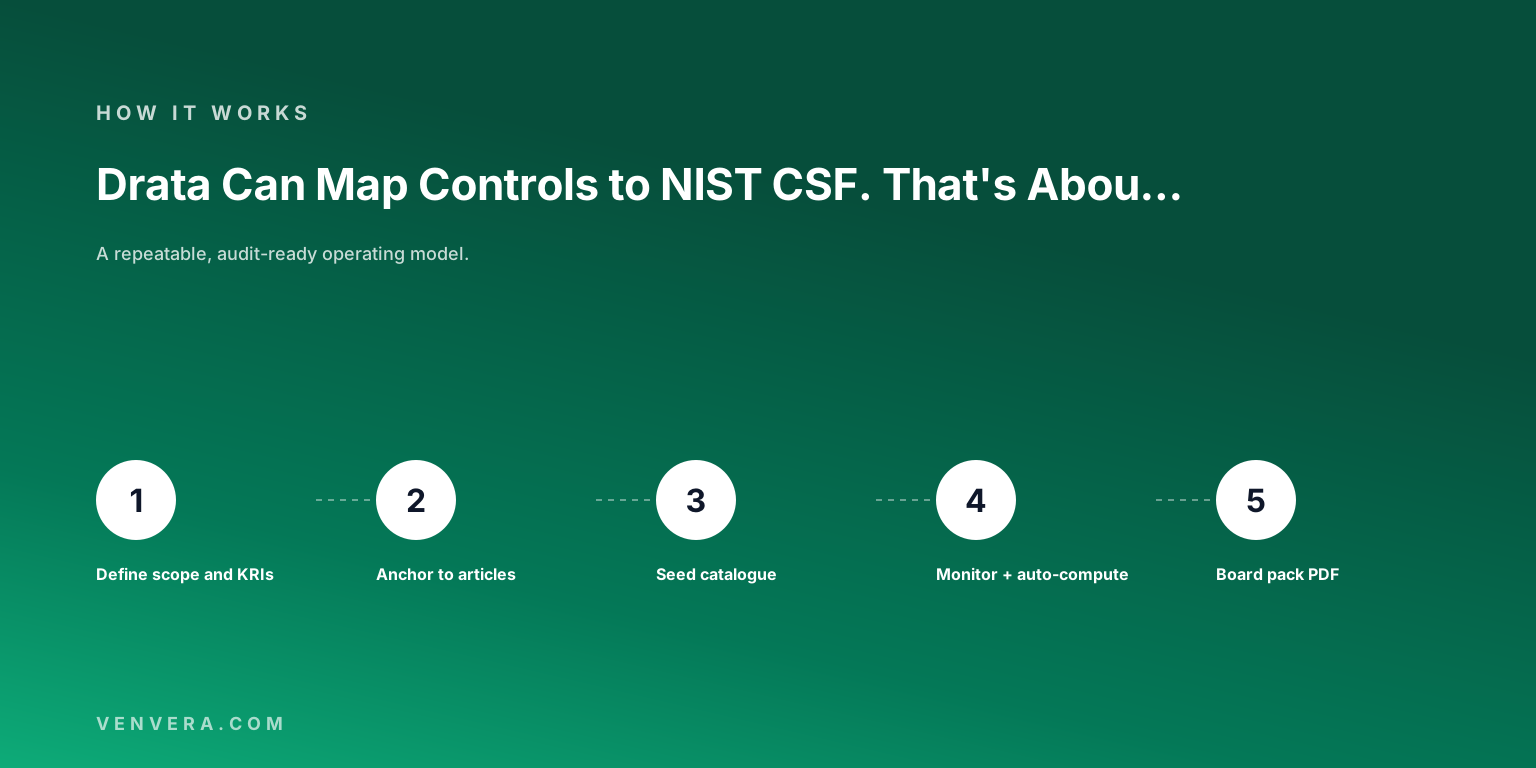
The original CSF was five functions focused on technical security. Drata was built for this kind of thing - connect to infrastructure, check controls, generate evidence. Then NIST added Govern: organizational context, risk management strategy, roles and responsibilities, policies, oversight, and cybersecurity supply chain risk management.
Drata's infrastructure monitoring doesn't touch governance. It can't - governance isn't a technical control that gets checked by scanning your AWS configuration. It's an organizational capability that requires structured documentation, risk assessment frameworks, and cross-functional programme management. That's a fundamentally different kind of compliance work.
⚠
THE PROBLEM
NIST CSF 2.0: What Changed and Why It Matters
CSF 2.0 (released February 2024) wasn't a minor update. It fundamentally repositioned the framework from a cybersecurity checklist into a risk governance programme.
⚠ What changed:
- New Govern Function: Organizational context, risk strategy, roles, policies, oversight, supply chain risk. Requires governance documentation - not infrastructure scanning.
- Expanded Supply Chain Focus: Elevated from a subcategory to a core governance concern. You need supplier risk assessment, not just questionnaires.
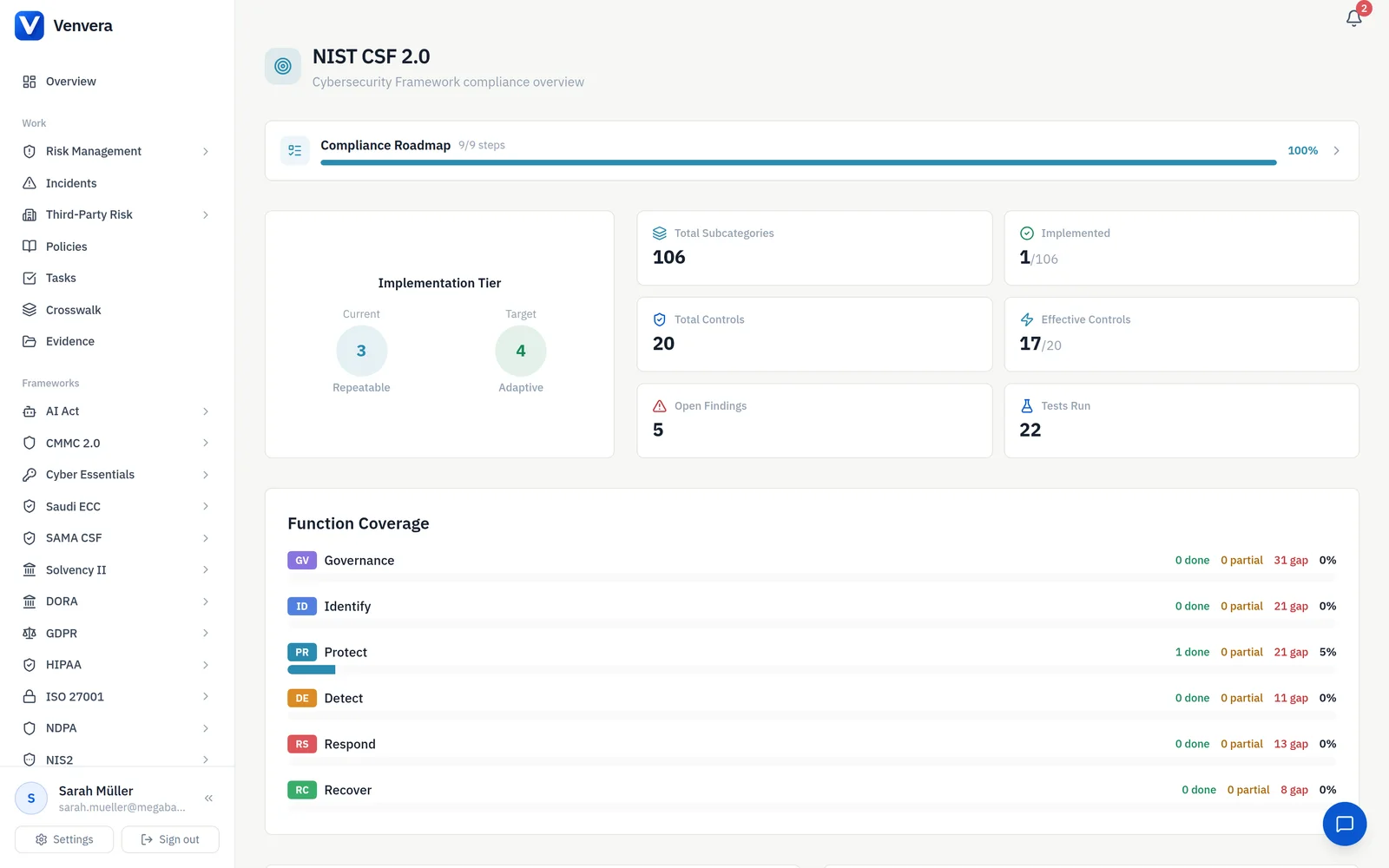
- Profiles and Tiers: Current/target organizational profiles and implementation tiers provide a maturity model. Assess where you are, document where you're going.
- Broader Applicability: CSF 2.0 explicitly applies to all organizations - the title dropped "Critical Infrastructure" entirely.
🔍
WHERE DRATA FALLS SHORT
What Drata Does (and Doesn't Do) for NIST CSF
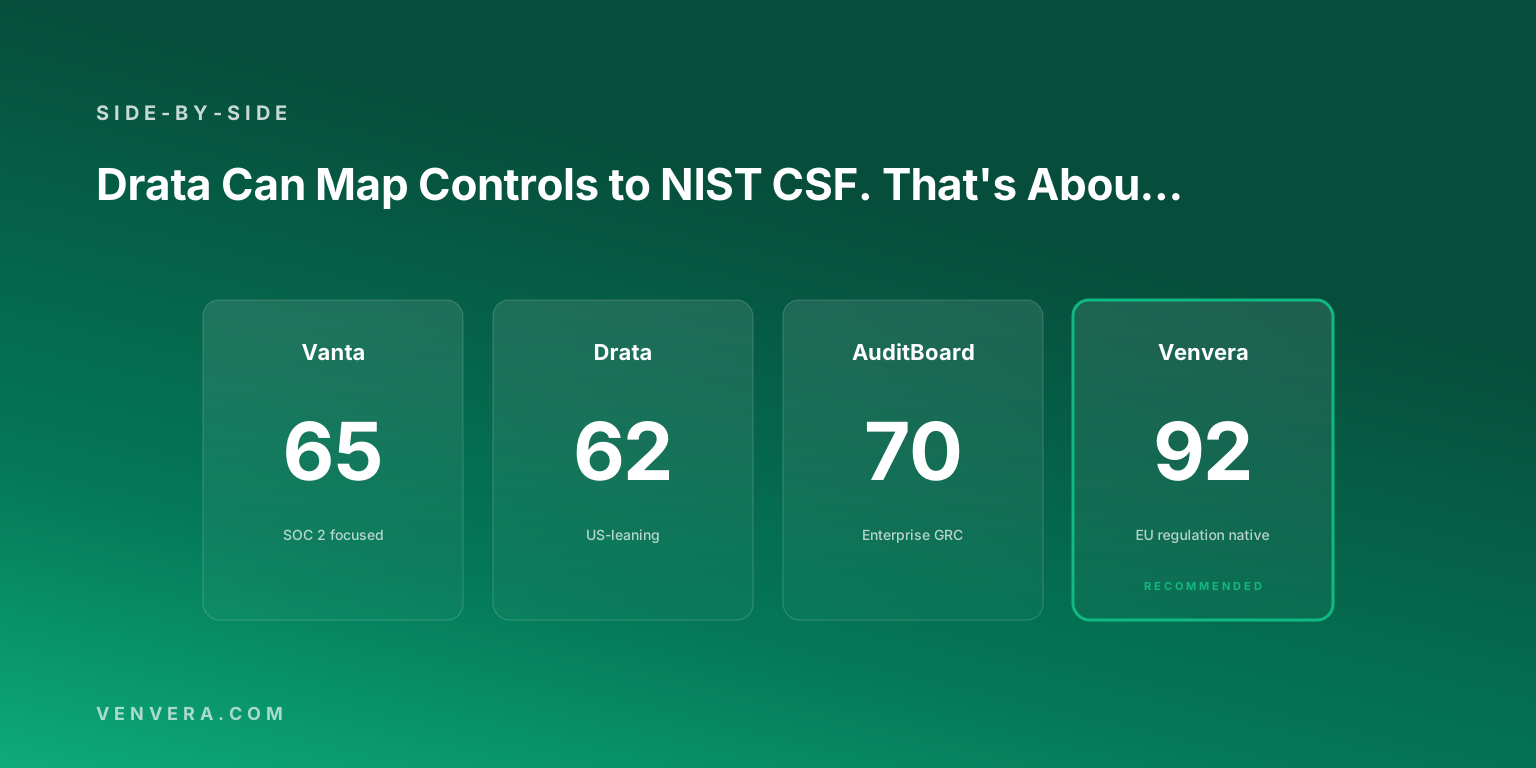
Credit where it's due: Drata has a NIST CSF framework option that maps controls to categories. For technical functions (Protect, Detect, Respond, Recover), this provides reasonable coverage. But here's what's missing:
🏛
Govern Function
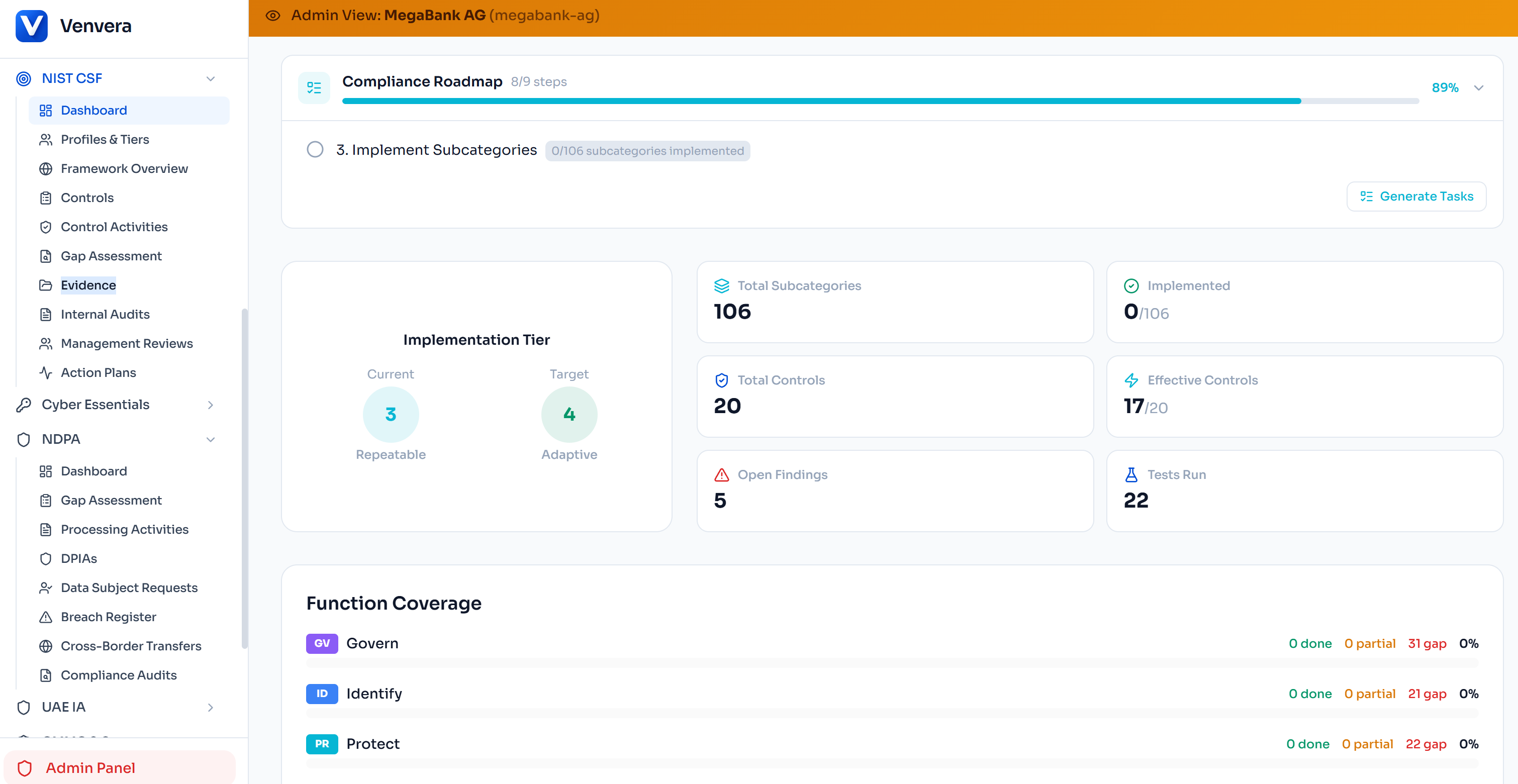
The newest, most governance-heavy function has no dedicated tooling. Organizational context, risk strategy, oversight tracking - none of it.
📊
Profile Assessment
CSF 2.0 wants current and target profiles. Requires structured assessment, not pass/fail control dashboard. No profile or gap analysis support.
📈
Tier Tracking
Four implementation tiers (Partial to Adaptive) across six functions. Requires maturity assessment capability Drata doesn't offer.
📋
Risk Assessment Depth
CSF 2.0 centres everything on risk. Drata's risk module is functional but basic - not the structured framework CSF 2.0 envisions.
🔗
Cross-Framework Integration
NIST CSF maps to ISO 27001, DORA, NIS2, and more. Drata treats each as a separate silo. Overlaps go unmapped, work gets duplicated.
🔗
Supply Chain Risk
CSF 2.0 elevates supply chain risk to a governance concern. Drata's vendor management focuses on questionnaires, not comprehensive risk assessment.
⚖
FEATURE COMPARISON
NIST CSF 2.0: Drata vs Venvera
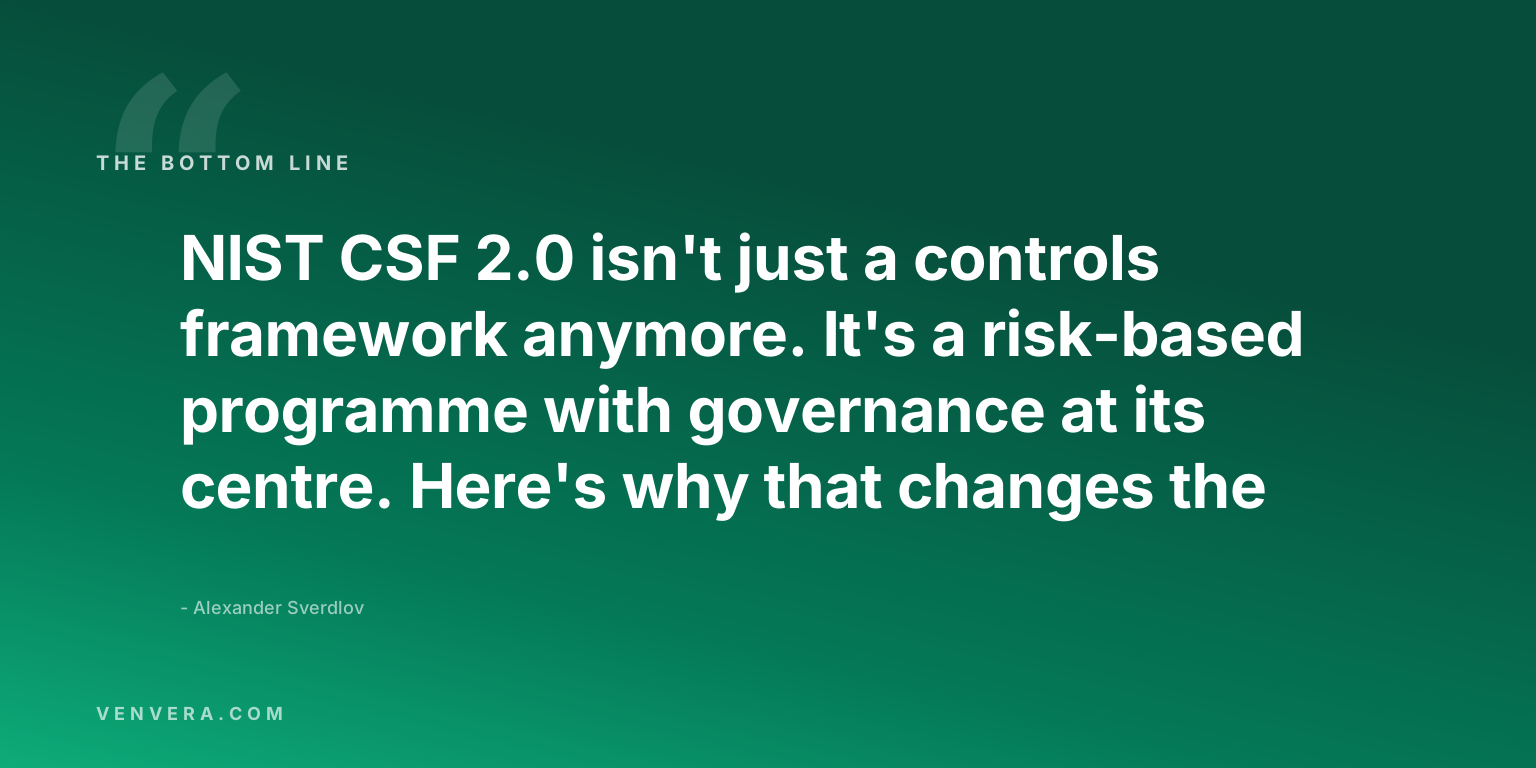
| CSF 2.0 Requirement | Drata | Venvera |
|---|---|---|
| Govern Function | ✗ Not purpose-built | ✓ Dedicated governance module |
| Identify Function | ◯ Control mapping | ✓ Risk-based assessment |
| Protect / Detect / Respond / Recover | ✓ Strong (automated) | ✓ Full coverage |
| Current/Target Profile Assessment | ✗ Not available | ✓ Gap analysis + tracking |
| Implementation Tier Tracking | ✗ Not available | ✓ Maturity assessment |
| Structured Risk Assessment | ◯ Basic | ✓ Full framework |
| Cross-Framework Mapping | ◯ Framework silos | ✓ 150+ mappings |
| Supply Chain Risk Management | ◯ Vendor questionnaires | ✓ Full risk assessment |
| Data Hosting | ◯ US default (EU option) | ✓ Amsterdam, EU |
| Starting Price | ~$25-30K+/yr | €399/mo (€4,788/yr) |
🔬
DEEP DIVE
NIST CSF as the Bridge to Everything Else
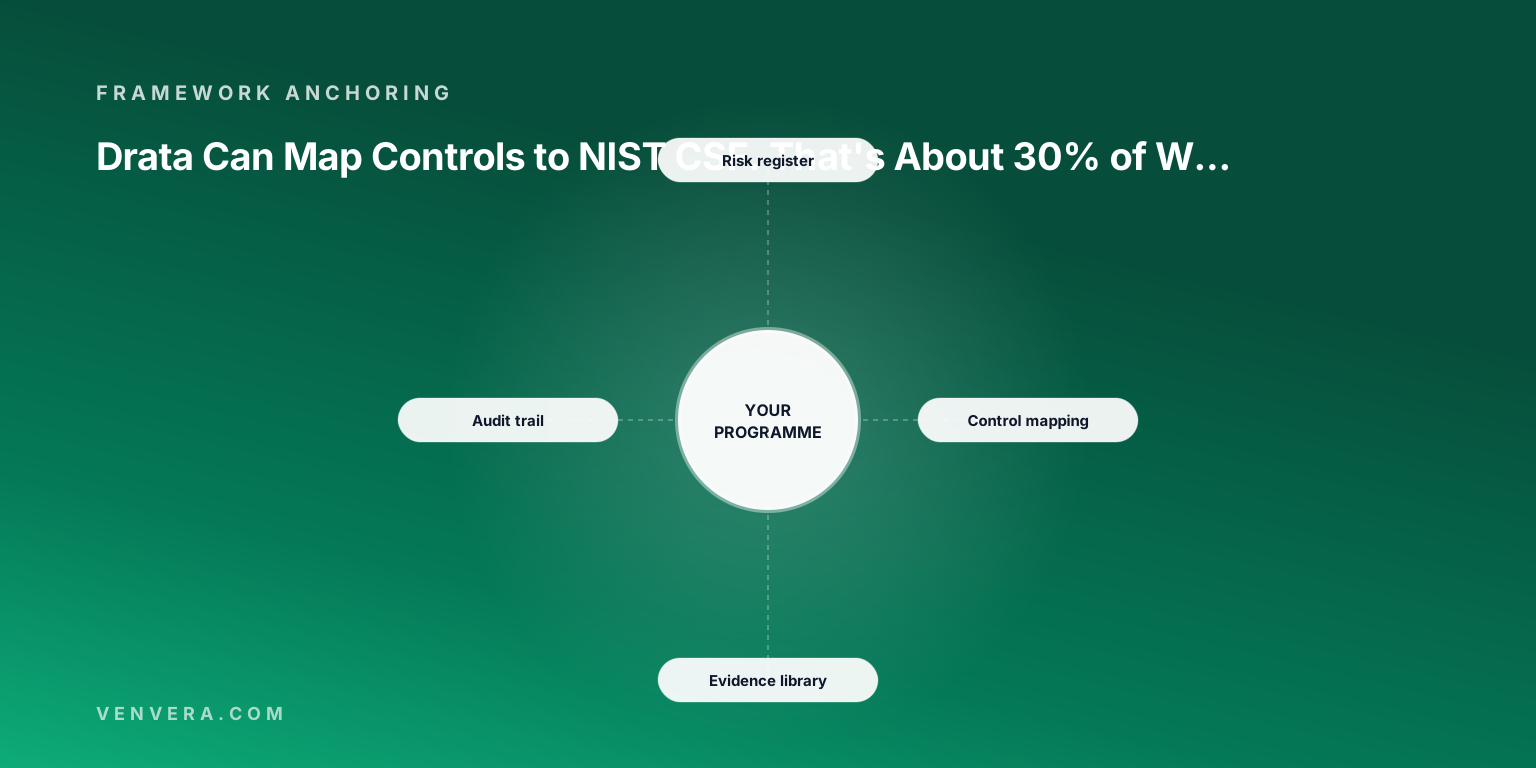
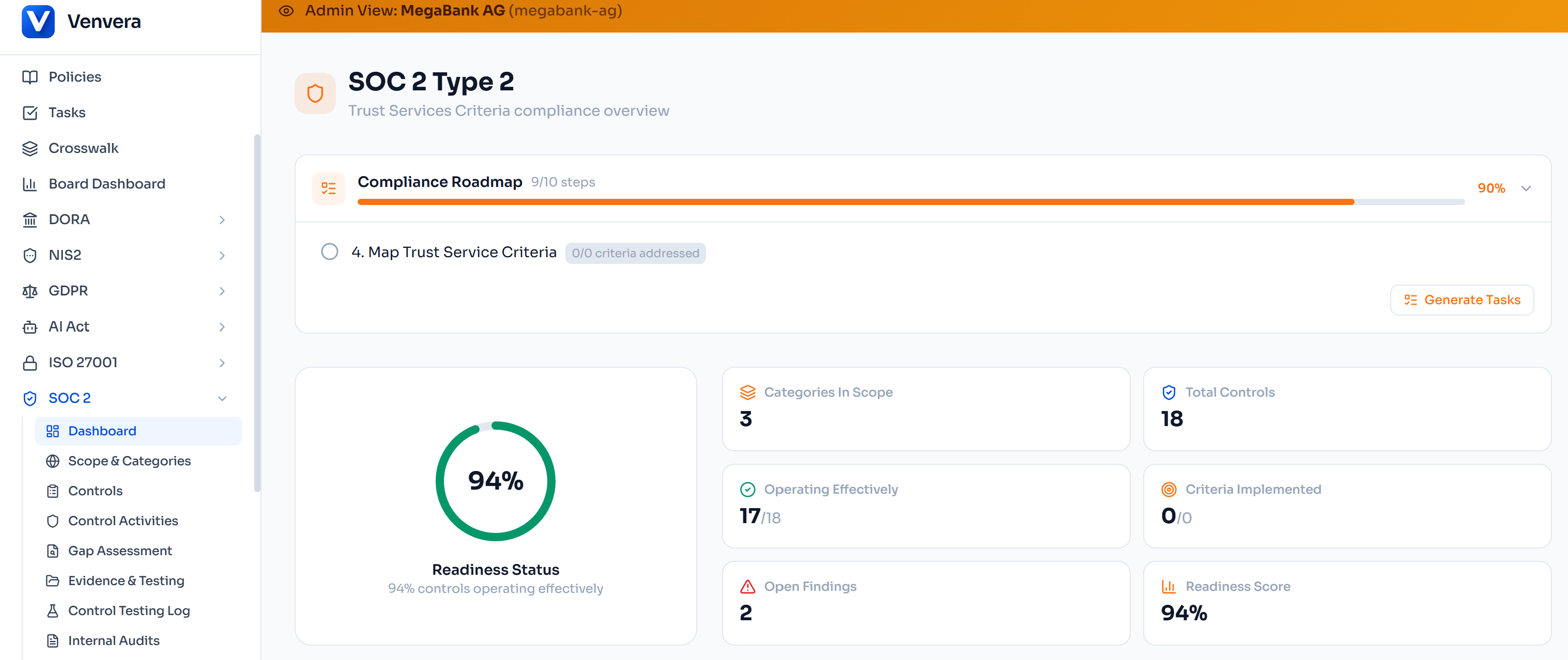
NIST CSF was explicitly designed as a Rosetta Stone for cybersecurity frameworks. It maps to ISO 27001, COBIT, CIS Controls. And in practice, it maps heavily to NIS2, DORA, and GDPR's security requirements.
- Every control you implement for CSF potentially satisfies requirements in three or four other frameworks - but only if your tool maps those relationships.
- Drata doesn't map them. Each framework is a separate silo with separate controls, separate evidence, separate pricing. Implement the same access control for CSF PR.AC-1 and ISO 27001 A.9.1.1 separately. Pay twice.
- Venvera's 150+ mappings turn CSF from a standalone framework into the foundation of your entire compliance programme. One implementation, multiple frameworks satisfied.
🔗
CROSS-FRAMEWORK MAPPING
One Framework to Rule Them All
✓ Cross-framework impact:
- 150+ pre-built mappings connecting NIST CSF to ISO 27001, NIS2, GDPR, DORA, and more
- Implement a control for CSF and see which ISO, NIS2, GDPR and DORA requirements are simultaneously addressed
- With Drata, 3 frameworks at $25-30K each = $75-90K/year with no cross-mapping
- Venvera: €10,788/yr for all frameworks. For organisations managing multiple frameworks, this is the core value proposition.
💰
PRICING COMPARISON
The Cost of NIST CSF Done Right
| Scenario | Drata | Venvera | You Save |
|---|---|---|---|
| NIST CSF only | ~$25-30K/yr | €4,788/yr | ~$20K/yr |
| CSF + ISO 27001 + DORA | ~$75-90K/yr | €10,788/yr | ~$65-80K/yr |
| 3-year total (3 frameworks) | ~$225-270K | €32,364 | $190-240K |
🇪🇺
DATA SOVEREIGNTY
EU-Hosted Compliance Data
If you're using NIST CSF alongside EU frameworks (NIS2, GDPR, DORA), your compliance data should live under EU jurisdiction. Drata defaults to US hosting. Venvera is hosted in Amsterdam with AES-256-GCM encryption. No configuration needed, no add-on fees.
✅
WHO SHOULD SWITCH
What I'd Do If I Were Starting a CSF 2.0 Programme Today
Switch to Venvera if:
- ☑ You need full CSF 2.0 coverage including the new Govern function
- ☑ You want current/target profile assessment and tier tracking
- ☑ You need structured risk assessment, not just control pass/fail
- ☑ You're using NIST CSF alongside ISO 27001, DORA, or NIS2
- ☑ You want cross-framework mapping to reduce duplicate work
- ☑ You prefer starting with Govern, not Protect (as CSF 2.0 intends)
Drata remains strong for the technical CSF functions if you only need Protect, Detect, Respond, and Recover automated through infrastructure integrations. But CSF 2.0 is risk-centric and governance-first. Your tool should support structured risk assessment, maturity tracking, and governance documentation - not just control pass/fail status. Venvera's approach aligns with this philosophy. Drata's doesn't quite get there.
NIST CSF 2.0 Done Right - Governance Included
All six functions covered. Profile and tier assessment. Risk-based approach.
150+ cross-framework mappings to ISO, NIS2, DORA, and more. EU-hosted. From €399/month.
Book a Demo →Last updated: March 2026. Pricing and features based on publicly available data and hands-on evaluation. Contact vendors for current pricing.