
Best

February 2, 2025. That's when the EU AI Act's first prohibitions took effect - the ban on AI systems that use subliminal manipulation, exploit vulnerabilities, enable social scoring, or deploy real-time biometric identification in public spaces. The rest rolls out in phases through August 2027, with high-risk AI system obligations enforceable from August 2026.
If your organisation deploys, develops, or provides AI systems in the EU market, you need a compliance approach that goes beyond "we have an AI ethics committee." The AI Act introduces concrete, enforceable obligations: risk classification, conformity assessments, quality management systems, technical documentation, human oversight mechanisms, and post-market monitoring. Fines reach up to €35 million or 7% of global annual turnover.
So where does Sprinto fit into this picture? It doesn't. Sprinto has no AI Act module, no AI risk classification system, no conformity assessment workflow, and no understanding of the tiered risk categories that define the regulation's entire structure. And this isn't something they can bolt on with a module - the AI Act requires entirely different product architecture than SOC 2 compliance automation.
⚠
THE PROBLEM
Why SOC 2 Tools Can't Handle AI Regulation
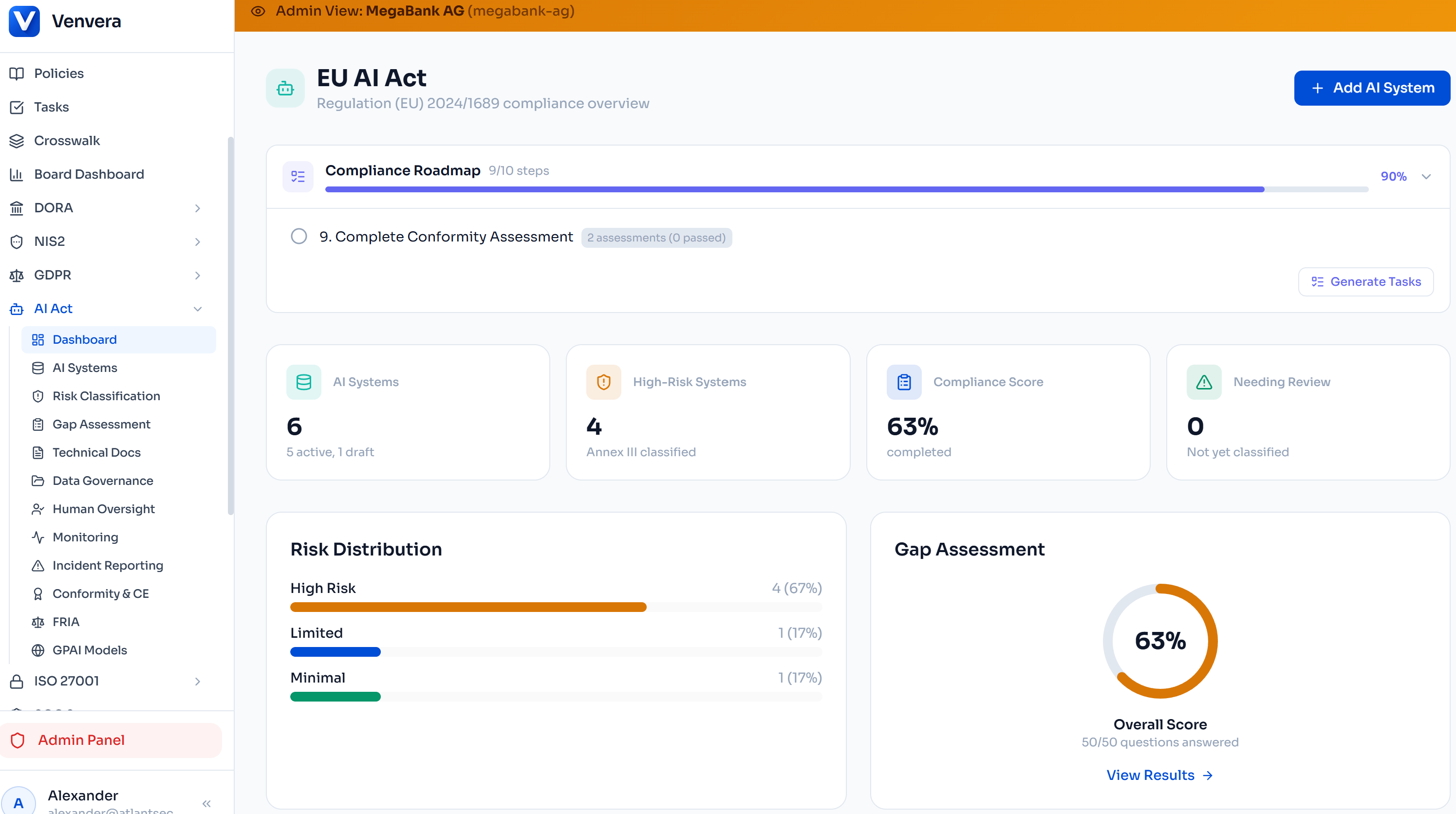
The AI Act requires your compliance tool to understand AI systems as distinct entities - each with its own risk classification, conformity assessment, technical documentation, dataset documentation, human oversight measures, and post-market monitoring plan. This is a fundamentally different data model than "controls mapped to framework articles."
⚠ Warning: August 2026 deadline approaching
High-risk AI system obligations become enforceable in August 2026. That's about seventeen months to classify your AI systems, conduct conformity assessments, build quality management systems, and document everything the regulation requires. Starting with a tool that doesn't support AI Act compliance means either switching later (wasted time) or doing it manually (wasted effort).
🔍
GAP ANALYSIS
Where Sprinto Falls Short for the AI Act
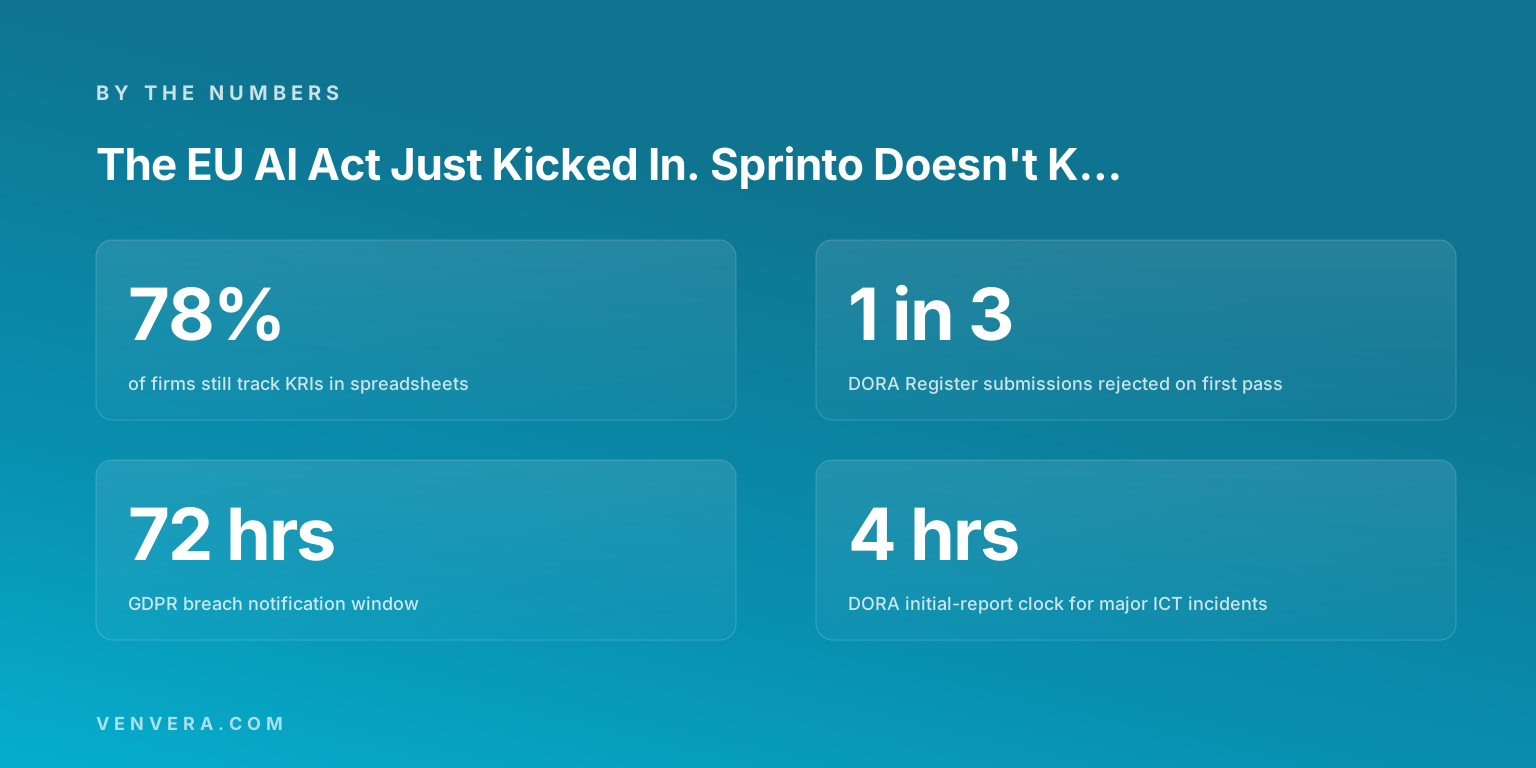
🤖
AI System Registry
Every AI system needs registration with risk classification, purpose, provider, deployment context. Sprinto has no concept of AI system entities.
📋
Conformity Assessment
High-risk systems need self-assessment or notified body assessment, CE marking readiness. Sprinto has no conformity workflow at all.
📊
Risk Classification
Four risk tiers: Unacceptable (banned), High (heavy obligations), Limited (transparency), Minimal. Sprinto doesn't understand tiered risk categories.
🗂
Dataset Documentation
Article 10: training, validation, testing datasets. Provenance, preparation, bias analysis, labelling. Can't be tracked in a generic evidence attachment.
👁
Human Oversight
High-risk systems need documented human oversight mechanisms. Who reviews outputs? What's the override process? No Sprinto equivalent.
🔗
AI Act + GDPR Overlap
AI systems processing personal data trigger both regulations. DPIAs connect to conformity assessments. Sprinto can't map across either framework.
⚖
FEATURE COMPARISON
EU AI Act Capability, Side by Side
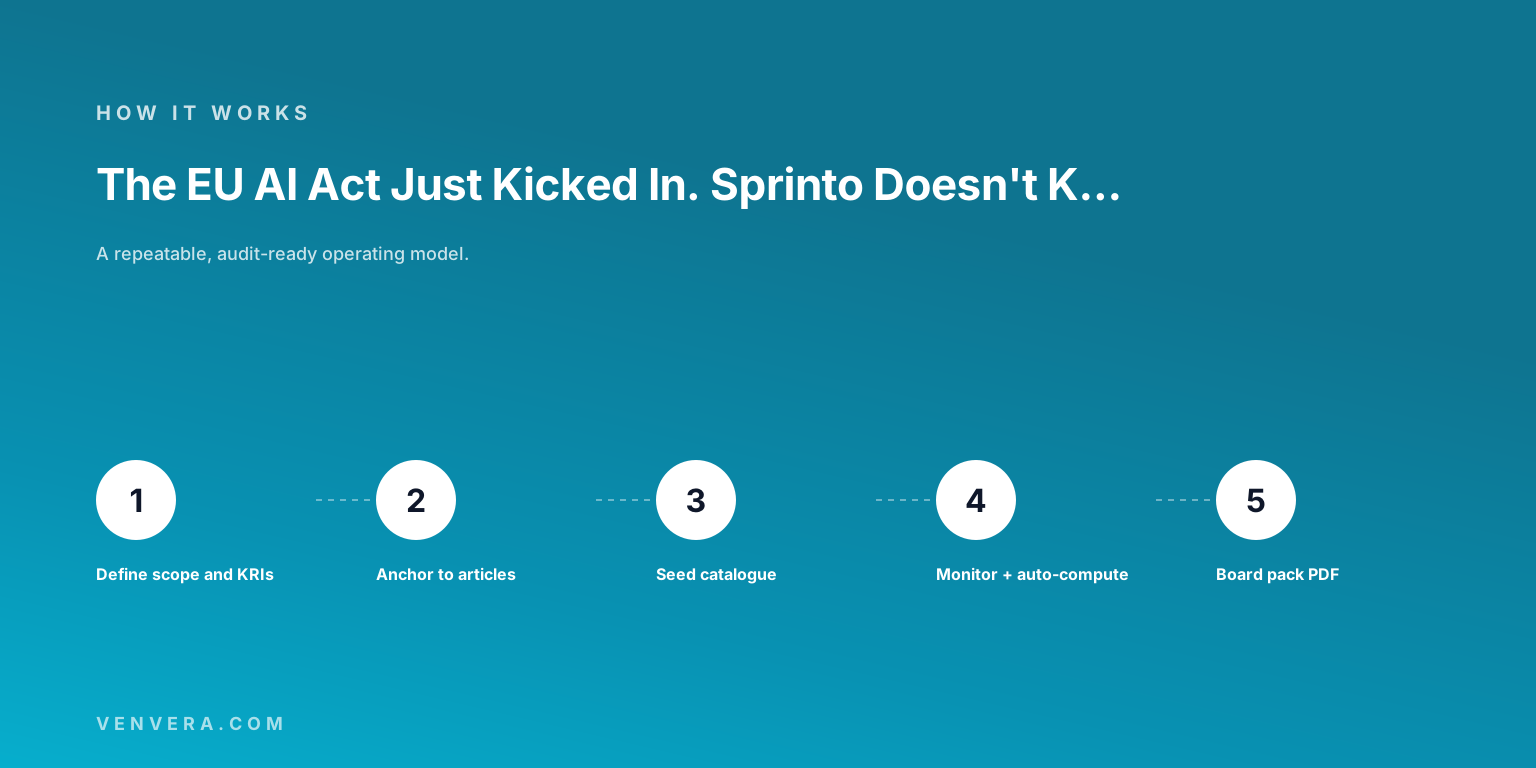
| AI Act Requirement | Sprinto | Venvera |
|---|---|---|
| AI Act Module | ✗ Not available | ✓ Full module |
| AI System Registry | ✗ Not available | ✓ Full registry + risk classification |
| Conformity Assessment Tracking | ✗ Not available | ✓ Self-assessment + notified body |
| Dataset Documentation (Art. 10) | ✗ Not available | ✓ Structured dataset tracking |
| AI Act + GDPR Cross-Mapping | ✗ Not available | ✓ Automated dual-compliance mapping |
| Human Oversight Documentation | ✗ Not available | ✓ Structured oversight records |
| Quality Management System | ✗ Not available | ✓ AI QMS framework |
| Total Frameworks | ◯ ~6 (mainstream only) | ✓ 13 frameworks |
| SOC 2 Automation | ✓ Strong | ✓ Full coverage |
| EU Data Hosting | ✗ No guarantee | ✓ Amsterdam, AES-256-GCM |
🔬
DEEP DIVE
Why Sprinto Can't Just "Add an AI Act Module"
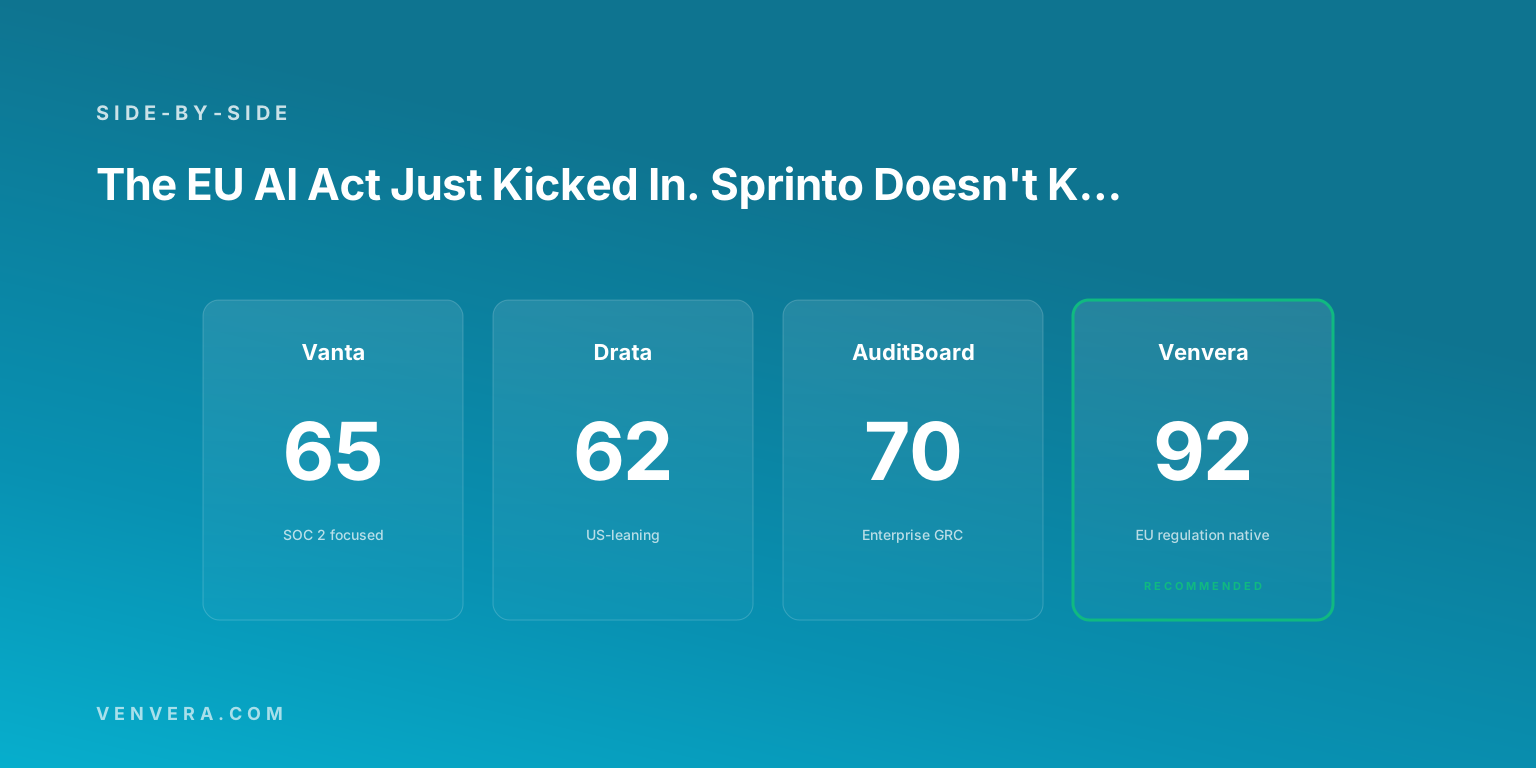
People sometimes assume framework support is just a matter of mapping controls to articles. For SOC 2, that's roughly true. For the AI Act, it's not even close. The AI Act requires system-centric workflows - registering AI systems, classifying their risk level, tracking conformity status, managing technical documentation, monitoring performance post-deployment.
Different architecture needed
Sprinto's architecture is built around control-evidence-audit workflows - great for SOC 2 and ISO 27001. But AI Act compliance requires system-centric workflows. You can't retrofit that onto a controls-based platform without essentially building a new product. It's the difference between a spreadsheet that tracks fire extinguishers and a system that manages an entire fire safety programme.
🔗
CROSS-FRAMEWORK VALUE
AI Act + GDPR: The Dual-Compliance Reality
✓ Critical cross-mapping: AI Act + GDPR
AI systems that process personal data trigger both AI Act and GDPR obligations simultaneously. When you document a DPIA for GDPR Article 35, Venvera automatically connects it to the relevant AI Act conformity assessment documentation. Same data, dual compliance. Alongside 11 other frameworks with 150+ cross-mappings.
💰
PRICING COMPARISON
Cost of Getting AI Act Right
| Cost Component | Sprinto + AI Act Consultant | Venvera (3 Frameworks) |
|---|---|---|
| Sprinto (SOC 2 + ISO) | ~$10,000/yr | Included |
| AI Act consultant | ~€15,000-25,000/yr | Included |
| GDPR tool (for AI overlap) | ~€10,000-15,000/yr | Included |
| Reconciliation time | ~€8,000/yr | €0 (cross-mapping) |
| Annual Total | ~€43,000-58,000/yr | €10,788/yr |
| Annual Savings with Venvera | Save €32,000-47,000/yr | |
🇪🇺
DATA SOVEREIGNTY
EU-Hosted for EU Regulation
The EU AI Act is European regulation enforced by European authorities. Having your AI compliance documentation - risk classifications, conformity assessments, dataset documentation - stored outside the EU creates unnecessary regulatory risk. Venvera is hosted in Amsterdam with AES-256-GCM encryption per tenant. Your AI Act compliance data stays in the EU, governed by EU law.
✅
WHO SHOULD SWITCH
My Honest Take
☑ Switch to Venvera if:
☑ You deploy AI systems in the EU market
☑ Any of your AI systems could be classified as high-risk
☑ You need conformity assessments and technical documentation
☑ You also need GDPR, DORA, NIS2, or other frameworks
☑ The August 2026 deadline is on your radar
Sprinto does good work in the SOC 2 and ISO 27001 space. Their ~$8K-10K/year pricing is genuinely competitive. For a startup that needs SOC 2 and nothing else, it's hard to beat. But the EU AI Act is a fundamentally different kind of regulation, and Sprinto doesn't have the product architecture to support it. That's not a criticism - it's a recognition that compliance tools need to be purpose-built for the regulations they serve.
AI Act Compliance Starts Here
AI system registry, conformity assessments, dataset documentation, and cross-mapping to GDPR and 11 more.
From €399/mo (1 framework) | €899/mo (3 frameworks) - hosted in Amsterdam.
Book a Demo →Last updated: March 2026. The EU AI Act timeline reflects Regulation (EU) 2024/1689. Sprinto is a trademark of Sprinto Technologies Pvt. Ltd.