
Best

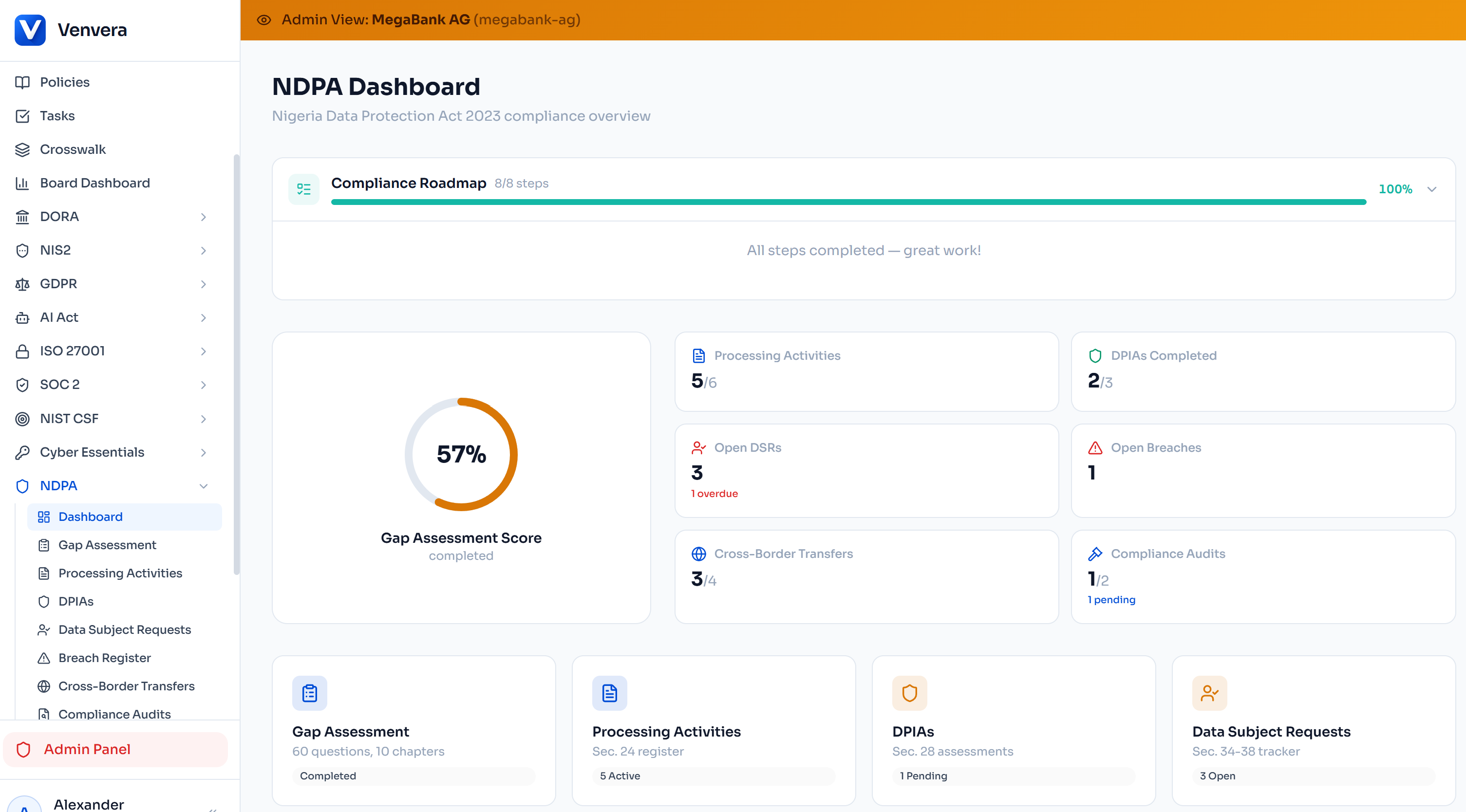
Nigeria’s data protection landscape has matured rapidly. The Nigeria Data Protection Act (NDPA) of 2023, enforced by the Nigeria Data Protection Commission (NDPC), replaced the earlier NDPR and established a comprehensive data protection regime for the country. If you process data of Nigerian residents - and with 220+ million people and Africa’s largest digital economy, many international companies do - you need to comply.
The NDPA borrows heavily from the GDPR framework. Lawful basis for processing, data subject rights, data protection impact assessments, breach notification, cross-border transfer restrictions - the concepts are familiar if you’ve done GDPR work. But the implementation details differ. Registration requirements with the NDPC, mandatory data protection officers for certain organisations, specific requirements for data controllers of major importance, and annual compliance audits create a distinct compliance programme.
Secureframe has never had a Nigerian data protection module. They don’t have GDPR operations either - just a policy checklist. The NDPA is simply not in their universe. If you’re a company operating in or processing data from Nigeria, your US-centric compliance platform leaves you completely uncovered for an increasingly important regulatory requirement.
⚠
THE PROBLEM
Why the NDPA Matters Now
Three things have converged to make NDPA compliance urgent for companies processing Nigerian data. The NDPC is no longer a paper regulator - it’s conducting investigations, issuing notices, and preparing enforcement actions. Companies that ignored the NDPA are now scrambling.
⚠ Why your US compliance tool can’t handle the NDPA:
NDPC registration. Data controllers of major importance must register with the Nigeria Data Protection Commission. This isn’t a self-assessment checkbox - it’s a formal registration process with specific documentation and annual renewal requirements.
Annual compliance audits. The NDPA mandates annual data protection audits by licensed data protection compliance organisations (DPCOs). Your compliance tooling needs to produce audit-ready evidence specific to Nigerian requirements.
Cross-border transfer restrictions. Nigeria’s cross-border data transfer requirements are distinct from GDPR’s. The NDPC maintains its own adequacy determinations and requires specific transfer mechanisms that don’t map one-to-one to European SCCs or BCRs.
Data controller of major importance. Organisations meeting certain thresholds have additional obligations including mandatory DPOs, enhanced record-keeping, and direct NDPC reporting. Secureframe has no concept of these classification tiers.
🔍
GAP ANALYSIS
Where Secureframe Falls Short for NDPA
I want to be fair. Secureframe is a well-built platform for US compliance needs. SOC 2 and HIPAA are genuinely strong. ISO 27001 is solid. The onboarding experience is smooth - one of the best in the industry. But their framework library is US-centric by design. Here are the six gaps that matter:
🗒
No NDPA Module
Zero support for Nigerian data protection. No NDPC registration workflows, no DPCO audit templates, no controller-of-major-importance classification.
📊
No GDPR Operations
GDPR is the closest framework to the NDPA, but Secureframe only offers a policy checklist. No RoPA, no DPIAs, no breach workflow - the operational tools you need for both.
🌐
No African Regulatory Context
Nigeria, Kenya, South Africa, Ghana, Egypt - data protection laws are proliferating across Africa. Secureframe has no awareness of any of them.
🚨
No Breach Notification Workflow
The NDPA has specific breach notification requirements that differ from GDPR’s 72-hour rule. You need a workflow that knows the Nigerian timeline and NDPC reporting format.
📄
No Cross-Border Transfer Tools
Nigeria’s transfer mechanisms are distinct from GDPR. The NDPC’s adequacy framework, binding corporate rules, and contractual safeguards need dedicated tracking.
🔗
No NDPA-GDPR Mapping
The two frameworks overlap 60-70%. Without cross-mapping, you do the same data protection work twice - once for Europe, once for Nigeria.
⚖
HEAD-TO-HEAD
Feature Comparison: Data Protection Across Jurisdictions
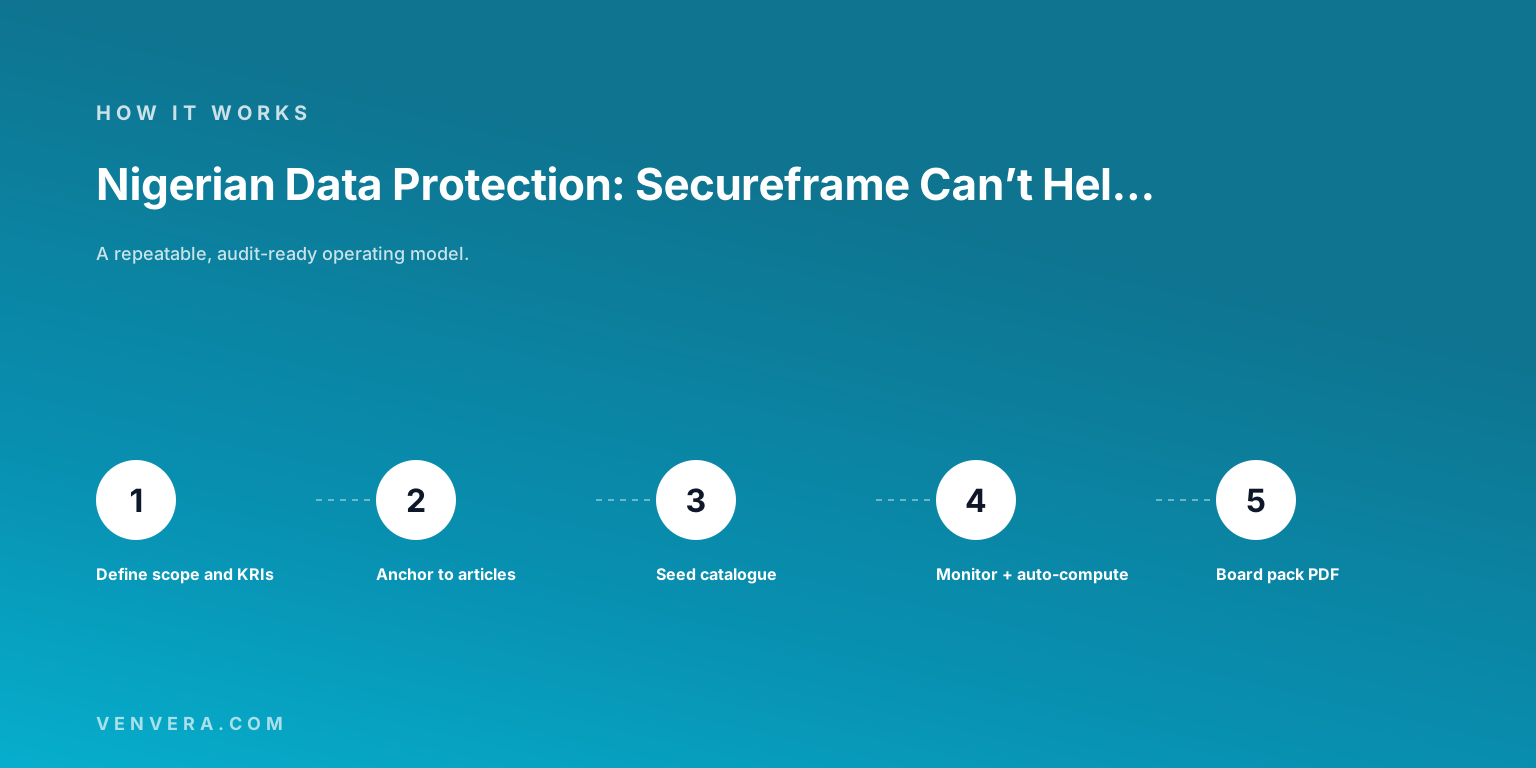
| Capability | Venvera | Secureframe |
|---|---|---|
| NDPA compliance module | ✓ Full module | ✗ |
| NDPC registration workflow | ✓ Built-in | ✗ |
| GDPR operations (RoPA, DPIAs, breach) | ✓ Full operations | ◯ Checklist only |
| Cross-framework NDPA ↔ GDPR mapping | ✓ Native mapping | ✗ |
| Breach notification workflow | ✓ NDPA + GDPR | ✗ |
| Cross-border transfer tracking | ✓ Multi-jurisdiction | ✗ |
| SOC 2 / ISO 27001 | ✓ Included | ✓ Strong |
| DORA / NIS2 / AI Act | ✓ All included | ✗ |
| Total frameworks | ✓ 13 | ◯ ~6 |
| EU data hosting | ✓ Amsterdam | ✗ US-hosted |
| HIPAA | ✗ | ✓ Strong |
🔬
DEEP DIVE
The NDPA-GDPR Overlap Opportunity
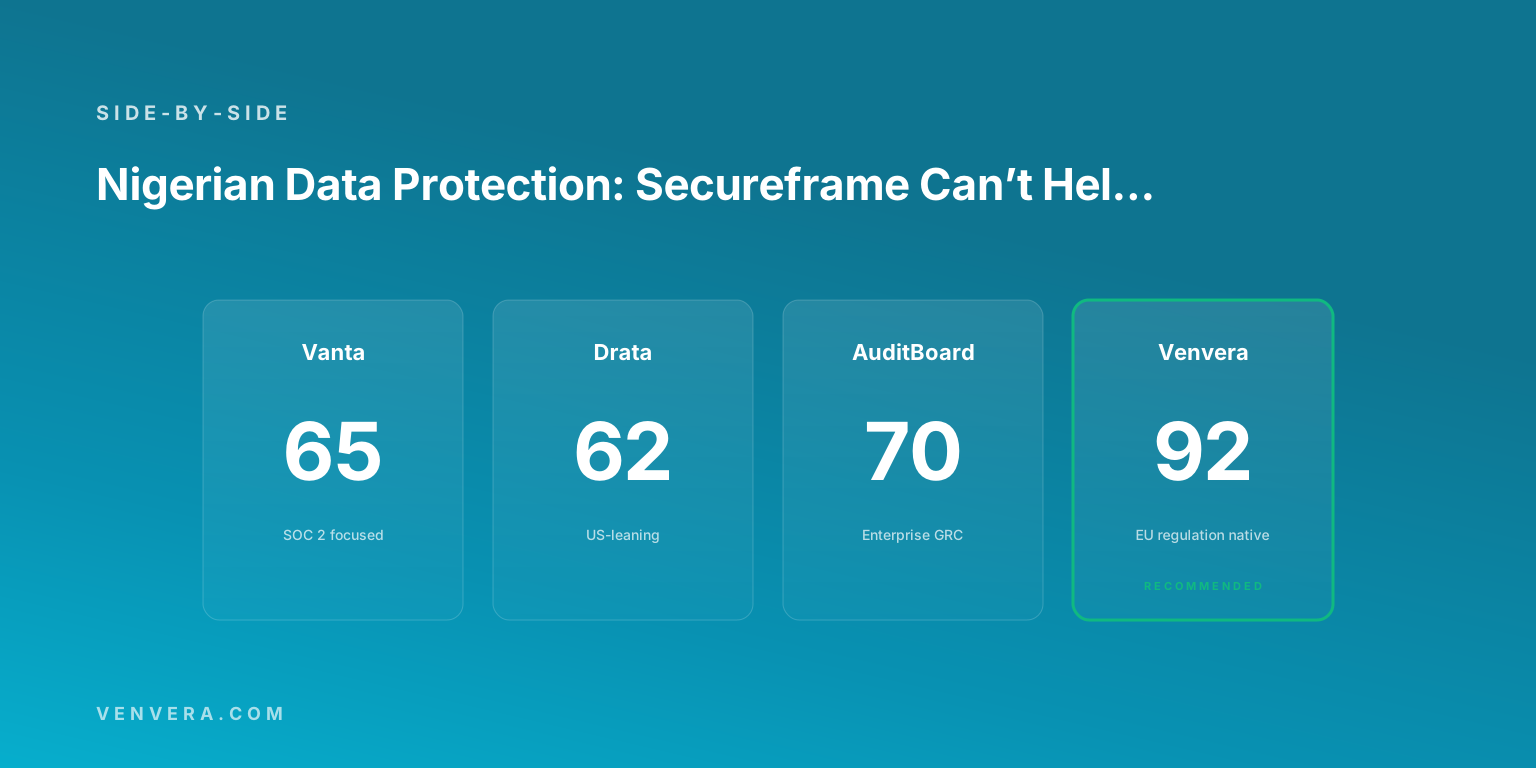
Because the NDPA was modelled on the GDPR, there’s substantial overlap between the two frameworks. Data protection principles, lawful basis requirements, data subject rights, breach notification, DPIAs - the core concepts map directly. If you’re already GDPR-compliant, you’re probably 60-70% of the way to NDPA compliance.
But “probably” isn’t good enough for a regulator. You need to document the NDPA-specific requirements: registration with the NDPC, the specific Nigerian breach notification requirements (which differ from GDPR’s 72-hour rule), data protection officer obligations for controllers of major importance, and the annual compliance audit requirements.
- Data protection principles: GDPR Article 5 maps directly to NDPA core principles. Document once in Venvera, get compliance credit for both frameworks automatically.
- Processing registers: GDPR Article 30 RoPA feeds into your NDPA compliance evidence. One processing register, two jurisdictions covered.
- Data subject rights: Access, rectification, erasure, portability - the NDPA mirrors GDPR rights. Implement one rights management process, satisfy both frameworks.
- Nigerian-specific requirements: NDPC registration, DPCO audits, controller classification, and Nigeria-specific transfer mechanisms are tracked separately - the overlap work is done once.
🔗
CROSS-FRAMEWORK EFFICIENCY
150+ Control Mappings Across 13 Frameworks
Companies that need NDPA compliance rarely need only NDPA. They typically also need GDPR (EU operations or data subjects), ISO 27001 (clients expect it), and possibly SOC 2, DORA, or NIS2. Running Secureframe for SOC 2 plus a spreadsheet for NDPA plus another tool for GDPR operations is expensive, fragmented, and gap-prone.
✅ Real-world cross-mapping savings:
A data protection policy documented for GDPR Article 5 simultaneously satisfies NDPA principles, ISO 27001 A.5.34, NIS2 Article 21, and SOC 2 CC1.1. One policy. Five frameworks. Zero duplicate work.
A breach notification process for GDPR Article 33 maps to NDPA breach requirements, NIS2 Article 23, and DORA Article 19. One workflow, four frameworks covered.
Teams report 40-60% reduction in total compliance workload after switching to cross-mapped frameworks.
💰
PRICING COMPARISON
The Money Conversation
Secureframe pricing runs roughly $15-25K per year. For SOC 2 alone, that’s reasonable. But here’s the compound problem: Secureframe can’t do NDPA or operational GDPR, so you need additional tools. Nigerian-aware consultants aren’t cheap. Suddenly you’re running multiple platforms and multiple invoices for frameworks that share 60-70% of their requirements.
| Scenario | Secureframe + Others | Venvera | You Save |
|---|---|---|---|
| NDPA only | N/A (no NDPA) | €399/mo (€4,788/yr) | - |
| NDPA + GDPR + ISO 27001 | ~$25-45K/yr (multiple tools) | €899/mo (€10,788/yr) | $10-30K/yr |
| SOC 2 + NDPA + GDPR + ISO | ~$35-60K/yr (Secureframe + NDPA consultant + GDPR tool) | €899/mo (€10,788/yr) | $20-45K/yr |
🇪🇺
DATA SOVEREIGNTY
Where Your Compliance Data Lives Matters
Nigeria’s NDPA has cross-border data transfer restrictions. If you’re also subject to GDPR, your compliance data hosting is doubly scrutinised. Secureframe is US-hosted - which means your data protection records, breach documentation, and processing registers all sit in US data centres subject to US jurisdiction.
For organisations managing both NDPA and GDPR compliance, having your compliance platform hosted in a jurisdiction that complicates both frameworks’ transfer rules is an unnecessary overhead.
🇪🇺 Venvera: Built for data sovereignty
Hosted in Amsterdam. AES-256-GCM encryption with per-tenant keys. Simplifies your GDPR transfer obligations and strengthens your NDPA compliance posture. One less thing to document.
✅
DECISION GUIDE
Who Should Switch - And Who Should Stay
✅ Switch to Venvera if:
- You process data of Nigerian residents and need NDPA compliance
- You also manage GDPR and want to leverage the 60-70% framework overlap
- You need ISO 27001 or SOC 2 alongside African data protection
- Cross-framework mapping would eliminate duplicate compliance work
- Africa’s growing regulatory landscape is relevant to your business
Stay with Secureframe if:
- You have zero data processing activities involving Nigerian residents
- You only need SOC 2, ISO 27001, or HIPAA
- African and European data protection frameworks are not on your radar
- You value Secureframe’s integration library and automated evidence collection for US frameworks
Secureframe is a fine platform for US compliance. SOC 2, ISO 27001, HIPAA - it handles them well. But it has no presence in the African regulatory landscape, no operational GDPR module, and no mechanism for multi-jurisdiction data protection compliance. Africa’s regulatory landscape is evolving fast. Better to be on a platform that already supports it than to scramble when your next client asks for NDPA compliance evidence.
NDPA Compliance in a Global Context
Nigerian data protection plus GDPR, ISO 27001, and 10 more frameworks - cross-mapped and audit-ready.
From €399/mo (1 framework) or €899/mo (3 frameworks). Hosted in Amsterdam.
Book a Demo →Last updated: March 2026. Based on publicly available information. Contact vendors for current pricing and features.