

Best

Quick reality check: Drata was built in San Diego for US SaaS companies doing SOC 2. The NDPA was written in Abuja to protect the data rights of 220 million Nigerians. These are not the same problem space.
I work with organisations that have operations or customers in Nigeria, and the compliance conversations around the NDPA are fundamentally different from the SOC 2 conversations those same organisations have with their US operations. The NDPA draws from GDPR's principles, but it has its own enforcement structure (NDPC), its own classification system for data controllers, and its own requirements for compliance filings and data protection audits.
When I look at what Drata offers for NDPA, I see the same pattern that repeats across all their non-SOC-2 frameworks: controls mapped to regulation articles. That's a starting point for understanding what the NDPA requires. It's not a compliance management system for actually meeting those requirements. The gap is particularly stark because the NDPA has operational requirements that simply don't exist in SOC 2 or ISO 27001 - the frameworks Drata was designed around.
⚠
THE PROBLEM
The NDPA Isn't "Nigerian GDPR" - and Your Tools Need to Know That
Many people assume the NDPA is just GDPR with a different flag. It borrows heavily from GDPR's principles, yes, but the implementation and enforcement mechanisms are distinctly Nigerian. Data controllers of major importance have enhanced obligations. Cross-border data transfers require specific mechanisms. Annual compliance filings need structured data. None of this maps to infrastructure monitoring.
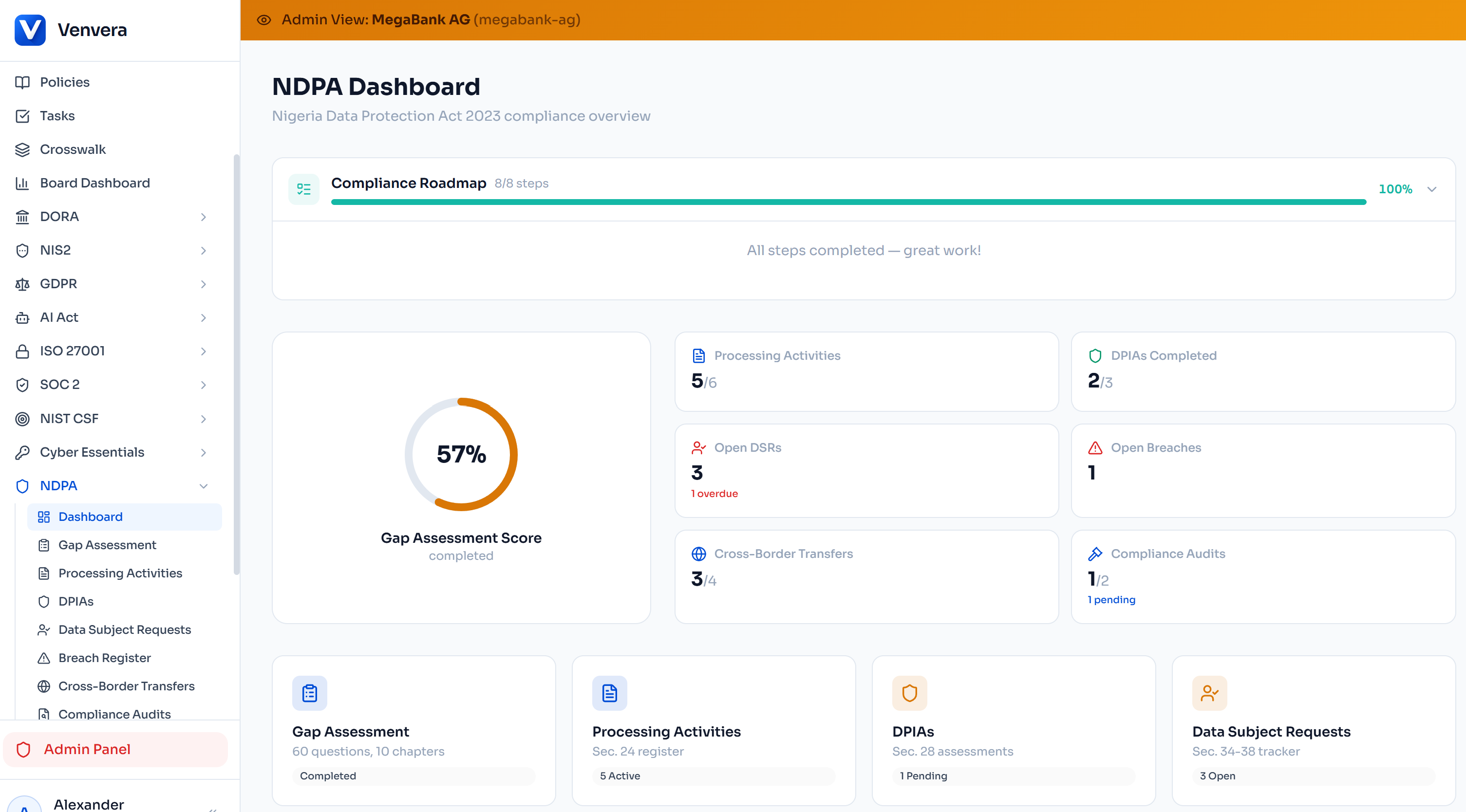
We tried setting up NDPA compliance in Drata. The controls mapped neatly to NDPA articles - at a surface level. But when it came time to actually manage DCMI classification, prepare an annual filing for the NDPC, or track cross-border transfer mechanisms, we had nothing. Just a dashboard full of green checkmarks and no way to satisfy a regulator.
⚠ The disconnect:
The NDPC doesn't ask "are your controls green?" They ask: "What is your DCMI classification? Where is your annual compliance filing? What transfer mechanisms apply to your cross-border data flows?" Drata can't answer any of these questions because it doesn't know they exist.
🔍
WHERE DRATA FALLS SHORT
Six NDPA Requirements Drata Simply Doesn't Cover
These aren't edge cases. They're core NDPA obligations that any organisation with Nigerian operations must address.
🏷
DCMI Classification
The NDPA classifies large-scale data controllers as "Data Controllers of Major Importance" with enhanced obligations. Drata has no concept of this classification system.
📋
Annual Compliance Filing
DCMIs must file an annual data protection audit report with the NDPC - a structured report with specific information requirements. Drata can't generate this filing.
🗺
Cross-Border Transfers
NDPA requires specific mechanisms for data transfers outside Nigeria - adequacy determinations, binding corporate rules, or contractual provisions. Drata doesn't track these.
🔎
NDPA-Specific DPIAs
The NDPA's criteria for "high risk" processing and DPIA requirements are defined by the NDPC, not by GDPR guidelines. You need NDPA-specific DPIA workflows.
👤
Consent Management
NDPA requires parental consent for data subjects under 18 (vs GDPR's 16). Structured consent tracking beyond what Drata provides.
📑
Processing Register
Like GDPR, but with NDPA-specific fields for processing activities, security measures, data breaches, and compliance status. A GDPR register isn't enough.
⚖
FEATURE COMPARISON
Drata vs Venvera for NDPA: Where They Stand
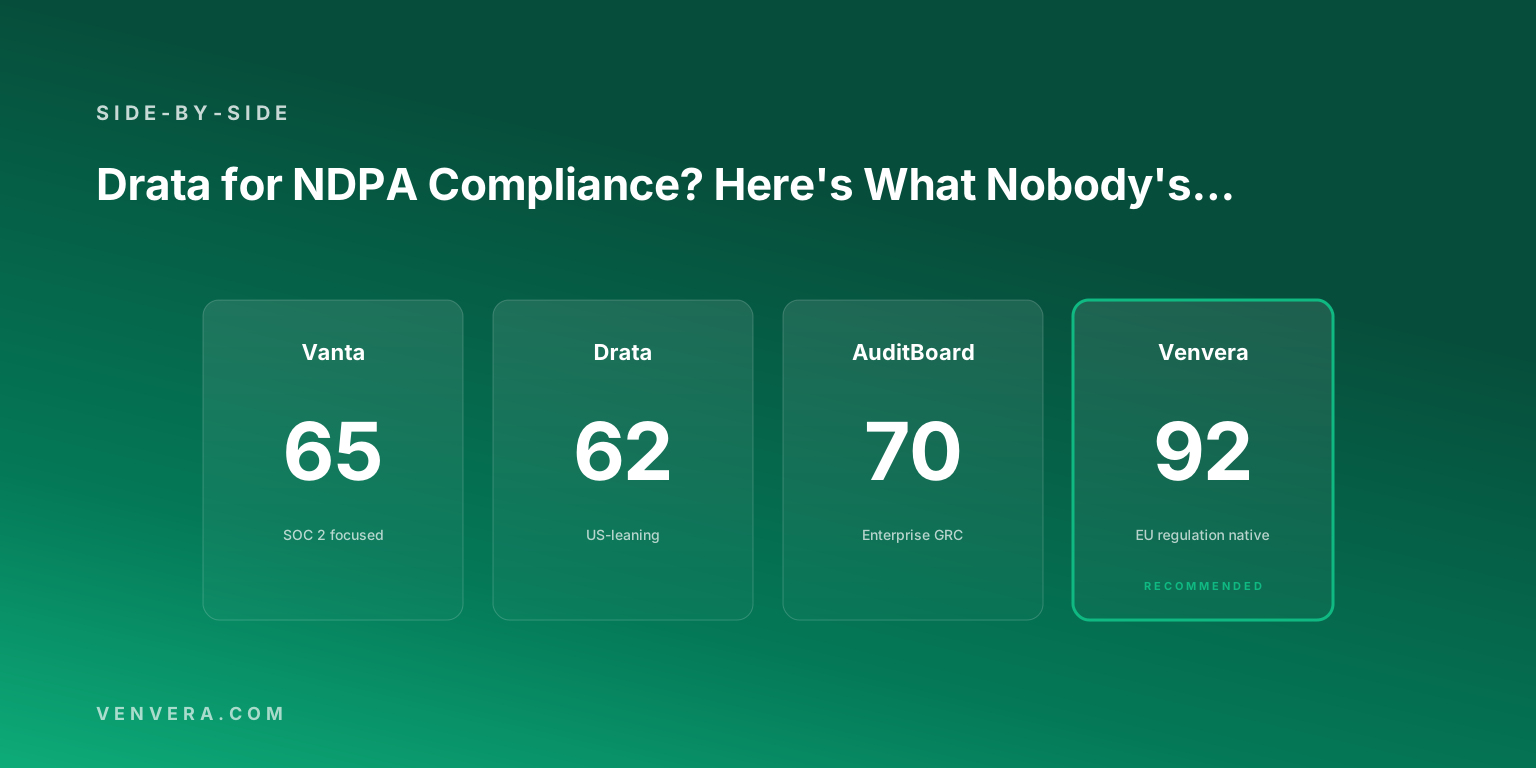
| NDPA Requirement | Drata | Venvera |
|---|---|---|
| DCMI Classification Tracking | ✗ Not available | ✓ Classification management |
| Annual Compliance Filing | ✗ Not available | ✓ Filing support |
| Data Processing Register | ✗ Not available | ✓ Full register |
| DPIA Management | ✗ Not available | ✓ Full NDPA workflow |
| Cross-Border Transfer Tracking | ✗ Not available | ✓ Transfer mechanisms tracked |
| Consent Management (Under-18) | ✗ Not available | ✓ Age-aware consent |
| Breach Notification | ◯ Generic incidents | ✓ NDPA-specific workflow |
| Technical Security Controls | ✓ Excellent | ✓ Full controls |
| Cross-Framework (NDPA + GDPR) | ◯ Separate silos | ✓ 150+ mappings |
| Starting Price | ~$25-30K+/yr | €399/mo (€4,788/yr) |
🔬
DEEP DIVE
The Multi-Jurisdiction Reality
Almost every organisation that needs NDPA compliance also needs GDPR. If you serve Nigerian customers from an EU entity, you're subject to both. If you process data from both Nigerian and EU citizens, you need both frameworks managed coherently. And if you're in financial services, you probably need DORA or SOC 2 on top of that.
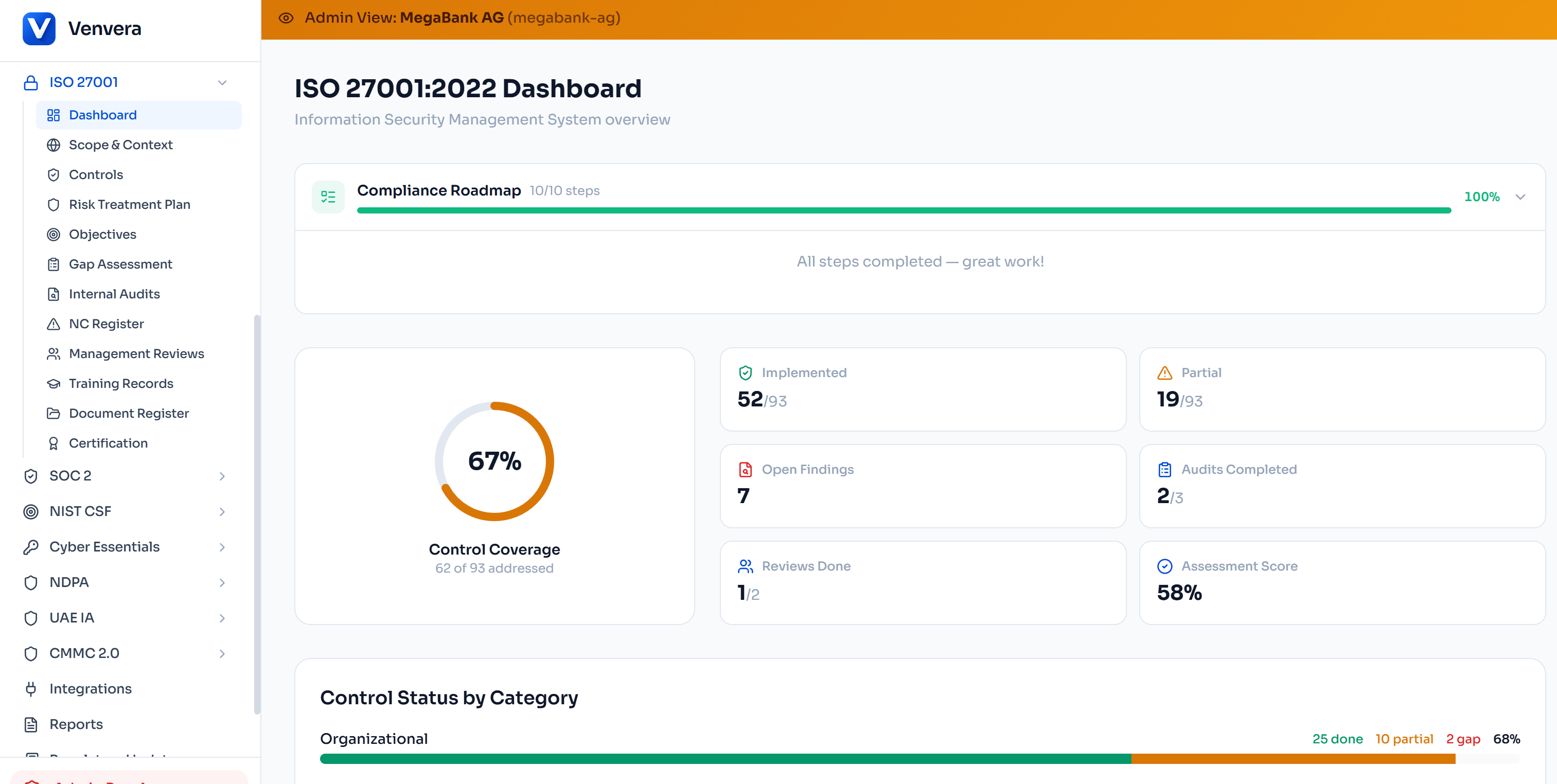
The overlap between NDPA and GDPR is substantial. Processing registers serve both. Security measures serve both. Breach notification procedures are similar (though not identical). A platform that maps these relationships saves you from doing the same work twice.
What actually changes with the right platform:
- The NDPA processing register shares a data model with the GDPR processing register. Implement once, comply with both.
- Security controls implemented for GDPR automatically flag corresponding NDPA requirements as addressed.
- Breach notification workflows handle both NDPC and DPA reporting requirements with jurisdiction-specific timelines.
- DPIA frameworks cover both GDPR Art. 35 and NDPA criteria - not identical, but mapped to reduce duplication.
🔗
CROSS-FRAMEWORK MAPPING
NDPA + GDPR: 70% Overlap, 0% Duplication
With Drata, NDPA and GDPR are separate framework modules with separate price tags. You'd pay $50-60K/year for two data protection frameworks that share 70% of their requirements - and Drata doesn't map those overlaps. You'd implement the same access controls, the same encryption standards, the same data retention policies twice.
✓ Cross-framework impact:
- 150+ pre-built mappings across NDPA, GDPR, ISO 27001, DORA, and 9 more frameworks
- ~60% work reduction on overlapping NDPA/GDPR requirements
- Single evidence base - implement once, satisfy both the NDPC and your EU DPA
- With Drata, each framework is siloed. Same processing register maintained twice, paid for twice.
💰
PRICING COMPARISON
The Cost of Multi-Jurisdiction Compliance
Organisations operating in Nigeria and the EU typically need NDPA + GDPR at minimum. Add ISO 27001 for international partners and the costs diverge dramatically.
| Scenario | Drata | Venvera | You Save |
|---|---|---|---|
| NDPA only | ~$25-30K/yr | €4,788/yr | ~$20K/yr |
| NDPA + GDPR | ~$50-60K/yr | €10,788/yr | ~$40-50K/yr |
| 3-year total (NDPA + GDPR + ISO) | ~$225-270K | €32,364 | $190-240K |
The three-year savings alone would fund a senior compliance analyst for your Lagos office. And the more expensive option gives you less for NDPA - because Drata's price buys you infrastructure monitoring that can't generate a DCMI filing. These are different products for different problems.
🌎
DATA SOVEREIGNTY
Where Your Compliance Data Lives Matters
The NDPA's cross-border transfer provisions exist precisely because data sovereignty matters. Using a US-hosted compliance platform to manage Nigerian data protection creates a tension that's difficult to explain to the NDPC. Your compliance records contain processing activity details, breach reports, and data flow mappings - sensitive operational data about how you handle the personal data of Nigerian citizens.
Venvera is hosted in Amsterdam with AES-256-GCM encryption. Not US-hosted with an EU option. EU-hosted by default. For organisations navigating the intersection of Nigerian data sovereignty and EU data protection, having your compliance platform outside both US and Nigerian jurisdiction but within the EU - with strong privacy protections - is the pragmatic choice.
✅
WHO SHOULD SWITCH
Is the Switch Right for You?
Switch to Venvera if:
- ☑ You're classified (or may be classified) as a DCMI
- ☑ You need to file annual compliance reports with the NDPC
- ☑ You need both NDPA and GDPR managed as interconnected frameworks
- ☑ You transfer data across Nigerian borders and need to track transfer mechanisms
- ☑ You need a processing register that serves both NDPA and GDPR requirements
- ☑ You'd rather spend $40K/year on people than on platform licensing for two data protection frameworks
Stay with Drata if SOC 2 is your primary framework and NDPA is a secondary concern you can manage with spreadsheets. Drata's infrastructure monitoring is excellent for technical controls. But if NDPA is a core obligation - if the NDPC matters to your business - then a platform that doesn't know what a DCMI is probably isn't the right fit.
NDPA Compliance That Understands Nigeria's Data Protection Landscape
DCMI classification. Processing registers. DPIA workflows. Annual filing support.
Cross-mapped to GDPR and 11 more frameworks. EU-hosted with AES-256-GCM encryption. From €399/month.
Book a Demo →Last updated: March 2026. Pricing and features based on publicly available data. The NDPA regulatory landscape is evolving - contact vendors for the latest capabilities.