

Best

Let me be clear about something upfront: Secureframe is not a bad product. I genuinely mean that. When our fintech startup needed SOC 2 Type II back in 2023, Secureframe made the whole thing almost painless. The onboarding was slick, the integrations with our AWS stack worked out of the box, and the auditor marketplace saved us weeks of shopping around. For what it was designed to do - getting US tech companies through SOC 2 and ISO 27001 - it’s one of the best.
But then we expanded into the EU. Got licensed as a payment institution. And suddenly, DORA wasn’t just some regulation we’d heard about at a conference. It was the thing keeping our CISO up at night. We logged into Secureframe, searched for “DORA,” and got nothing. Not a partial module. Not a beta. Nothing.
And that’s when the real education began. We spent three months evaluating platforms, talking to other financial entities, and learning what DORA actually demands from a tooling perspective. This article is what I wish someone had written for us before we started that journey.
⚠
THE PROBLEM
What DORA Actually Demands (And Why Most Tools Can’t Deliver)
I’ve lost count of how many compliance vendors told us “yeah, we support DORA” during demos. Turns out “support” meant they had a PDF checklist mapped to DORA articles. That’s like saying you support Formula 1 because you own a steering wheel.
⚠ Why generic compliance tools fail at DORA:
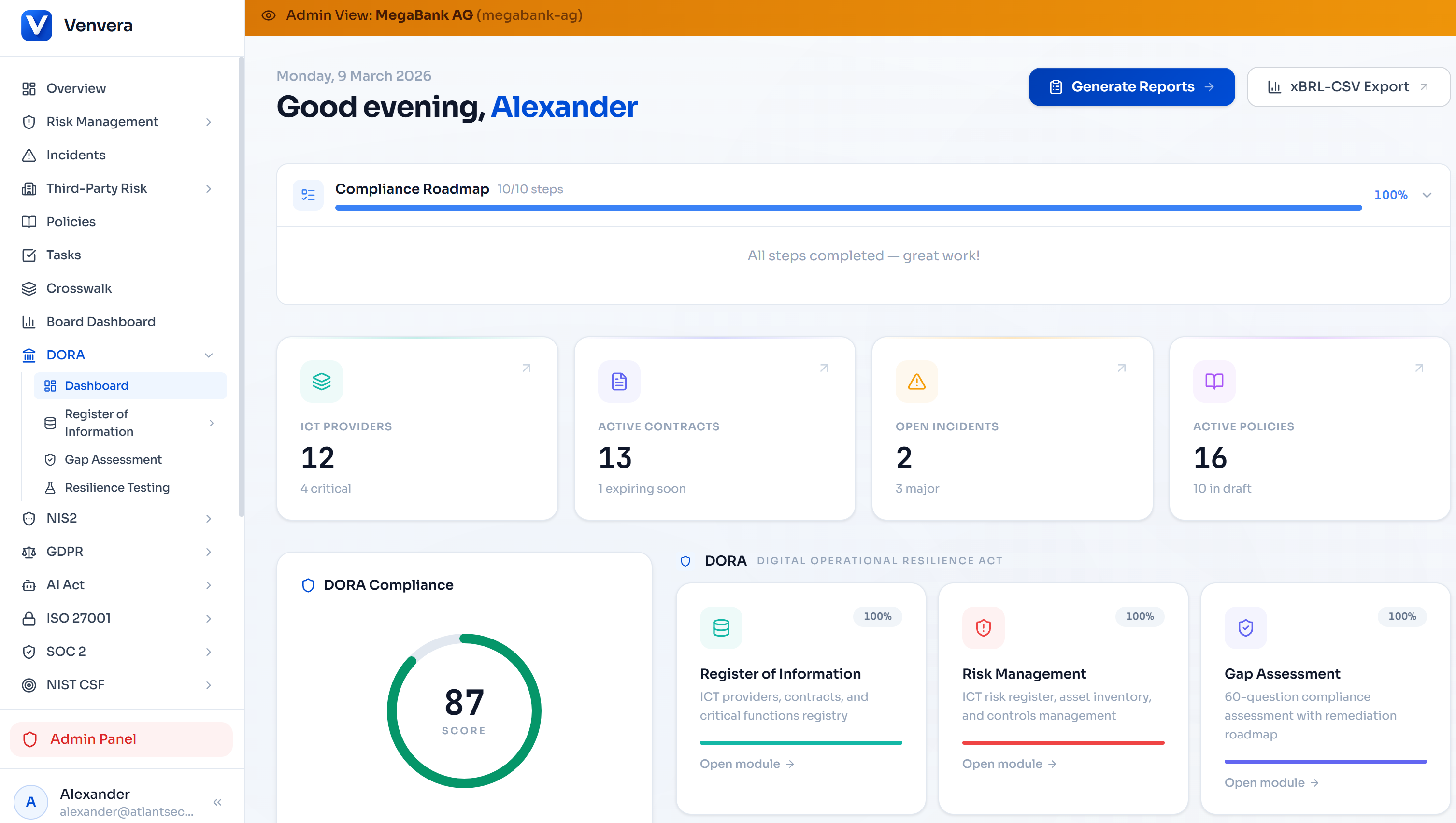
Register of Information. Article 28(3) requires a structured register of every ICT third-party arrangement. The ESA’s ITS defines 15 interconnected templates with over 100 mandatory fields. You cannot do this in a flat vendor list.
xBRL-CSV export. Your supervisor will ask for data in this specific structured reporting format - not CSV, not Excel. I watched our compliance lead spend three weeks trying to manually convert spreadsheet data into valid xBRL-CSV. She nearly quit.
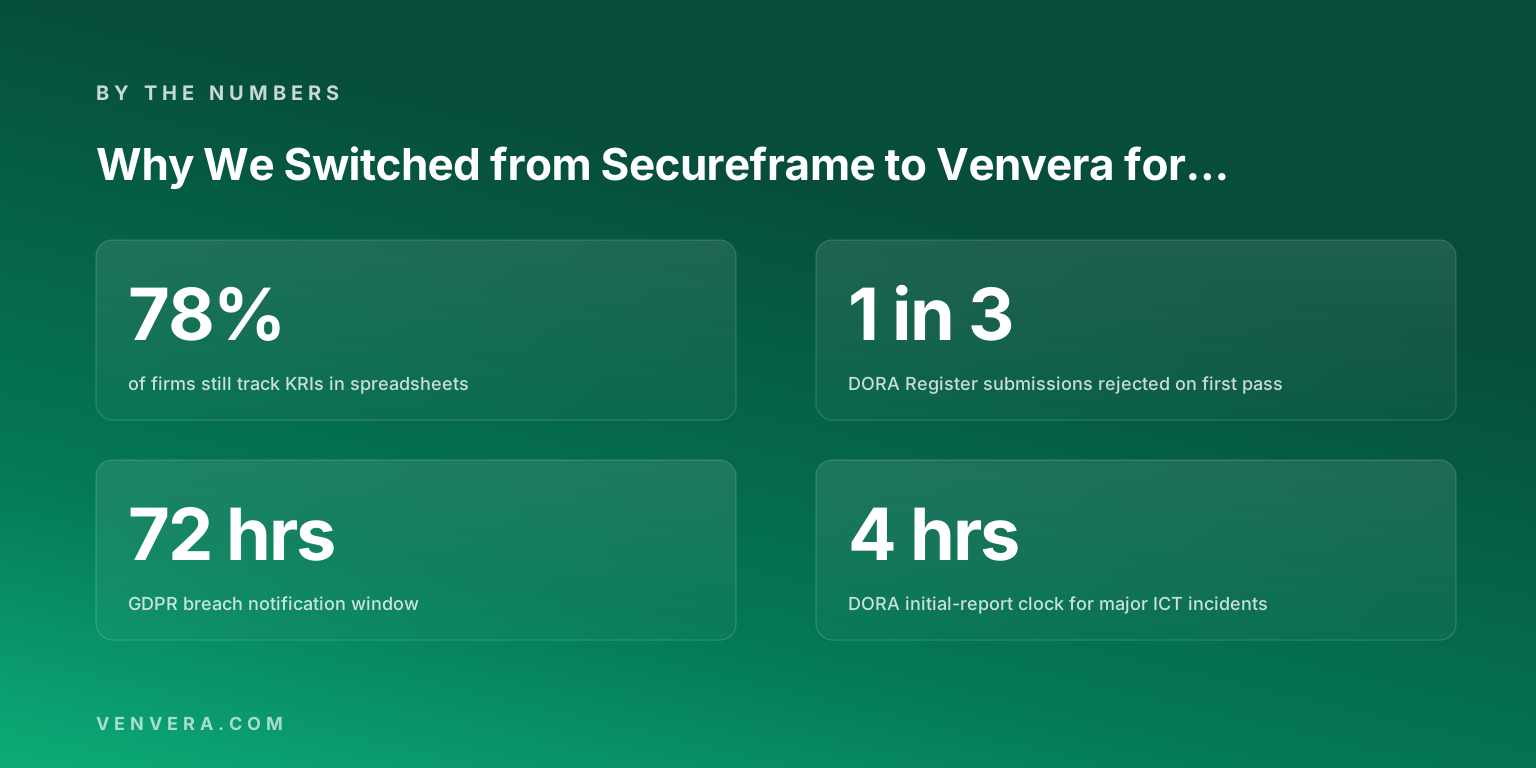
Incident classification per the RTS. DORA doesn’t use “Low / Medium / High.” It defines specific criteria: clients affected, duration, geographic spread, data integrity impact. Major incidents need initial notification within 4 hours.
Third-party contractual tracking. Articles 28-30 specify mandatory contractual provisions, sub-outsourcing documentation, exit strategies, and concentration risk analysis.
🔍
GAP ANALYSIS
Where Secureframe Falls Short for DORA
Secureframe is genuinely good at SOC 2, ISO 27001, and HIPAA. But DORA lives in a completely different regulatory universe. Here are the six gaps that matter most:
🗒
No Register of Information
The ESA’s 15-template ITS model with 100+ mandatory fields doesn’t exist in Secureframe. You’d need a separate system entirely.
📊
No xBRL-CSV Export
Supervisory filing requires this exact format. Manual conversion takes weeks and invites errors that regulators catch immediately.
🌐
No ESA Entity Codes
LEI, EBA, EIOPA, ESMA identifiers are hardcoded into DORA reporting. Secureframe has no concept of European supervisory identifiers.
🚨
No RTS Incident Workflow
DORA’s incident classification uses specific RTS criteria, not generic severity levels. The 4-hour notification window needs a purpose-built workflow.
📄
No Contractual Tracking
Articles 28-30 require tracking specific mandatory provisions, sub-outsourcing, and exit strategies. Generic vendor management won’t satisfy regulators.
⚖
HEAD-TO-HEAD
Feature Comparison: What Your Supervisor Actually Asks For
| DORA Requirement | Venvera | Secureframe |
|---|---|---|
| Register of Information (15 ESA templates) | ✓ Full ITS model | ✗ |
| xBRL-CSV supervisory export | ✓ Native | ✗ |
| ESA entity codes (LEI, EBA, EIOPA, ESMA) | ✓ Built-in | ✗ |
| Incident classification (RTS criteria) | ✓ RTS-aligned | ✗ |
| 4-hour major incident notification | ✓ Workflow | ✗ |
| Third-party contractual tracking (Art. 28-30) | ✓ Full | ✗ |
| ICT risk management (5 pillars) | ✓ Full | ✗ |
| Gap assessment against DORA articles | ✓ Built-in | ✗ |
| Cross-framework mapping (NIS2, GDPR, ISO) | ✓ 13 frameworks | ◯ SOC 2 + ISO only |
| SOC 2 / ISO 27001 | ✓ Included | ✓ Strong |
| EU data hosting | ✓ Amsterdam | ✗ US-hosted |
| HIPAA | ✗ | ✓ Strong |
🔬
DEEP DIVE
What Actually Changed When We Switched
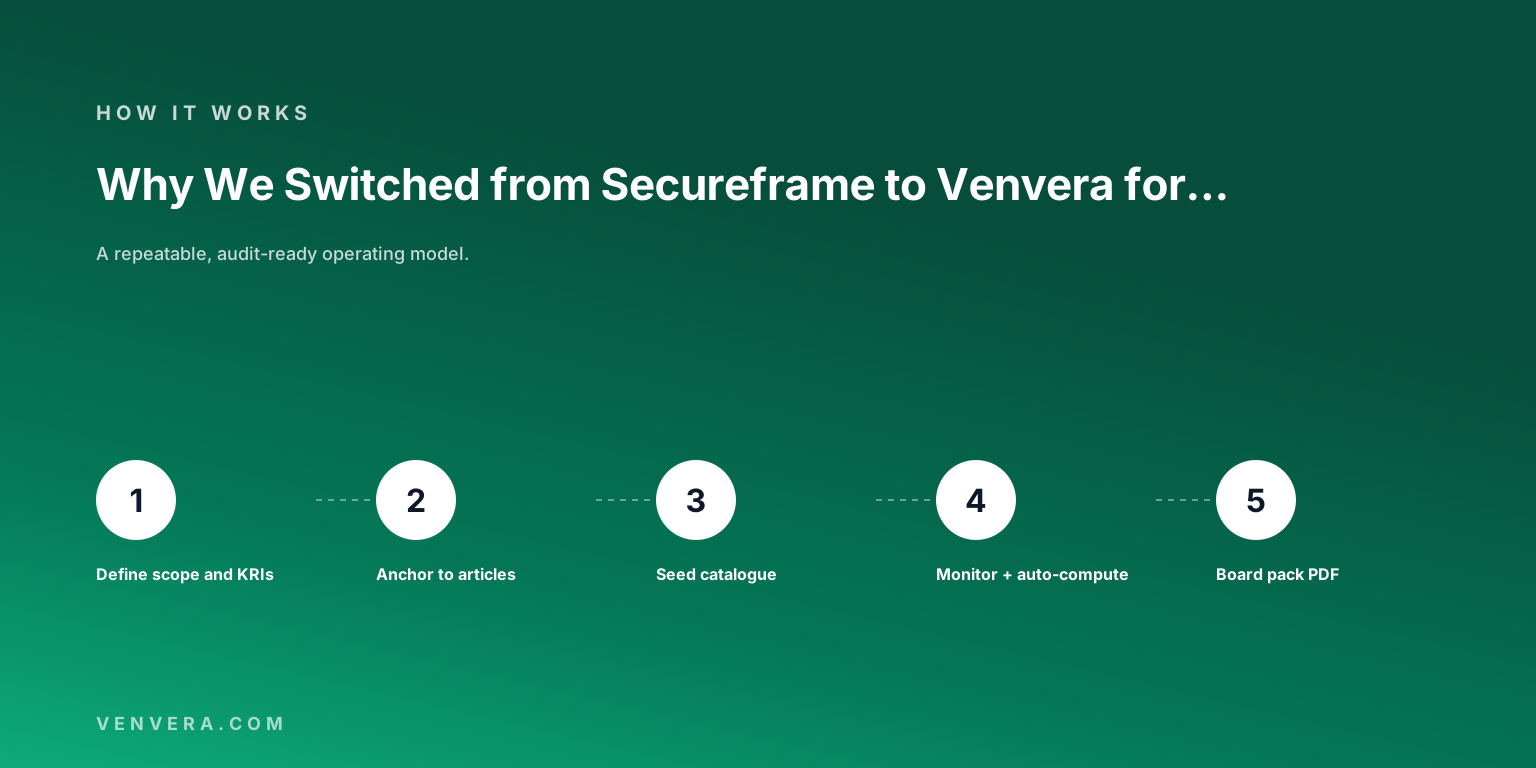
The migration took about two weeks. Not going to pretend it was instant - we had to export our SOC 2 evidence from Secureframe and re-map it in Venvera. But here’s what shifted immediately:
- Week 1: We imported our ICT provider list and Venvera’s data model forced us to structure it properly. Providers linked to contractual arrangements, arrangements linked to business functions, everything tagged with ESA codes. Our compliance manager literally said “oh, that’s what this was supposed to look like.”
- Week 2: We ran our first gap assessment against DORA’s five pillars. Found 23 gaps we didn’t know existed - mostly in incident classification and third-party contractual provisions. Those weren’t things Secureframe would have ever flagged.
- Week 3: The cross-framework mapping kicked in. Controls we’d already documented for ISO 27001 automatically mapped to DORA, NIS2, and GDPR requirements. Our compliance workload for those frameworks dropped by about 40%.
- Month 2: We generated our first xBRL-CSV export. Clean. Valid. Ready to submit. No late-night manual conversions. No prayer-based file formatting.
🔗
CROSS-FRAMEWORK EFFICIENCY
150+ Control Mappings Across 13 Frameworks
DORA doesn’t exist in isolation. If you’re a European financial entity, you also need GDPR, probably NIS2, almost certainly ISO 27001. The controls overlap massively - and that overlap is either your biggest headache or your biggest efficiency gain, depending on your tooling.
✅ Real-world cross-mapping savings:
An access control policy documented for DORA Article 9 simultaneously satisfies ISO 27001 A.8.2, NIS2 Article 21(2)(i), GDPR Article 32, SOC 2 CC6.1, and NIST CSF PR.AC. One control. Six frameworks. Zero duplicate work.
An incident response plan for DORA Article 17 maps to NIS2 Article 23, ISO 27001 A.5.24, and NIST CSF RS.RP.
Teams report 40-60% reduction in total compliance workload after switching to cross-mapped frameworks.
💰
PRICING COMPARISON
The Money Conversation
Secureframe pricing runs roughly $15-25K per year. For SOC 2 alone, that’s reasonable. But here’s the maths problem for European financial entities: you need DORA, Secureframe can’t do it, so you need a second platform. Then add GDPR operations and NIS2. Suddenly you’re running three platforms and three invoices.
| Scenario | Secureframe + Others | Venvera | You Save |
|---|---|---|---|
| DORA only | N/A (no DORA) | €399/mo (€4,788/yr) | - |
| DORA + GDPR + NIS2 | ~$30-50K/yr (multiple tools) | €899/mo (€10,788/yr) | $15-35K/yr |
| SOC 2 + ISO + DORA + GDPR | ~$40-75K/yr (Secureframe + DORA tool + GDPR tool) | €899/mo (€10,788/yr) | $25-60K/yr |
🇪🇺
DATA SOVEREIGNTY
Your Compliance Data Belongs in Europe
This one surprised us. We didn’t think hosting location would matter much - until our supervisor asked where our compliance data was stored. Secureframe is US-hosted. That means your Register of Information, your ICT risk assessments, your incident reports - all sitting in US data centres, subject to US jurisdiction.
For a European financial entity demonstrating operational resilience to a European supervisor, that’s awkward. The supervisor’s next question is predictably “and what’s your exit strategy if the US provider becomes unavailable?” - which is literally what DORA Article 28 requires you to have documented.
🇪🇺 Venvera: Built for European data sovereignty
Hosted in Amsterdam. AES-256-GCM encryption with per-tenant keys. No transatlantic data transfers. One less thing to explain during your supervisory examination.
✅
DECISION GUIDE
Who Should Switch - And Who Should Stay
✅ Switch to Venvera if:
- You’re a European financial entity subject to DORA
- You need a proper Register of Information with xBRL-CSV export
- You also manage GDPR, NIS2, or ISO 27001 compliance
- Cross-framework mapping would save your team significant hours
- EU data hosting is important for your supervisory relationship
Stay with Secureframe if:
- You’re a US-based company with zero EU regulatory obligations
- You only need SOC 2, ISO 27001, or HIPAA
- DORA, NIS2, and GDPR are genuinely not on your radar
- You value Secureframe’s integration library and automated evidence collection over regulatory depth
Secureframe is a good product in its lane. SOC 2, ISO 27001, HIPAA - it handles them well. But if you’re a European financial entity that needs to demonstrate DORA compliance to your supervisor - with a proper Register of Information, xBRL-CSV exports, and structured third-party risk management - Secureframe simply cannot help you. Venvera was built for exactly this.
Ready to Actually Do DORA?
Register of Information, xBRL-CSV export, ESA entity codes, and 13 regulatory frameworks.
From €399/mo (1 framework) or €899/mo (3 frameworks). Hosted in Amsterdam.
Book a Demo →Last updated: March 2026. Pricing and feature details based on publicly available information and hands-on experience. Contact vendors for current pricing.