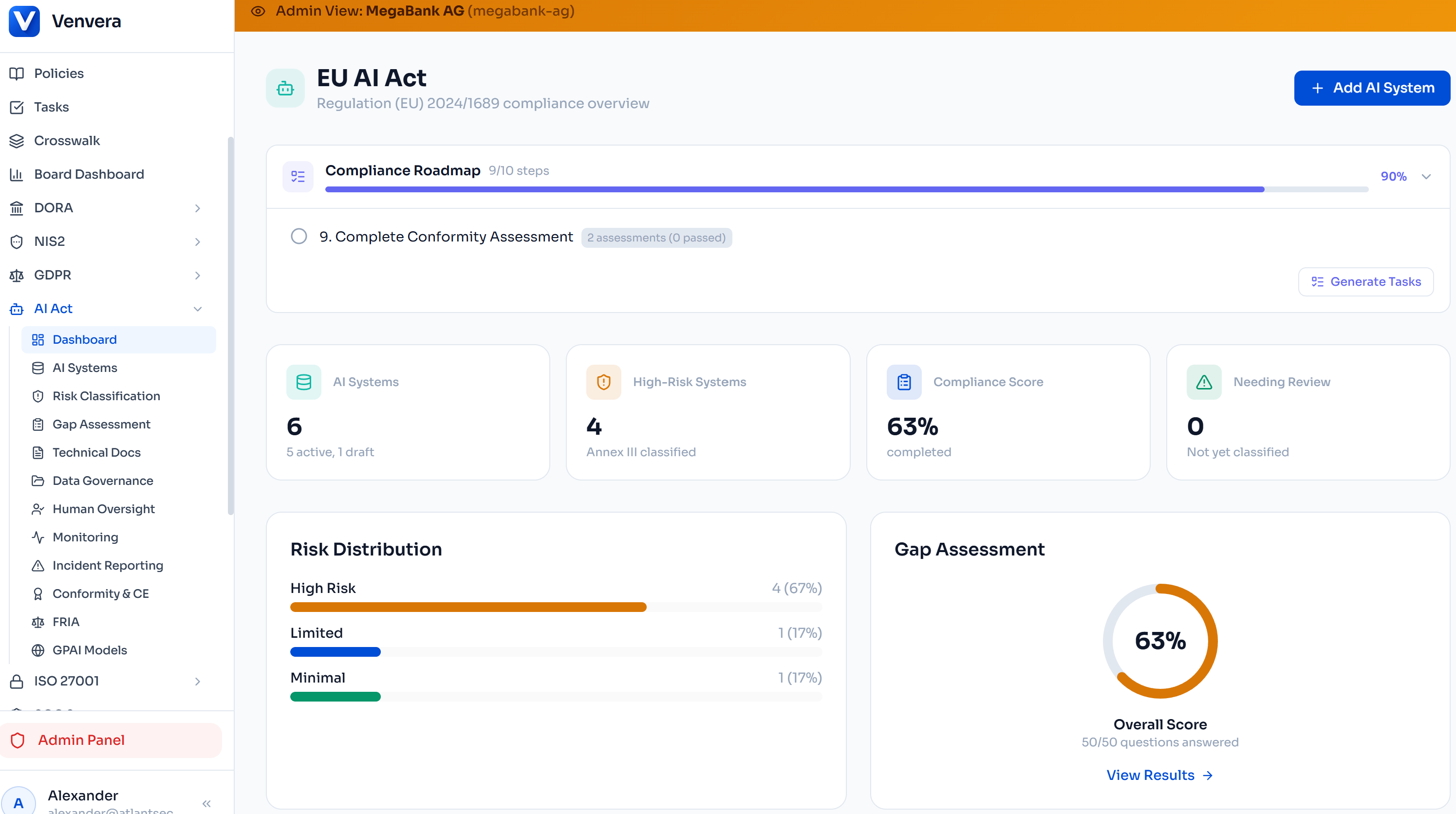

Best
Drata earned its reputation by automating the grind of audit preparation. It connects to your stack, checks controls continuously, and keeps evidence fresh so a SOC 2 or ISO 27001 audit is far less painful. If that is the problem in front of you, it does it well.
But continuous control monitoring answers "is this control still passing." Risk management answers a wider set of questions: what could hurt us, how likely is it, how severe, is it inside the appetite the board agreed, and is the trend getting better or worse. Drata's risk assessment module is built to feed an audit, so it stops where real risk work begins. There is no proper residual scoring, no risk appetite engine, and no key risk indicators monitored over time.
Venvera approaches it from the risk side first. Below is what changes when the register, not the audit, is the centre of the platform.
⚖️
The distinction
Control monitoring is not risk management
A passing control is good news about one safeguard. A risk posture is the bigger story: which exposures are unacceptable today, which are trending the wrong way, and where you are deliberately accepting risk. Drata is optimised for the first; managing the second needs a register that scores, a appetite that constrains, and indicators that move.
📊
The register
Inherent and residual scoring on a 5x5 matrix
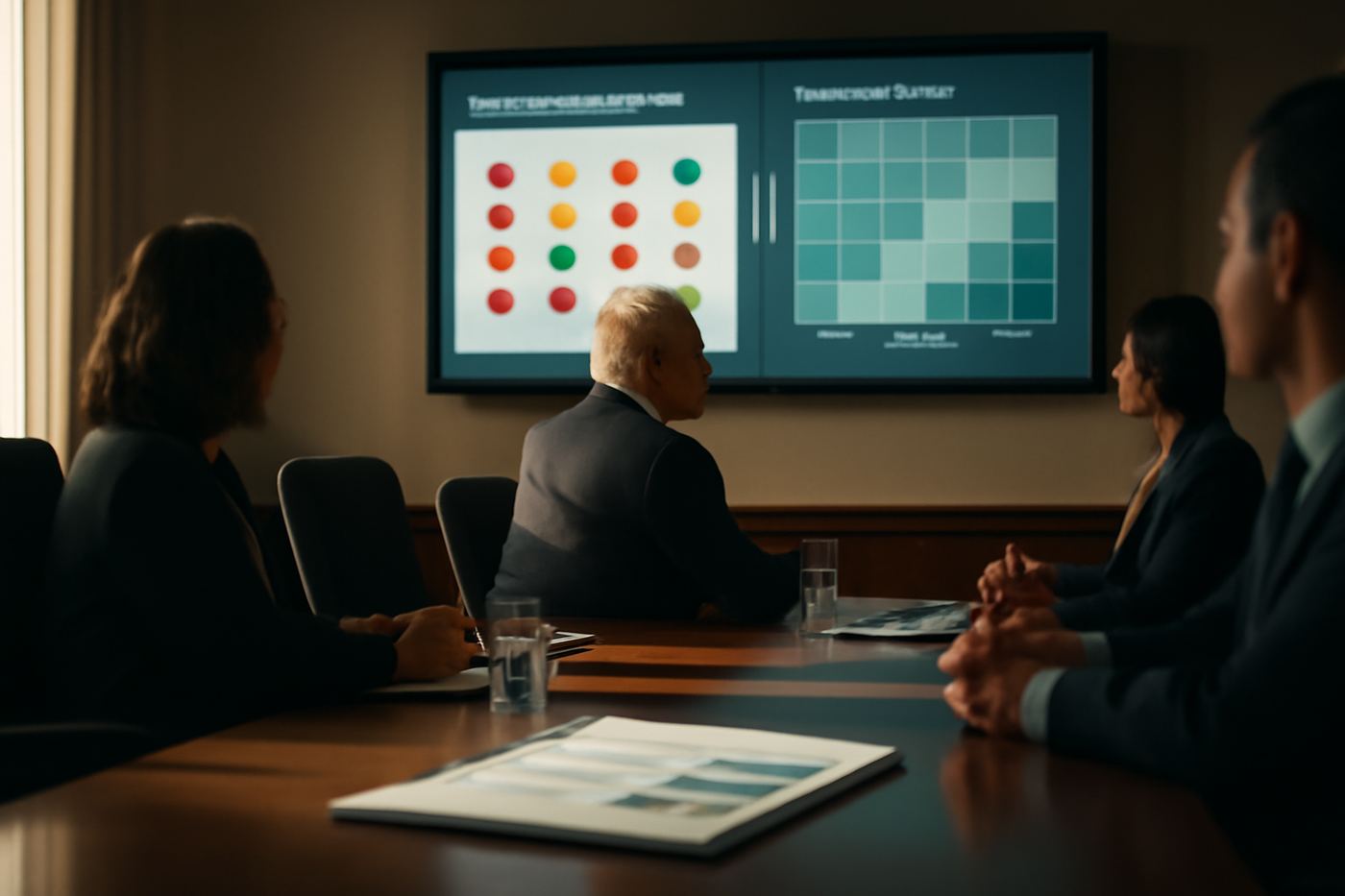
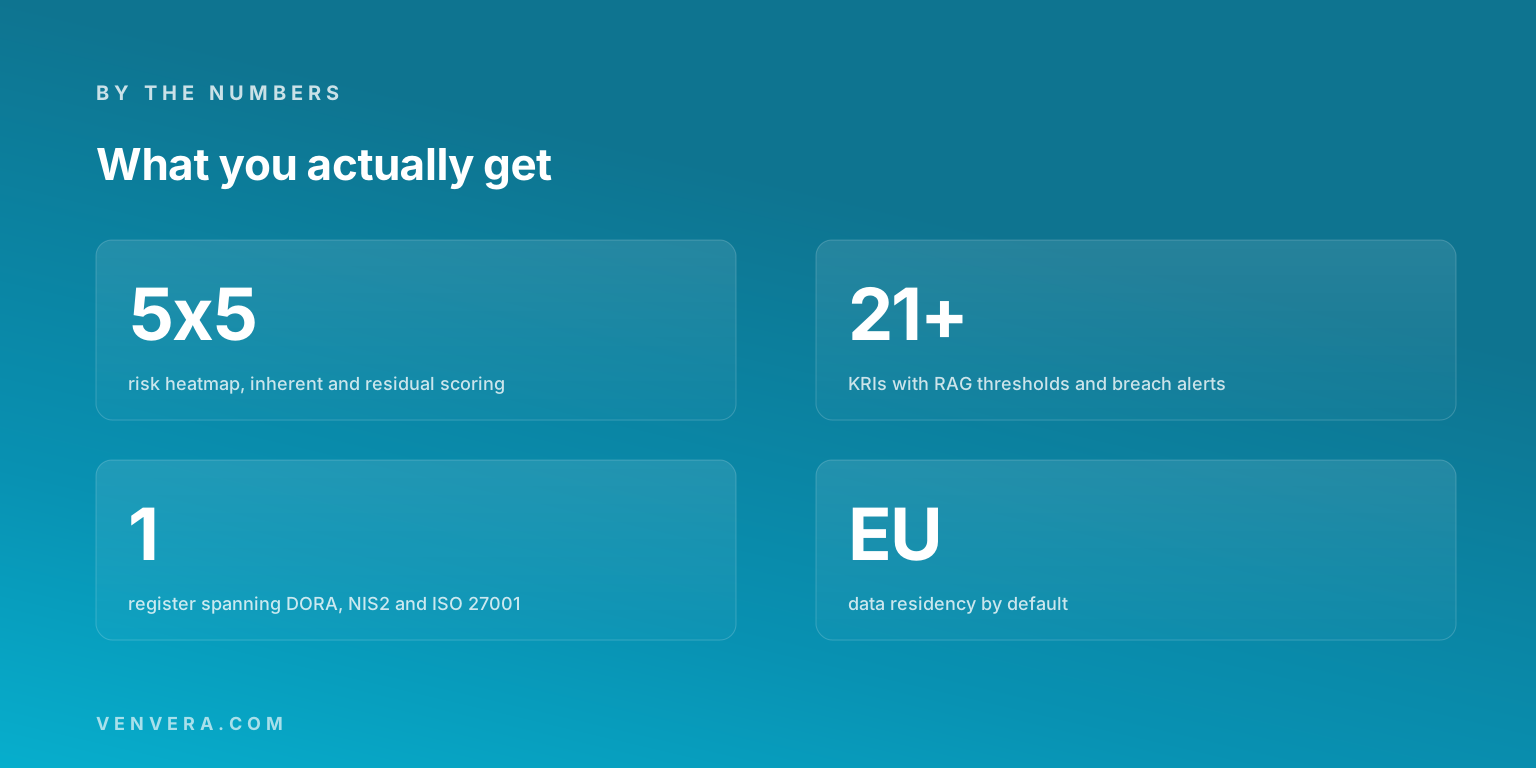
Each Venvera risk is scored twice: inherent (before controls) and residual (after them), from a likelihood and impact rating on a 5x5 scale. The Risk Dashboard renders the register as a colour-coded heatmap, counts risks in every cell, and flags overdue reviews. It is the difference between a list of risks and a managed portfolio of them.
🎯
Risk appetite
An appetite engine, not an appetite paragraph
Venvera turns risk appetite into something operational: per-level thresholds, a 25-cell preview of exactly where the lines fall, and a review and approval step so the appetite is owned. The register then automatically separates what is within appetite from what must be treated or escalated. This simply does not exist in an audit-automation tool.
📈
KRIs
Indicators that trend, alert, and collect themselves
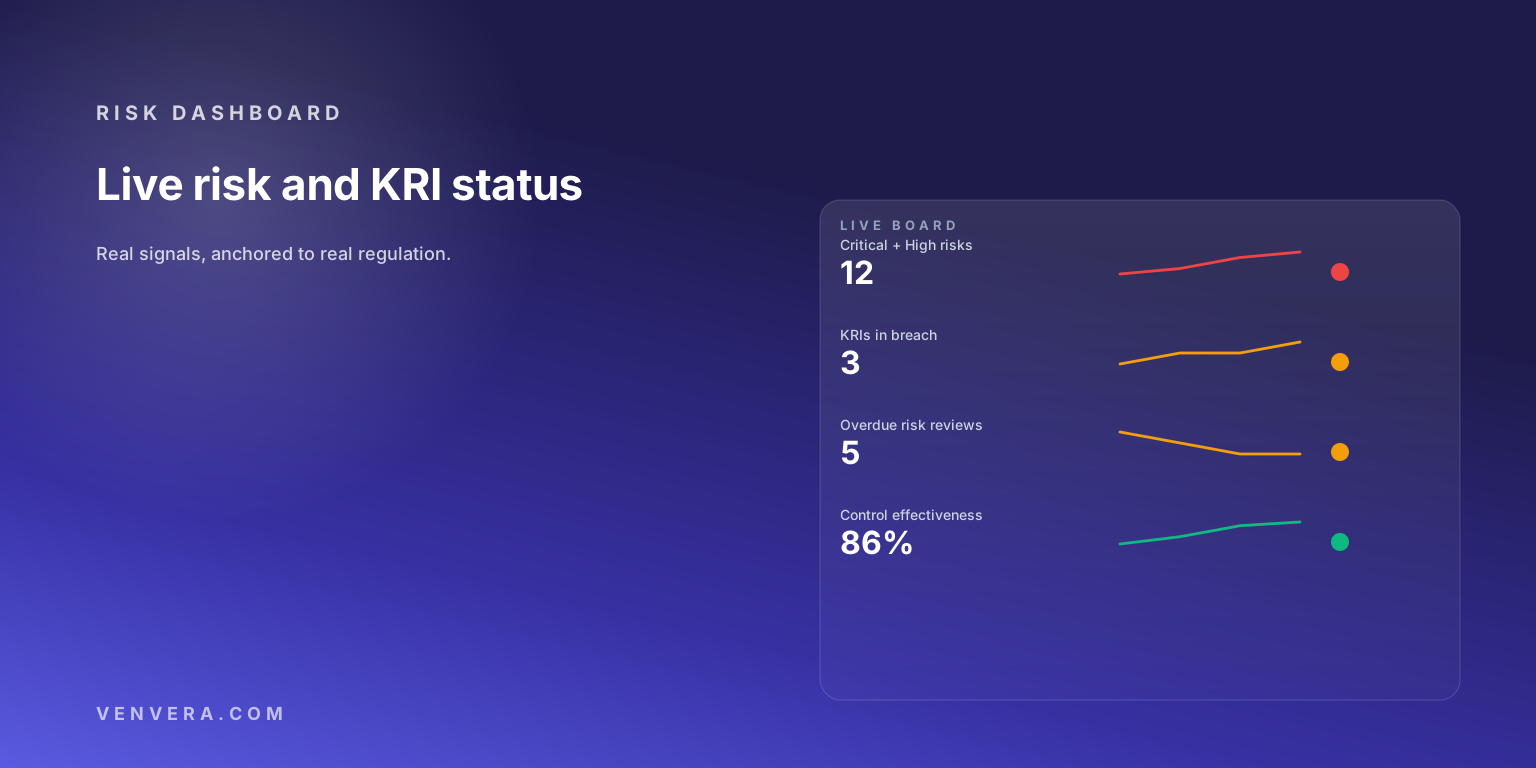
Where Drata continuously checks controls, Venvera continuously tracks risk through Key Risk Indicators: a library tied to DORA, NIS2 and ISO 27001 clauses, each with RAG thresholds and automatic breach records. Many auto-compute from live data; for the manual ones you email the owner a single-use magic link to submit the period's value with no login required. The KRI Dashboard gives you latest RAG status, elevated measurements, reporting health and the state of every outstanding update request.
🛠️
Remediation
From finding to remediated and assured
The Issues register tracks each weakness with a rating, owner and reviewer, and attaches remediation actions with due dates, retargeted dates where they slip, status updates, recommendations and an auditor assurance review. It gives the closure trail an assessor wants, and it connects the dots between a risk, the control that addresses it, and the work to fix the gap.
🌍
Consolidation
One risk register for every framework, in the EU
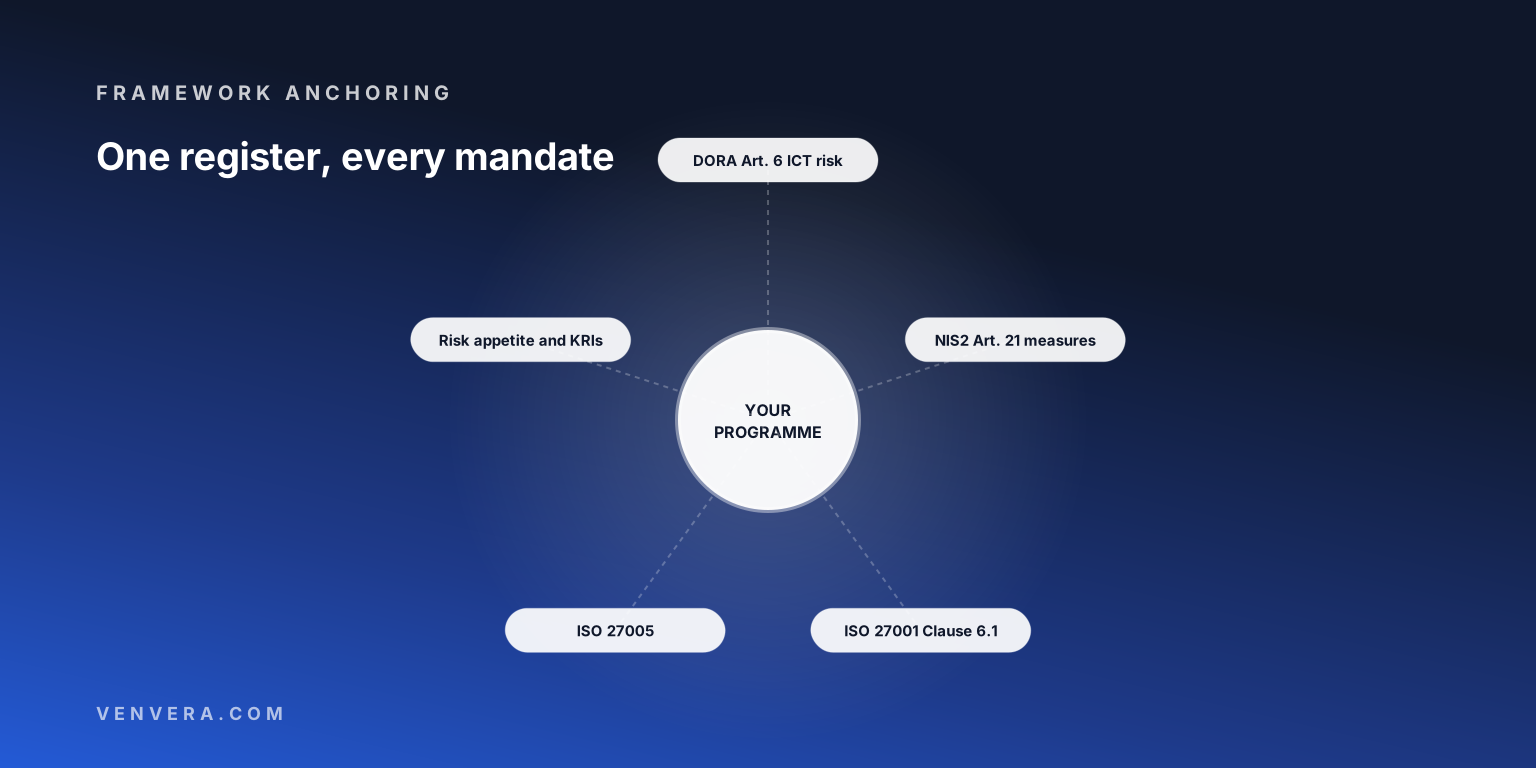
One register drives DORA, NIS2 and ISO 27001 together, so you maintain risk once rather than per standard. And Venvera is hosted in the EU by default, which is often the deciding factor for European financial entities weighing a US platform.
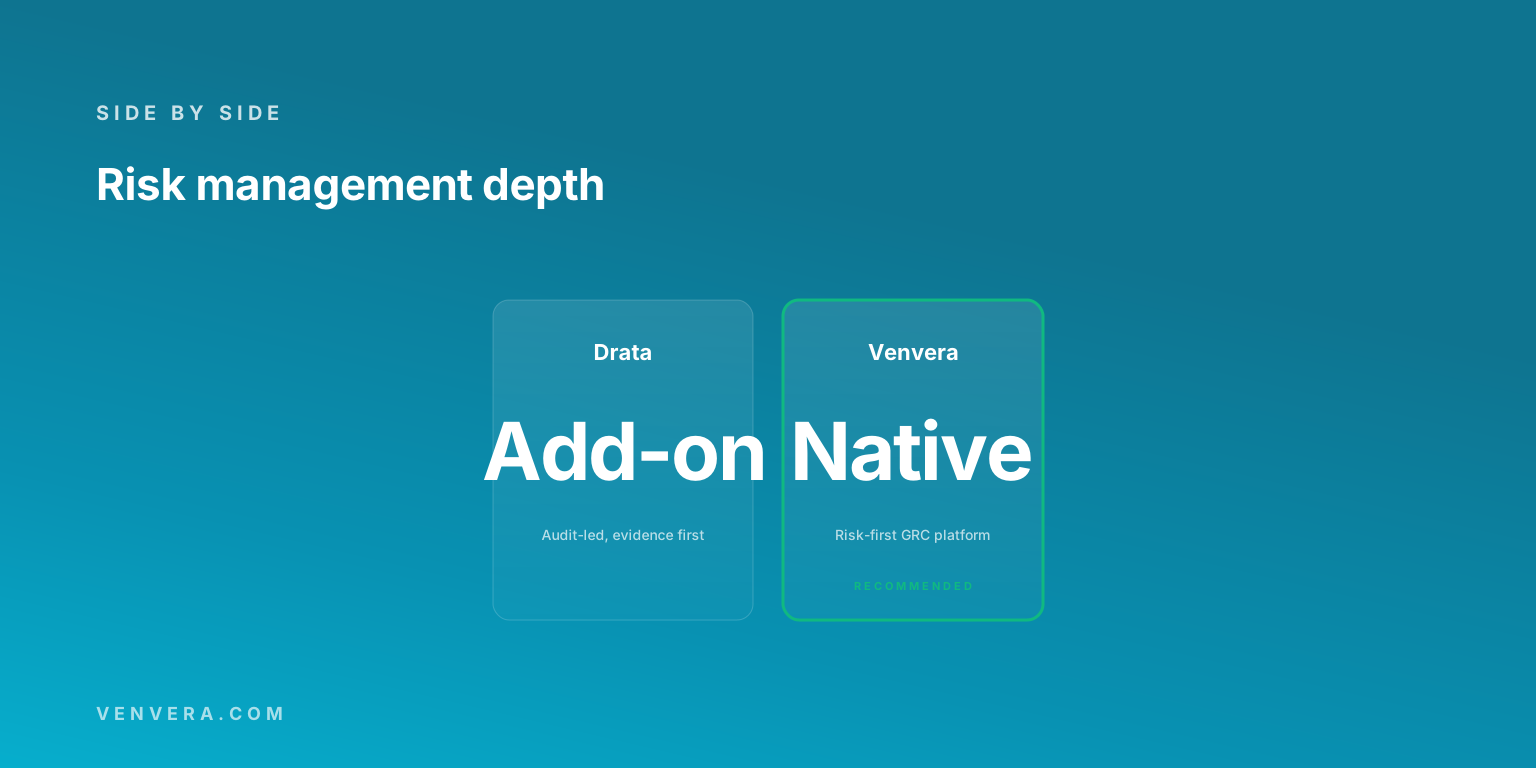
Drata vs Venvera for risk management
| Risk capability | Drata | Venvera |
|---|---|---|
| Dedicated risk register | Light add-on | Core module |
| Inherent and residual scoring | Limited | Yes, with a 5x5 matrix |
| Visual risk heatmap | No | Yes |
| Risk appetite with per-level thresholds | No | Yes, with approval workflow |
| Key Risk Indicators with RAG bands | No | 21+ KRIs, breach alerts |
| Request measurements from owners | No | Magic-link requests |
| Issues and remediation tracking | Basic findings | Full remediation actions |
| One register across DORA, NIS2, ISO 27001 | Per-standard | Unified |
| EU data residency by default | No | Yes |
Who should switch
If your need is continuous evidence for a SOC 2 or ISO 27001 audit, Drata is a strong tool. Look at Venvera when:
- You are accountable for risk, not just for passing controls.
- DORA, NIS2 or ISO 27001 reporting means you want a single risk register.
- You need risk appetite, KRIs and a heatmap that an audit tool does not provide.
- EU hosting and data residency are firm requirements.
See risk management built for risk teams, not just auditors
Book a 30 minute walkthrough of the Venvera risk register, KRIs, risk appetite and board pack, mapped to the frameworks you already report on.
Book a demo Explore the module