
Best
Middle East Information Security
Vanta doesn't cover Middle Eastern regulations. Here's a platform that does - alongside 10 more frameworks.

The UAE has quietly become one of the most sophisticated cybersecurity regulatory environments in the Middle East. The UAE Information Assurance (IA) standards, driven by the Telecommunications and Digital Government Regulatory Authority (TDRA) and the National Cybersecurity Council, establish mandatory security requirements for government entities, critical infrastructure operators, and their supply chains. If you do business with UAE government bodies or operate in regulated sectors within the Emirates, UAE IA compliance isn't optional.
And if you've been looking at compliance platforms to help you manage it, you've encountered a recurring theme: almost all of them were built for the US market. Vanta is the most prominent example - a platform that excels at SOC 2 for American tech companies but has effectively zero coverage of Middle Eastern regulatory requirements.
For organisations operating in the UAE, this leaves a glaring gap. You might use Vanta for SOC 2 to satisfy your US clients, but your UAE IA obligations live entirely outside the platform - in spreadsheets, Word documents, and manual audit trails. That's exactly the fragmentation that modern compliance platforms should eliminate.
Venvera was designed for multi-jurisdictional compliance from the ground up. UAE IA is one of 16 frameworks included natively in every plan, sitting alongside ISO 27001, SOC 2, GDPR, NIST CSF, and others. This article explains why that matters and how cross-framework mapping makes UAE IA compliance dramatically more efficient.
🏛️
Framework Overview
What UAE Information Assurance Standards Require
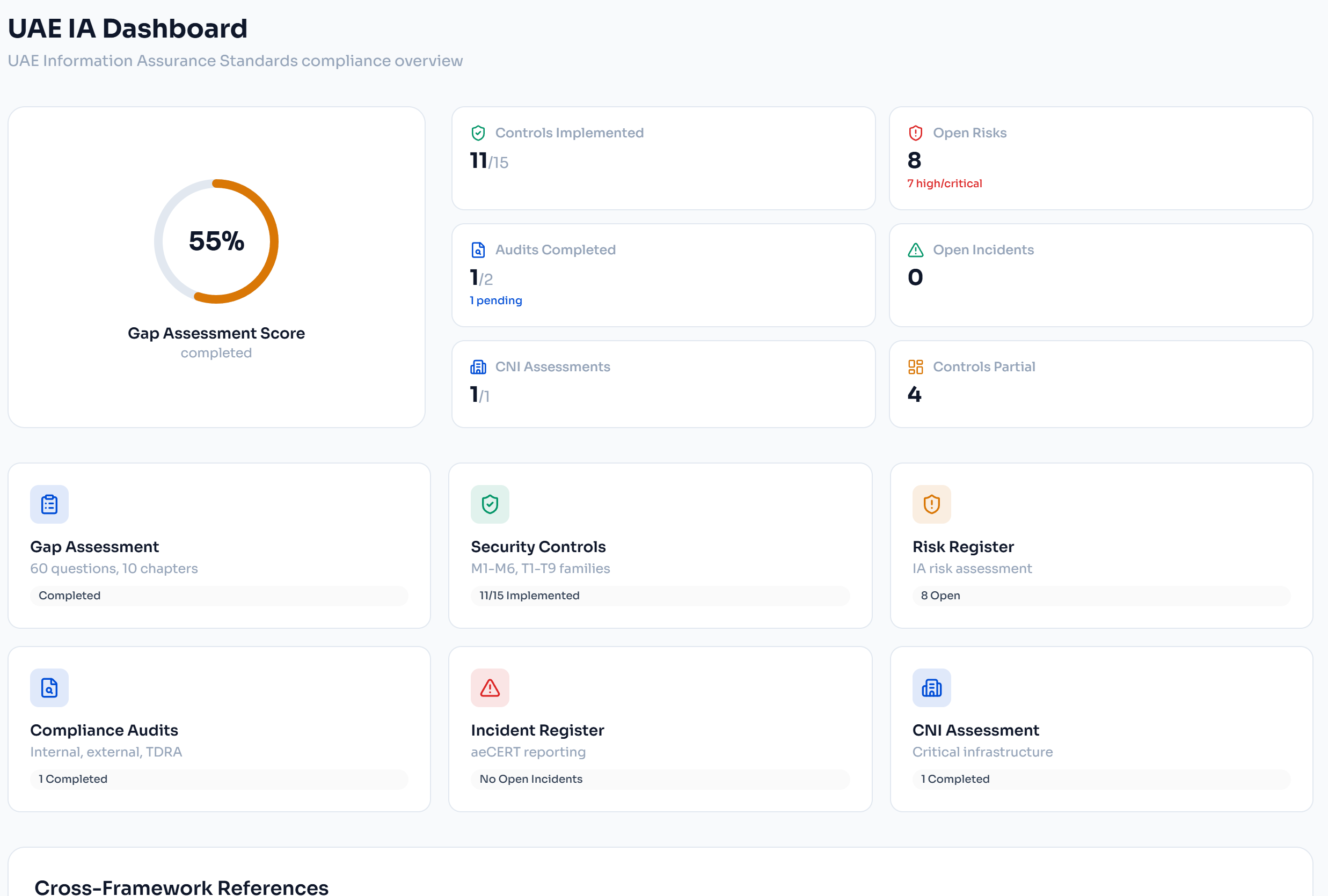
The UAE IA framework is a comprehensive information security standard that draws from international best practices (particularly ISO 27001 and NIST) while adding UAE-specific requirements for data classification, national security, and critical infrastructure protection.
The framework also includes UAE-specific elements: data classification aligned to UAE government standards, mandatory incident reporting to the UAE Computer Emergency Response Team (aeCERT), and specific requirements around cloud services and data localisation that international frameworks don't cover.
⚠️
The Gap
Why Vanta Doesn't Help With UAE IA Compliance
Vanta's framework coverage reflects its market: American tech companies. Their platform offers no UAE IA module, no Middle Eastern regulatory coverage, and no plans to add it based on publicly available roadmap information.
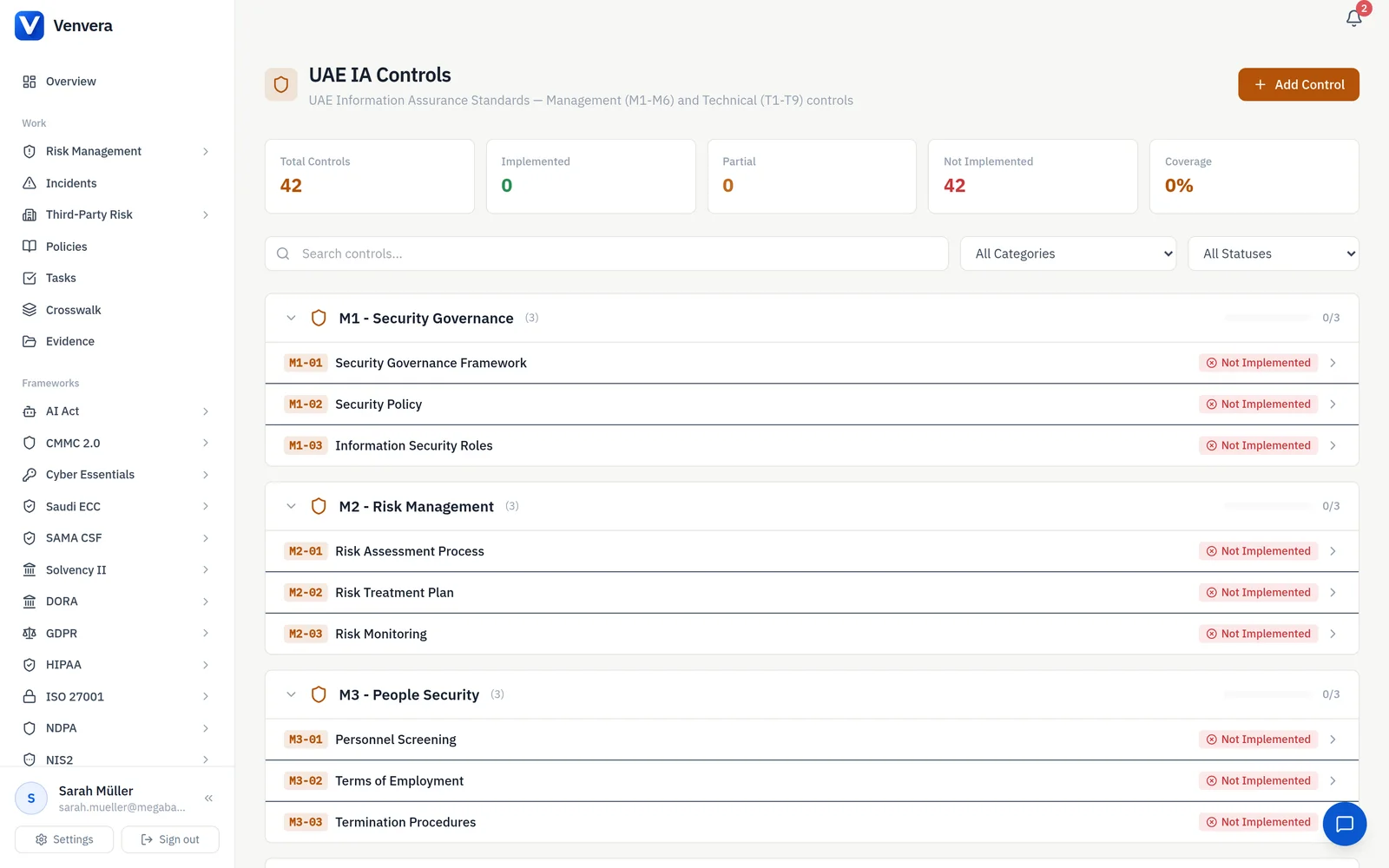
What's missing from Vanta for UAE organisations:
- No UAE IA framework module - the entire standard is absent from their platform
- No UAE data classification - the government's classification scheme (Top Secret, Secret, Confidential, Restricted, Public) isn't supported
- No aeCERT reporting templates - UAE incident reporting requirements are specific and mandatory
- No data localisation tracking - the UAE has specific requirements about where certain data categories must be stored
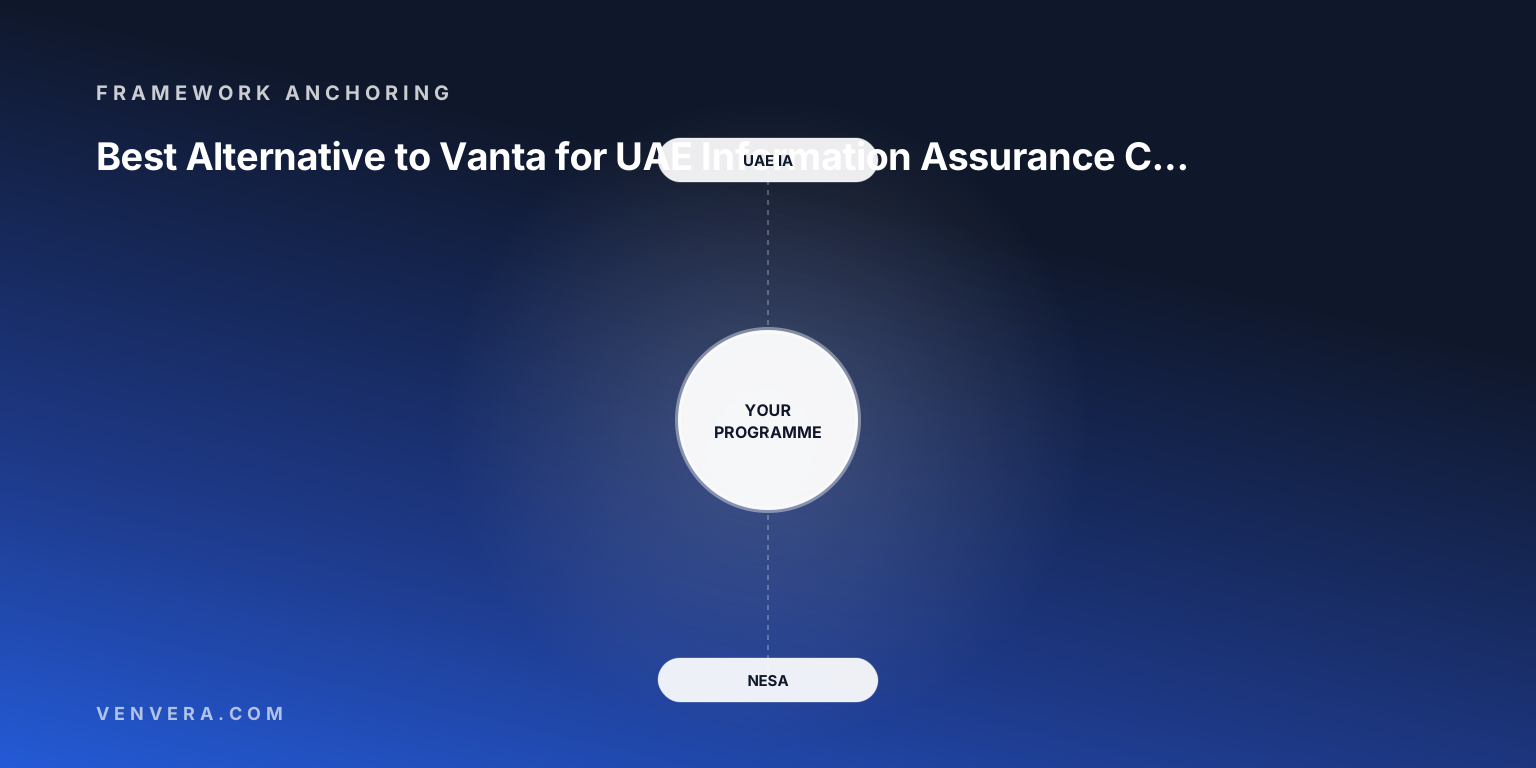
- No NESA alignment - the National Electronic Security Authority's critical infrastructure requirements aren't covered
For companies operating in the UAE, this means either managing UAE IA compliance entirely outside Vanta (manual processes, spreadsheets) or finding a platform that actually covers the framework. The first approach works until you face an audit or a client due diligence exercise that expects structured, auditable evidence. The second approach is what Venvera provides.
📊
Head-to-Head
Venvera vs. Vanta: UAE IA Feature Comparison

🔗
Cross-Framework Intelligence
UAE IA + ISO 27001: The Natural Partnership
The UAE IA framework was heavily influenced by ISO 27001 - which means organisations already certified to ISO 27001 have a significant head start on UAE IA compliance. In Venvera, this relationship is made explicit and actionable through cross-framework mapping.
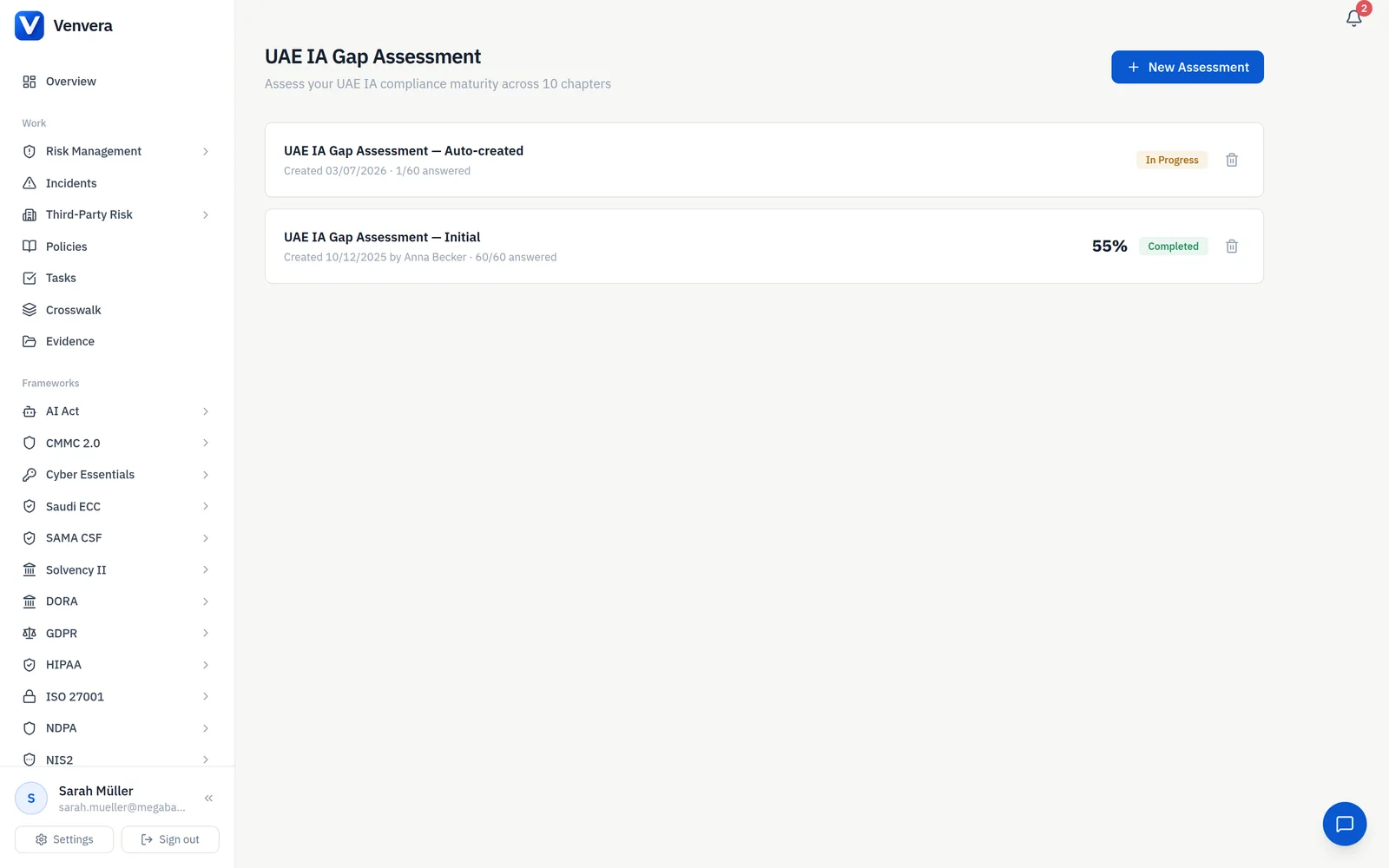
Mapping Example: Access Control
| UAE IA Requirement | ISO 27001 Mapping | NIST CSF |
| Access control policy | A.9.1.1 | PR.AC-1 |
| User registration | A.9.2.1 | PR.AC-1 |
| Privilege management | A.9.2.3 | PR.AC-4 |
| Password management | A.9.4.3 | PR.AC-1 |
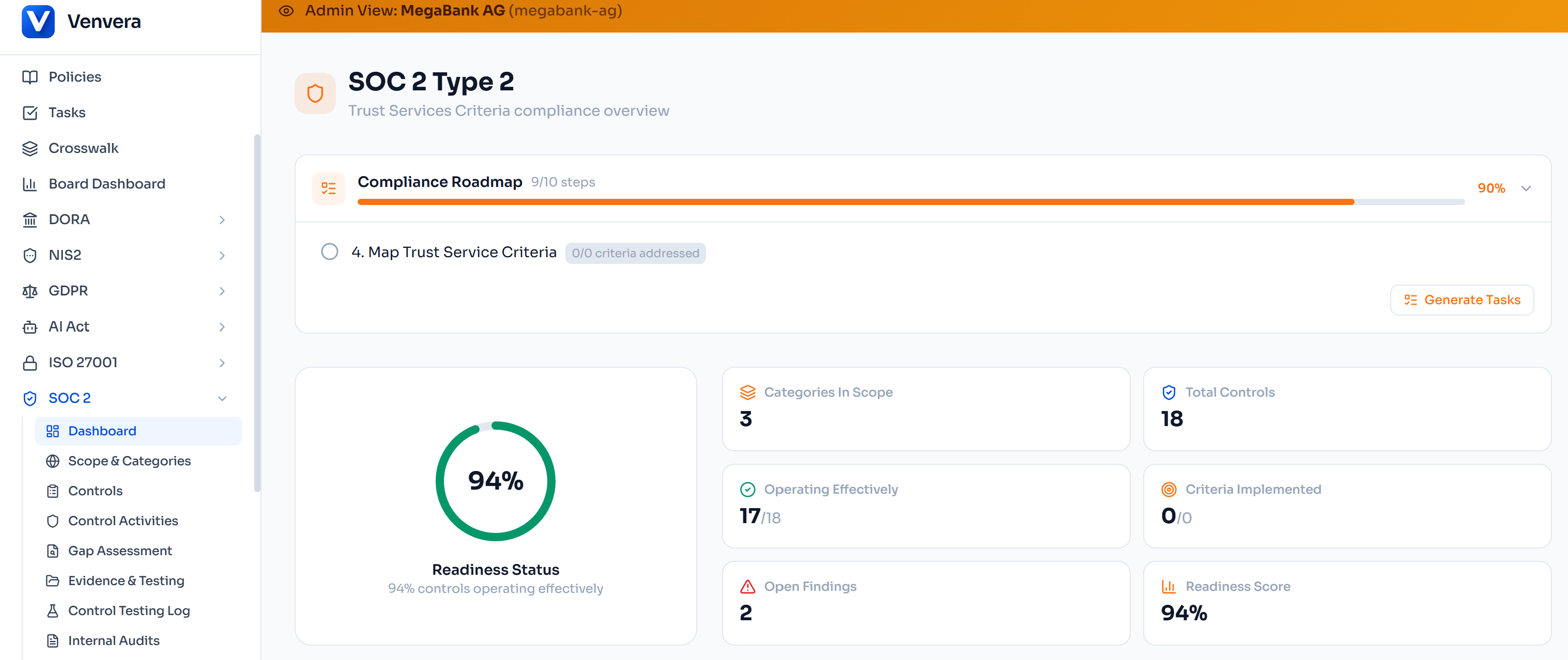
For each UAE IA control you implement in Venvera, the platform immediately shows which ISO 27001, NIST CSF, and SOC 2 requirements are simultaneously satisfied. If you're already ISO 27001 certified, activating the UAE IA module in Venvera instantly shows your gap - often 15-20% incremental work rather than a full compliance programme from scratch.
This is particularly valuable for multinational companies that need ISO 27001 globally but also need UAE IA for their Emirates operations. Instead of two separate compliance programmes, you have one unified effort with clear visibility into the overlap and the gaps.
💰
Pricing
The Real Cost of Multi-Jurisdictional Compliance
For organisations operating across the Gulf, Africa, and Europe, the cost comparison is stark. Vanta covers a fraction of your compliance needs at premium pricing. Venvera covers all of them - including the regional frameworks Vanta ignores - with transparent pricing from €299/mo.
🎯
Decision Guide
Who Should Choose Venvera for UAE IA Compliance
- You operate in the UAE and need to comply with TDRA/NESA information assurance requirements
- You're a government contractor or critical infrastructure operator in the Emirates
- You already have ISO 27001 and want to efficiently extend coverage to UAE IA
- You operate across multiple Middle Eastern, African, or European markets with diverse regulatory requirements
- You need UAE IA alongside SOC 2, ISO 27001, or GDPR in a single platform
- You're frustrated that mainstream compliance platforms ignore Middle Eastern regulations entirely
The UAE's regulatory environment is maturing rapidly, and enforcement is tightening. Organisations that treat UAE IA as a serious compliance obligation - managed with proper tooling rather than manual workarounds - will be better positioned for audits, government contracts, and client due diligence exercises.
UAE IA Compliance, On a Platform That Gets It
Full UAE Information Assurance module with ISO 27001 cross-mapping - plus 10 more frameworks including NDPA, GDPR, and SOC 2.